Close

March 9: Gregory, Bishop of Nyssa, c. 394

Welcome to the Holy Women, Holy Men blog! We invite you to read about this commemoration, use the collect and lessons in prayer, whether individually or in corporate worship, then tell us what you think. For more information about this project, click here.
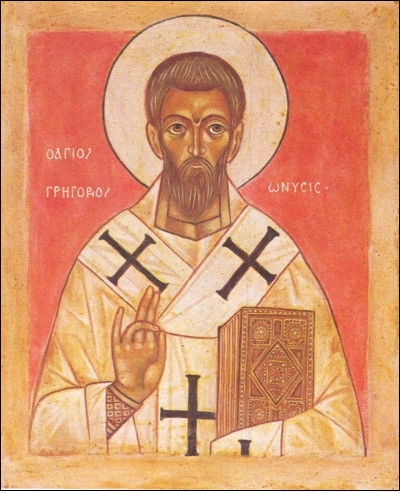
Gregory was a man enchanted with Christ and dazzled by the meaning of his Passion. He was born in Caesarea about 334, the younger brother of Basil the Great, and, in his youth, was but a reluctant Christian.

When he was twenty, the transfer of the relics of the Forty Martyrs of Sebaste to the family chapel at Annesi quickened Gregory’s faith, and he became a practicing Christian and a lector. He abandoned this ministry, however, to become a rhetorician like his father.

His brother Basil, in his struggle against the Emperor Valens, compelled Gregory to become Bishop of Nyssa, a town ten miles from Caesarea. Knowing himself to be unfit for the charge, Gregory described his ordination as the most miserable day of his life. He lacked the important episcopal skills of tact and understanding, and had no sense of the value of money. Falsely accused of embezzling Church funds, Gregory went into hiding for two years, not returning to his diocese until Valens died.

Although he resented his brother’s dominance, Gregory was shocked by Basil’s death in 379. Several months later, he received another shock: his beloved sister Macrina was dying. Gregory hastened to Annesi and conversed with her for two days about death, and the soul, and the meaning of the resurrection. Choking with asthma, Macrina died in her brother’s arms.

The two deaths, while stunning Gregory, also freed him to develop as a deeper and richer philosopher and theologian. He reveals his delight in the created order in his treatise, On the Making of Man. He exposes the depth of his contemplative and mystical nature in his Life of Moses and again in his Commentary on the Song of Songs. His Great Catechism is still considered second only to Origen’s treatise, On First Principles.

In 381, Gregory attended the Second Ecumenical Council at Constantinople, where he was honored as the “pillar of the Church.” In the fight for the Nicene faith, he was one of the three great Eastern theologians, known with Basil the Great and Gregory of Nazianzus, as the Cappadocian Fathers.

Collects

I     Almighty God, who hast revealed to thy Church thine eternal Being of glorious majesty and perfect love as one God in Trinity of Persons: Give us grace that, like thy bishop Gregory of Nyssa, we may continue steadfast in the confession of this faith, and constant in our worship of thee, Father, Son, and Holy Spirit; who livest and reignest now and for ever.  Amen.

II     Almighty God, you have revealed to your Church your eternal Being of glorious majesty and perfect love as one God in Trinity of Persons: Give us grace that, like your bishop Gregory of Nyssa, we may continue steadfast in the confession of this faith, and constant in our worship of you, Father, Son, and Holy Spirit; for you live and reign for ever and ever.  Amen.

Lessons

Wisdom 7: 24-28

Ephesians 2: 17-22

John 14: 23-26

Psalm 19: 7-11 (12-14)

Preface of Trinity Sunday

From Holy, Women, Holy Men: Celebrating the Saints © 2010 by The Church Pension Fund. Used by permission.

* * *

We invite your reflections about this commemoration and its suitability for the official calendar and worship of The Episcopal Church. How did this person’s life witness to the Gospel? How does this person inspire us in Christian life today?

To post a comment, your first and last name and email address are required. Your name will be published; your email address will not. The first time you post, a moderator will need to approve your submission; after that, your comments will appear instantly.
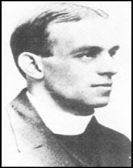
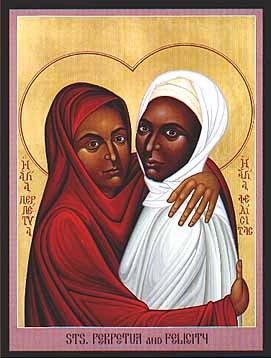
March 8: Geoffrey Anketell Studdert Kennedy, Priest, 1929

Welcome to the Holy Women, Holy Men blog! We invite you to read about this commemoration, use the collect and lessons in prayer, whether individually or in corporate worship, then tell us what you think. For more information about this project, click here.

G. A. Studdert Kennedy was born in Leeds in 1883, one of nine children. His father, William Studdert Kennedy, was vicar in Leeds. Kennedy earned a degree in classics and divinity in 1904 at Trinity College, Dublin. After his ordination, he served parishes in Rugby and Worcester.

At the outbreak of the First World War, Kennedy volunteered as a chaplain to soldiers on the Western Front. Along with the spiritual comfort he gave to the wounded and dying, he was famous for handing out Woodbine cigarettes to the soldiers, who called him “Woodbine Willie.”

A skilled poet, Kennedy published several volumes of religious poetry. He also wrote poems based on his experience as war chaplain, published in the volumes Rough Rhymes of a Padre (1918) and MoreRough Rhymes (1919). His courage and has compassion for the soldiers he served can be heard in his poem “Woodbine Willie,” a gracious, moving account of the men who gave him his nickname:

THEY gave me this name like their nature,

Compacted of laughter and tears,

A sweet that was born of the bitter,

A joke that was torn from the years.

Of their travail and torture, Christ’s fools,

Atoning my sins with their blood,

Who grinned in their agony sharing

The glorious madness of God.

Their name! Let me hear it—the symbol

Of unpaid—unpayable debt,

For the men to whom I owed God’s Peace,

I put off with a cigarette.

He also published a collection of sermons entitled I Believe: Sermons on the Apostle’s Creed (1928). His later poems and prose works express the Christian socialism and pacifism he adopted during his war years. He eventually worked for the Industrial Christian Fellowship. On one of his speaking tours on their behalf, he became ill, and he died in Liverpool in 1929.

Studdert Kennedy remains a powerful influence on the pacifist cause, and his many writings have inspired figures such as Desmond Tutu and Jürgen Moltmann.

Collects

I     Glorious God, we give thanks not merely for high and holy things, but for the common things of earth which thou hast created: Wake us to love and work, that Jesus, the Lord of life, may set our hearts ablaze and that we, like Geoffrey Studdert Kennedy, may recognize thee in thy people and in thy creation, serving the holy and undivided Trinity; who liveth and reigneth throughout all ages of ages.  Amen.

II     Glorious God, we give thanks not merely for high and holy things, but for the common things of earth which you have created: Wake us to love and work, that Jesus, the Lord of life, may set our hearts ablaze and that we, like Geoffrey Studdert Kennedy, may recognize you in your people and in your creation, serving the holy and undivided Trinity; who lives and reigns throughout all ages of ages.  Amen.

Lessons

2 Samuel 22: 1-7 (8-16) 17-19

1 Corinthians 15:  50-58

Luke 10: 25-37

Psalm 69: 15-20

Preface of a Saint (2)

From Holy, Women, Holy Men: Celebrating the Saints © 2010 by The Church Pension Fund. Used by permission.

* * *

We invite your reflections about this commemoration and its suitability for the official calendar and worship of The Episcopal Church. How did this person’s life witness to the Gospel? How does this person inspire us in Christian life today?

To post a comment, your first and last name and email address are required. Your name will be published; your email address will not. The first time you post, a moderator will need to approve your submission; after that, your comments will appear instantly.


March 7: Perpetua and her Companions, Martyrs at Carthage, 202

Welcome to the Holy Women, Holy Men blog! We invite you to read about this commemoration, use the collect and lessons in prayer, whether individually or in corporate worship, then tell us what you think. For more information about this project, click here.

About This Commemoration

Vibia Perpetua was a young widow, mother of an infant and owner of several slaves, including Felicitas and Revocatus. With two other young Carthaginians, Secundulus and Saturninus, they were catechumens preparing for baptism.

Early in the third century, Emperor Septimius Severus decreed that all persons should sacrifice to the divinity of the emperor. There was no way that a Christian, confessing faith in the one Lord Jesus Christ, could do this. Perpetua and her companions were arrested and held in prison under miserable conditions.

In a document attributed to Perpetua, we learn of visions she had in prison. One was of a ladder to heaven, which she climbed to reach a large garden; another was of her brother who had died when young of a dreadful disease, but was now well and drinking the water of life; the last was of herself as a warrior battling the Devil and defeating him to win entrance to the gate of life. “And I awoke, understanding that I should fight, not with beasts, but with the Devil … So much about me up to the day before the games; let him who will write of what happened then.”

At the public hearing before the Proconsul, she refused even the entreaties of her aged father, saying, “I am a Christian.”

On March 7, Perpetua and her companions, encouraging one another to bear bravely whatever pain they might suffer, were sent to the arena to be mangled by a leopard, a boar, a bear, and a savage cow. Perpetua and Felicitas, tossed by the cow, were bruised and disheveled, but Perpetua, “lost in spirit and ecstasy,” hardly knew that anything had happened. To her companions she cried, “Stand fast in the faith and love one another. And do not let what we suffer be a stumbling block to you.”

Eventually, all were put to death by a stroke of a sword through the throat. The soldier who struck Perpetua was inept. His first blow merely pierced her throat between the bones. She shrieked with pain, then aided the man to guide the sword properly. The report of her death concludes, “Perhaps so great a woman, feared by the unclean spirit, could not have been killed unless she so willed it.”

Collects

I     O God the King of saints, who didst strengthen thy servants Perpetua and Felicitas and their companions to make a good confession, staunchly resisting, for the cause of Christ, the claims of human affection, and encouraging one another in their time of trial: Grant that we who cherish their blessed memory may share their pure and steadfast faith, and win with them the palm of victory; through the same Jesus Christ our Lord, who liveth and reigneth with thee and the Holy Spirit, one God, for ever and ever.  Amen.

II     O God the King of saints, you strengthened your servants Perpetua and Felicitas and their companions to make a good confession, staunchly resisting, for the cause of Christ, the claims of human affection, and encouraging one another in their time of trial: Grant that we who cherish their blessed memory may share their pure and steadfast faith, and win with them the palm of victory; through Jesus Christ our Lord, who lives and reigns with you and the Holy Spirit, one God, for ever and ever. Amen.

Lessons

Daniel 6:10-16

Hebrews 10:32-39

Matthew 24: 9-14

Psalm 124

Preface of a Saint (3)

From Holy, Women, Holy Men: Celebrating the Saints © 2010 by The Church Pension Fund. Used by permission.

* * *

We invite your reflections about this commemoration and its suitability for the official calendar and worship of The Episcopal Church. How did this person’s life witness to the Gospel? How does this person inspire us in Christian life today?

To post a comment, your first and last name and email address are required. Your name will be published; your email address will not. The first time you post, a moderator will need to approve your submission; after that, your comments will appear instantly.


March 6: William W. Mayo, Charles F. Menninger, and Their Sons, Pioneers in Medicine, 1911, 1953

Welcome to the Holy Women, Holy Men blog! We invite you to read about this commemoration, use the collect and lessons in prayer, whether individually or in corporate worship, then tell us what you think. For more information about this project, click here.

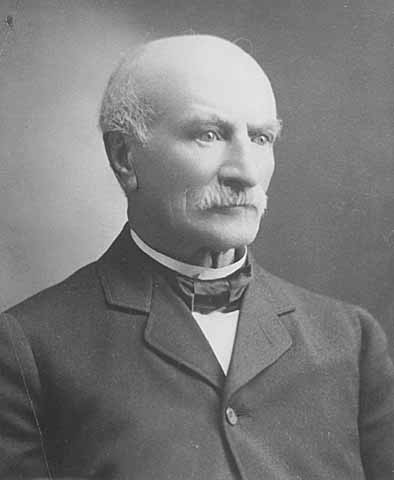
William W. Mayo
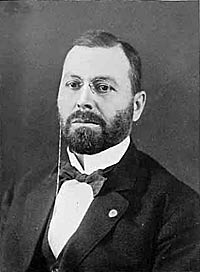
Charles F. Menninger

William W. Mayo, with his two sons, William J. Mayo and Charles H. Mayo, built St. Mary’s, the first general hospital in Minnesota. When a devastating tornado struck Rochester, Minnesota, in August 1883, the Mayos joined with the Sisters of St. Francis to respond to the disaster. This partnership between the Episcopalian Mayos and the Roman Catholic Sisters raised a few eyebrows, but became well known for a new type of patient care that emphasized the whole person, spiritually as well as physically.

Building on a vision of doctors working as a team with other medical professionals, not as solo diagnosticians, the Mayos aggressively opened their doors to other doctors and medical researchers. St. Mary’s Hospital and what would become The Mayo Clinic became a model for integrating person-centered medical care with the best in cutting edge scientific and medical research. The Mayo Clinics continue today as outstanding centers for patient care and medical research.

Charles F. Menninger, together with his sons, Karl and William, were pioneers in establishing a new kind of psychiatric treatment facility in Topeka, Kansas, founded in 1925. They played a major role in transforming the care of the mentally ill in ways that were not only more medically effective, but were also more humane. Among the notable accomplishments of the Menninger Clinic has been its advocacy for better treatment and a more informed public policy in support of the needs of the mentally ill.

In 1973, Dr. Karl Menninger wrote the influential book Whatever Became of Sin? The work looks at sin—personal, corporate, and systemic—and insists that recognizing sin, within us and among us, is a key component in personal and relational health. He believed strongly that naming sin and dealing with its consequences contributes positively to good health in persons and in communities. The book was a standard textbook in theological seminaries for a generation or more.

The work of the Mayos and Menningers was transformative because of their commitment to treating the whole person—physically, emotionally, and spiritually.

Collects

I     Divine Physician, your Name is blessed for the work and witness of the Mayos and the Menningers, and the revolutionary developments that they brought to the practice of medicine. As Jesus went about healing the sick as a sign of the reign of God come near, bless and guide all those inspired to the work of healing by thy Holy Spirit, that they may follow his example for the sake of thy kingdom and the health of thy people; through the same Jesus Christ, who with thee and the Holy Spirit liveth and reigneth, one God, now and for ever.  Amen.

II     Divine Physician, we bless your Name for the work and witness of the Mayos and the Menningers, and the revolutionary developments that they brought to the practice of medicine. As Jesus went about healing the sick as a sign of the reign of God come near, bless and guide all those inspired to the work of healing by your Holy Spirit, that they may follow his example for the sake of your kingdom and the health of your people; through the same Jesus Christ, who with you and the Holy Spirit lives and reigns, one God, now and for ever.  Amen.

Lessons

Sirach (Ecclesiasticus) 38:1-8

Acts 5:12-16

Luke 8:40-46

Psalm 91:9-14

Preface of the Epiphany

From Holy, Women, Holy Men: Celebrating the Saints © 2010 by The Church Pension Fund. Used by permission.

* * *

We invite your reflections about this commemoration and its suitability for the official calendar and worship of The Episcopal Church. How did this person’s life witness to the Gospel? How does this person inspire us in Christian life today?

To post a comment, your first and last name and email address are required. Your name will be published; your email address will not. The first time you post, a moderator will need to approve your submission; after that, your comments will appear instantly.


March 4: Paul Cuffee, Witness to the Faith among the Shinnecock, 1812

Welcome to the Holy Women, Holy Men blog! We invite you to read about this commemoration, use the collect and lessons in prayer, whether individually or in corporate worship, then tell us what you think. For more information about this project, click here.

About This Commemoration

Born in 1757, Paul Cuffee was converted to Christianity in his early twenties. He was ordained in the Presbyterian Church becoming a famous preacher and missionary to the native communities around the present-day Mastic Beach, at Hampton Bays, and at Montauk, all on Long Island, New York. Known as “Priest Paul,” Cuffee was instrumental in working for the survival of native tribes. He demonstrated particular gifts in bringing together a strong witness to the Christian faith in dialogue with those who held traditional native beliefs.

Paul Cuffee strengthened the permanent presence of Native Americans in the area by establishing prayer meeting grounds in several locations. These became safe havens for diplomatic talks and places where native people could practice spiritually. He was a faithful advocate for his people and their way of life. Among the fruits of his efforts was the development of many allies of European descent, thus helping to ensure that Native Americans on Long Island could retain what little land they had left. Part of Cuffee’s legacy can still be seen in the ceremonial “June Meeting” for the Shinnecock tribe that includes a Christian worship service, a tradition that continues to this day. Paul Cuffee is remembered for being a “most eloquent speaker” and is mentioned in Uncle Tom’s Cabin, the famous anti-slavery novel by Harriet Beecher Stowe.

Priest Paul is buried on a tiny plot of land at Canoe Place in Hampton Bays, his historic gravesite diminished by development on the Long Island Railroad. His descendants  continue mission work in the area that is a direct result of Priest Paul’s efforts. His gravestone reads, “Erected by the New York Missionary Society, in memory of the Rev. Paul Cuffee, an Indian of the Shinnecock tribe, who was employed by the Society for the last thirteen years of his life, on the eastern part of Long Island, where he labored with fidelity and success. Humble, pious and indefatigable in testifying the gospel of the grace of God, he finished his course with joy on the 7th of March, 1812, aged 55 years and 3 days.”

Collects

I    Almighty God, who didst empower Paul Cuffee to be a powerful evangelist and preacher and so to win many souls for Christ among the Native Americans of Long Island: Help us to proclaim thy Word with power, in the Name of the same Jesus Christ; who with thee and the Holy Spirit liveth and reigneth, one God, for ever and ever. Amen.

II     Almighty God, you empowered Paul Cuffee to be a powerful evangelist and preacher and so to win many souls for Christ among the Native Americans of Long Island: Help us to proclaim your Word with power, in the Name of the same Jesus Christ; who with you and the Holy Spirit lives and reigns, one God, for ever and ever. Amen.

Lessons

Isaiah 55: 1-5

Colossians 3: 12-17

John 16: 16-24

Psalm 100

Preface of Apostles

From Holy, Women, Holy Men: Celebrating the Saints © 2010 by The Church Pension Fund. Used by permission.

* * *

We invite your reflections about this commemoration and its suitability for the official calendar and worship of The Episcopal Church. How did this person’s life witness to the Gospel? How does this person inspire us in Christian life today?

To post a comment, your first and last name and email address are required. Your name will be published; your email address will not. The first time you post, a moderator will need to approve your submission; after that, your comments will appear instantly.


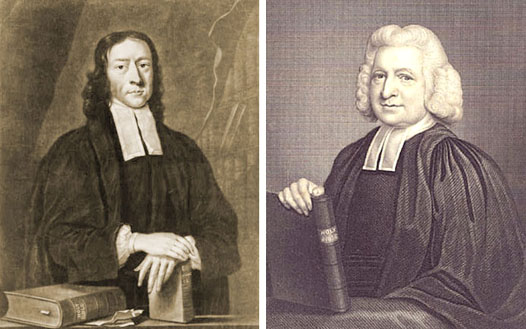
March 3: John and Charles Wesley, Priests, 1791, 1788

Welcome to the Holy Women, Holy Men blog! We invite you to read about this commemoration, use the collect and lessons in prayer, whether individually or in corporate worship, then tell us what you think. For more information about this project, click here.


John (left) and Charles Wesley

John was the fifteenth, and Charles the eighteenth, child of Samuel Wesley, Rector of Epworth, Lincolnshire. John was born June 17, 1703, and Charles, December 18, 1707.

The lives and fortunes of the brothers were closely intertwined. As founders and leaders of the “Methodist” or evangelical revival in eighteenth-century England, their continuing influence redounds throughout the world and is felt in many Churches.

Although their theological writings and sermons are still widely appreciated, it is through their hymns—especially those of Charles, who wrote over six thousand of them—that their religious experience, and their Christian faith and life, continue to affect the hearts of many. Both brothers were profoundly attached to the doctrine and worship of the Church of England; and no amount of abuse and opposition to their cause and methods ever shook their confidence in, and love of it.

Both Wesleys were educated at Christ Church, Oxford. It was there that they gathered a few friends to join in strict adherence to the worship and discipline of the Prayer Book, and were thus given the name “Methodists.” John was ordained in 1728 and Charles in 1735.

The two brothers went together to Georgia in 1735, John as a missionary of the Society for the Propagation of the Gospel, and Charles as secretary to James Oglethorpe, the Governor.

Shortly after their return to England, they both experienced an inner conversion, Charles on May 21, 1738, and John on May 24, at a meeting in Aldersgate Street with a group of Moravians, during a reading of Luther’s Preface to the Epistle to the Romans. John recorded, “I felt my heart strangely warmed. I felt I did trust in Christ, Christ alone, for salvation; and an assurance was given me that he had taken away my sins, even mine, and saved me from the law of sin and death.” So the revival was born.

The later schism of the Methodists from the Church of England occurred after the death of the two brothers—Charles on March 29, 1788, and John on March 2, 1791—but John’s uncanonical ordinations of “elders” for America (bitterly opposed by Charles) doubtless set the basis for it.

Collects

I     Lord God, who didst inspire thy servants John and Charles Wesley with burning zeal for the sanctification of souls, and didst endow them with eloquence in speech and song: Kindle in thy Church, we beseech thee, such fervor, that those whose faith has cooled may be warmed, and that those who have not known thy Christ may turn to him and be saved; who liveth and reigneth with thee and the Holy Spirit, one God, now and for ever.  Amen.

II     Lord God, you inspired your servants John and Charles Wesley with burning zeal for the sanctification of souls, and endowed them with eloquence in speech and song: Kindle in your Church, we entreat you, such fervor, that those whose faith has cooled may be warmed, and those who have not known Christ may turn to him and be saved; who lives and reigns with you and the Holy Spirit, one God, now and for ever.  Amen.

Lessons

Isaiah 49: 5-6

Romans 12: 11-17

Luke 9: 2-6

Psalm 103: 1-4, 13-18

Preface of Pentecost

From Holy, Women, Holy Men: Celebrating the Saints © 2010 by The Church Pension Fund. Used by permission.

* * *

We invite your reflections about this commemoration and its suitability for the official calendar and worship of The Episcopal Church. How did this person’s life witness to the Gospel? How does this person inspire us in Christian life today?

To post a comment, your first and last name and email address are required. Your name will be published; your email address will not. The first time you post, a moderator will need to approve your submission; after that, your comments will appear instantly.


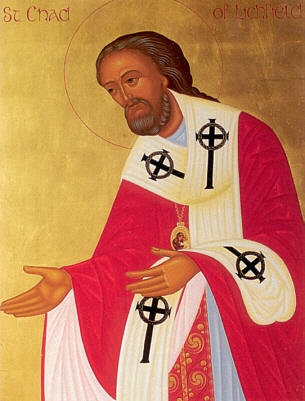
March 2: Chad, Bishop of Lichfield, 672

Welcome to the Holy Women, Holy Men blog! We invite you to read about this commemoration, use the collect and lessons in prayer, whether individually or in corporate worship, then tell us what you think. For more information about this project, click here.

About this Commemoration

One of four brothers dedicated to service in the Church, Chad was trained by Aidan of Lindisfarne as a follower of the Celtic tradition in ritual. His elder brother Cedd, a godly and upright man, had built a monastery at Lastingham, where he governed as abbot. At his death, Cedd left the abbacy to Chad. According to the Venerable Bede, Chad was “a holy man, modest in his ways, learned in the Scriptures, and zealous in carrying out their teaching.”

Impressed by Chad’s qualities, the King appointed him Bishop of York. Chad was ordained by “bishops of the British race who had not been canonically ordained,” Bede tells us. Chad was, Bede also notes, “a man who kept the Church in truth and purity, humility, and temperance.” Following apostolic example, he traveled about his diocese on foot.

The new Archbishop of Canterbury, Theodore, arrived in England four years after Chad’s ordination as bishop. Theodore made it clear that Chad’s ordination had been irregular, that is, not according to Roman custom; and Chad most humbly offered to resign from office. “Indeed, I never believed myself worthy of it,” he said.

Theodore, impressed by such humility, reordained him, and appointed him Bishop of Mercia and Northumbria. Chad continued his custom of traveling on foot, until Theodore ordered him to ride, at least on longer journeys. When Chad hesitated, the Archbishop is said to have lifted him bodily onto the horse, “determined to compel him to ride when the need arose.”

Chad administered his new diocese with devout concern. He built a monastery, and established monastic rule at Barrow. In his see city of Lichfield, where he had an official dwelling, he preferred to read and meditate in a small house he had built nearby.

Two and one-half years after his reordination, plague broke out, killing many residents of the diocese including Chad himself, whose death Bede describes thus: “He joyfully beheld … the day of the Lord, whose coming he had always anxiously awaited. He was mindful to his end of all that the Lord did.” He was buried at the Cathedral Church of St. Peter in Lichfield.

Collects

I     Almighty God, whose servant Chad, for the peace of the Church, relinquished cheerfully the honors that had been thrust upon him, only to be rewarded with equal responsibility: Keep us, we pray thee, from thinking of ourselves more highly than we ought to think, and ready at all times to step aside for others, that the cause of Christ may be advanced; through the same Jesus Christ our Lord, who liveth and reigneth with thee and the Holy Spirit, one God, now and for ever.  Amen.

II     Almighty God, for the peace of the Church your servant Chad relinquished cheerfully the honors that had been thrust upon him, only to be rewarded with equal responsibility: Keep us, we pray, from thinking of ourselves more highly than we ought to think, and ready at all times to step aside for others, that the cause of Christ may be advanced; through him who lives and reigns with you and the Holy Spirit, one God, now and for ever. Amen.

Lessons

Proverbs 16:1-3

Philippians 4:10-13

Luke 14:1, 7-14

Psalm 95:1-7

Preface of a Saint (2)

From Holy, Women, Holy Men: Celebrating the Saints © 2010 by The Church Pension Fund. Used by permission.

* * *

We invite your reflections about this commemoration and its suitability for the official calendar and worship of The Episcopal Church. How did this person’s life witness to the Gospel? How does this person inspire us in Christian life today?

To post a comment, your first and last name and email address are required. Your name will be published; your email address will not. The first time you post, a moderator will need to approve your submission; after that, your comments will appear instantly.


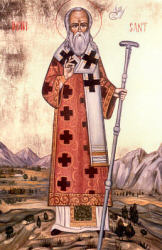
March 1: David, Bishop of Menevia, Wales, c.544

Welcome to the Holy Women, Holy Men blog! We invite you to read about this commemoration, use the collect and lessons in prayer, whether individually or in corporate worship, then tell us what you think. For more information about this project, click here.


About This Commemoration

Despite the overwhelming victory of the pagan Angles, Saxons, andJutes in the fifth century, one part of Britain continued in the ways of Christianity—Wales, the land west of the Wye River. In this last stronghold of the old Britons, the faith sprung from Glastonbury continued to flourish.

To the family of one Sanctus in Menevia there was born a son David (“the beloved”). Little is known of his early life, but while fairly young he founded a monastery, near Menevia and became its abbot. He was later elected bishop. His strongest desire was to study and meditate in the quiet of his monastery, but he was virtually dragged to an assembly of bishops called to combat the heresy of Pelagianism. Once there, David proved to be so eloquent and learned that Archbishop Dubricius chose him as his own successor as Primate of Wales. In time, David founded eleven other monasteries in Wales, and made a pilgrimage to Jerusalem.

He is said to have been strict in the governing of his own monastery at Menevia, yet loving in his treatment and correction of wrongdoers. One of his nicknames, “the Waterman,” may indicate that he allowed the monks in his care to drink only water at meals instead of the customary wine or mead.

A scholar, a competent administrator, and a man of moderation, David filled the offices he held with distinction. He became a leaderand guardian of the Christian faith in Wales. Eventually he moved the center of episcopal government to Menevia, which is still an episcopal city, now called Ty-Dewi (House of David).

Some facts of his life can be historically established. Among them is that toward the end of his life he had several Irish saints as his pupils at the monastery. In legend—and many legends surround his life— David is clearly the foremost saint of Wales. He is revered and loved to this day as patron of Wales, foremost Christian priest, and courageous leader.

Collects

I    Almighty God, who didst call thy servant David to be a faithful and wise steward of thy mysteries for the people of Wales: Mercifully grant that, following his purity of life and zeal for the Gospel of Christ, we may with him receive our heavenly reward; through Jesus Christ our Lord, who liveth and reigneth with thee and the Holy Spirit, one God, for ever and ever.  Amen.

II    Almighty God, you called your servant David to be a faithful and wise steward of your mysteries for the people of Wales: Mercifully grant that, following his purity of life and zeal for the Gospel of Christ, we may with him receive our heavenly reward; through Jesus Christ our Lord, who lives and reigns with you and the Holy Spirit, one God, for ever and ever.  Amen.

Lessons

Proverbs 15:14-21

1 Thessalonians 2:2b-12

Mark 4:26-29

Psalm 16:5-11

Preface of Apostles

From Holy, Women, Holy Men: Celebrating the Saints © 2010 by The Church Pension Fund. Used by permission.

* * *

We invite your reflections about this commemoration and its suitability for the official calendar and worship of The Episcopal Church. How did this person’s life witness to the Gospel? How does this person inspire us in Christian life today?

To post a comment, your first and last name and email address are required. Your name will be published; your email address will not. The first time you post, a moderator will need to approve your submission; after that, your comments will appear instantly.


February 29: John Cassian, Abbot at Marseilles, 433

Welcome to the Holy Women, Holy Men blog! We invite you to read about this commemoration, use the collect and lessons in prayer, whether individually or in corporate worship, then tell us what you think. For more information about this project, click here.

•   •   •

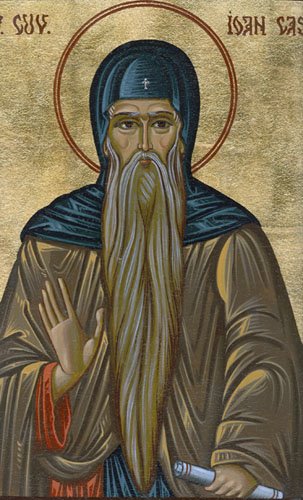
John Cassian

About this Commemoration

John Cassian struggled with the problems of living the Christian life in a time when the world seemed to be falling apart. In so doing, he laid the foundations for what would be the spirituality of the Western Church.

Born Romania around 365, Cassian traveled as a young man to a monastery in Bethlehem and later moved to Egypt where he sought the tutelage of the great founders of the ascetic movement of the desert such as Antony and Macarius.

At the heart of desert monasticism was the idea that the image of God in each person, tarnished by sin but not destroyed, yearns to and has the capacity to love God with the purity of heart with which God loves us. Their aim was to rid themselves of the anxieties and distractions that called their attention away from loving God.

Cassian was initiated into this tradition before political pressures forced him to leave Egypt in about 399. He moved to southern Gaul and there founded a house for monks, and later a house for women religious. Though Cassian’s goal was, like his desert mentors, the perfection of the individual soul, he insisted that no one should embark on a monastic vocation alone. One should enter a house where other monks are pursuing the same goal, live according to a time-tested rule, and thereby gain the guidance and companionship of the community.

Though Cassian remained committed to the desert ideal of individual perfection, his insistence on the necessity of Christian community and loving moderation was the basis for Benedictine monasticism, which eventually became the basic spirituality of the Western Church. It was perhaps a paradox that only in community could the Christian: “lose sight of earthly things in proportion to the inspiration of its purity so that … with the inner gaze of the soul it sees the glorified Jesus coming in the splendor of His majesty.”

Collects

I    Holy and Mighty One, whose beloved Son Jesus Christ blessed the pure in heart: We offer thanks for the life and teachings of John Cassian that draw us to a discipline of holy living for the sake of thy reign. Call us to turn the gaze of the eyes of our soul always toward thee, that we may abide in thy love, shown to us in our Savior Jesus Christ; who with thee and the Holy Spirit is one God, living and true, to the ages of ages. Amen.

II    Holy and Mighty One, whose beloved Son Jesus Christ blessed the pure in heart: We give you thanks for the life and teachings of John Cassian that draw us to a discipline of holy living for the sake of your reign. Call us to turn the gaze of the eyes of our soul always toward you, that we may abide in your love, shown to us in our Savior Jesus Christ; who with you and the Holy Spirit is one God, living and true, to the ages of ages. Amen.

Lessons

2 Kings 2:9–15

1 John 3:1–3

John 1:1–14

Psalm 145:1–7

Preface of Lent (1)

Text from Holy Women, Holy Men: Celebrating the Saints © 2010 by The Church Pension Fund. Used by permission.

•   •   •

We invite your reflections about this commemoration and its suitability for the official calendar and worship of The Episcopal Church. How did this person’s life witness to the Gospel? How does this person inspire us in Christian life today?

If you’d like to participate in the official online trial use survey, click here. For more information about the survey, click here.

To post a comment, your first and last name and email address are required. Your name will be published; your email address will not. The first time you post, a moderator will need to approve your submission; after that, your comments will appear instantly.
February 28: Anna Julia Haywood Cooper and Elizabeth Evelyn Wright, Educators, 1964, 1904

Welcome to the Holy Women, Holy Men blog! We invite you to read about this commemoration, use the collect and lessons in prayer, whether individually or in corporate worship, then tell us what you think. For more information about this project, click here.

•   •   •

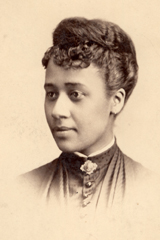
Anna Julia Haywood Cooper

Elizabeth Evelyn Wright

About this Commemoration

Anna Julia Haywood Cooper was born about 1859 in Raleigh, North Carolina, to an enslaved woman and a white man, presumably her mother’s master. She attended St. Augustine Normal School and Collegiate Institute, founded by the Episcopal Church to educate African American teachers and clergy. There she became an Episcopalian and married George Cooper, one of her instructors, who was the second African American ordained to the Episcopal priesthood in North Carolina.

Widowed in 1879, Cooper received degrees from Oberlin College, and was made principal of the African American high school in Washington, D.C. Denied reappointment in 1906 because she refused to lower her educational standards. Cooper emphasized the importance of equal education for African Americans. An advocate for African American women, Cooper assisted in organizing the Colored Women’s League and the first Colored Settlement House in Washington, D.C.

At the age of 65, in 1925, Cooper became the fourth African American woman to complete a doctorate, granted by the Sorbonne in Paris. From 1930-1942, she served as President of Freylinghuysen University. She died at the age of 104.

Elizabeth Evelyn Wright was born in Talbotton, Georgia, in 1872. Her father was an African American and her mother of Cherokee descent.

With the encouragement of her teachers, Lizzie, as she was called, enrolled at Tuskegee Institute in Alabama. She worked for the school during the day and attended night classes, but Olivia Washington, wife of the head of Tuskegee, Booker T. Washington, noted her promise and strength of character. Mrs. Washington made it possible for Lizzie to attend day classes.

Wright interrupted her studies and went to Hampton County, South Carolina, to establish a school for rural black children. Arsonists thwarted her efforts and she returned to Tuskegee to finish her degree, graduating in 1894. She returned to Hampton County to re-start her school, but once again her efforts were turned back. Together with two colleagues, Jessie Dorsey and Hattie Davidson, she ventured to friendlier territory near Denmark in 1897. There she started the Denmark Industrial Institute, modeled after Tuskegee. It continues today as Voorhees College, affiliated with the Episcopal Church.

Collects

I    Eternal God, who didst inspire Anna Julia Haywood Cooper and Elizabeth Evelyn Wright with the love of learning and the joy of teaching: Help us also to gather and use the resources of our communities for the education of all thy children; through Jesus Christ our Savior, who liveth and reigneth with thee and the Holy Spirit, one God, for ever and ever. Amen.

II    Eternal God, you inspired Anna Julia Haywood Cooper and Elizabeth Evelyn Wright with the love of learning and the joy of teaching: Help us also to gather and use the resources of our communities for the education of all your children; through Jesus Christ our Savior, who lives and reigns with you and the Holy Spirit, one God, for ever and ever. Amen.

Lessons

Proverbs 9:1–6

1 Timothy 4:6–16

Luke 4:14–21

Psalm 78:1–7

Preface of a Saint (3)

Text from Holy Women, Holy Men: Celebrating the Saints © 2010 by The Church Pension Fund. Used by permission.

•   •   •

We invite your reflections about this commemoration and its suitability for the official calendar and worship of The Episcopal Church. How did this person’s life witness to the Gospel? How does this person inspire us in Christian life today?

If you’d like to participate in the official online trial use survey, click here. For more information about the survey, click here.

To post a comment, your first and last name and email address are required. Your name will be published; your email address will not. The first time you post, a moderator will need to approve your submission; after that, your comments will appear instantly.