Close

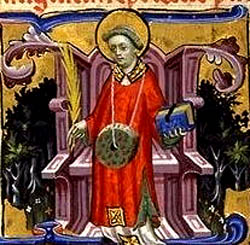
January 22: Vincent, Deacon of Saragossa and Martyr, 304

Welcome to the Holy Women, Holy Men blog! We invite you to read about this commemoration, use the collect and lessons in prayer, whether individually or in corporate worship, then tell us what you think. For more information about this project, click here.

###
About this Commemoration

Vincent has been called the protomartyr of Spain. Little is known about the actual events surrounding his life, other than his name, his order of ministry, and the place and time of his martyrdom. He was a native of Huesca, in northeastern Spain, and was ordained deacon byValerius, Bishop of Saragossa. In the early years of the fourth century, the fervent Christian community in Spain fell victim to a persecution ordered by the Roman emperors Diocletian and Maximian. Dacian, governor of Spain, arrested Valerius and his deacon Vincent, and had them imprisoned at Valencia.

According to one legend, Valerius had a speech impediment, and Vincent was often called upon to preach for him. When the two prisoners were challenged to renounce their faith, amid threats of torture and death, Vincent said to his bishop, “Father, if you order me, I will speak.” Valerius is said to have replied, “Son, as I committed you to dispense the word of God, so I now charge you to answer in vindication of the faith which we defend.” The young deacon then told the governor that he and his bishop had no intention of betraying the true God. The vehemence and enthusiasm of Vincent’s defense showed no caution in his defiance of the judges, and Dacian’s fury was increased by this exuberance in Christian witness. Valerius was exiled, but the angry Dacian ordered that Vincent be tortured.

Although the accounts of his martyrdom have been heavily embellished by early Christian poets, Augustine of Hippo writes that Vincent’s unshakeable faith enabled him to endure grotesque punishments and, finally, death.

Records of the transfer and present whereabouts of Vincent’s relics are of questionable authenticity. We are certain, however, that his cult spread rapidly throughout early Christendom and that he was venerated as a bold and outspoken witness to the truth of the living Christ.

Collects

i Almighty God, whose deacon Vincent, upheld by thee,was not terrified by threats nor overcome by torments: Strengthen us, we beseech thee, to endure all adversity with invincible and steadfast faith; through Jesus Christ our Lord, who liveth and reigneth with thee and the Holy Spirit, one God, for ever and ever. Amen.

ii Almighty God, your deacon Vincent, upheld by you,was not terrified by threats nor overcome by torments: Strengthen us to endure all adversity with invincible and steadfast faith; through Jesus Christ our Lord, who lives and reigns with you and the Holy Spirit, one God, for ever and ever. Amen.

Lessons

Jeremiah 26:12–15

Revelation 7:13–17

Luke 12:4–12

Psalm

116:10–17

Preface of  a Saint (3)

Text from Holy, Women, Holy Men: Celebrating the Saints © 2010 by The Church Pension Fund. Used by permission.

###

We invite your reflections about this commemoration and its suitability for the official calendar and worship of The Episcopal Church. How did this person’s life witness to the Gospel? How does this person inspire us in Christian life today?

If you’d like to participate in the official online trial use survey, click here. For more information about the survey, click here.

To post a comment, your first and last name and email address are required. Your name will be published; your email address will not. The first time you post, a moderator will need to approve your submission; after that, your comments
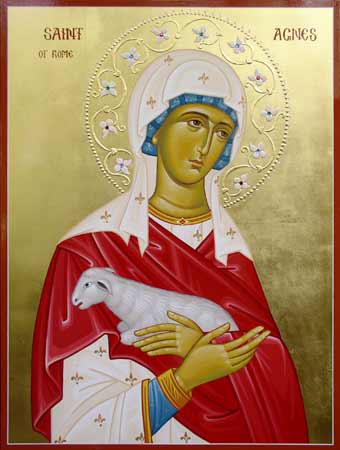
 

January 21: Agnes, Martyr at Rome, 304

Welcome to the Holy Women, Holy Men blog! We invite you to read about this commemoration, use the collect and lessons in prayer, whether individually or in corporate worship, then tell us what you think. For more information about this project, click here.

###

About this Commemoration

As a child of twelve years, Agnes suffered for her faith, in Rome, during the cruel persecution of the Emperor Diocletian. After rejecting blandishments and withstanding threats and tortures by her executioner, she remained firm in refusal to offer worship to the heathen gods, and was burned at the stake—or, according to another early tradition, was beheaded with the sword. The early Fathers of the Church praised her courage and chastity, and remarked upon her name, which means “pure” in Greek and “lamb” in Latin.

Pilgrims still visit Agnes’ tomb and the catacomb surrounding it,  beneath the basilica of her name on the Via Nomentana in Rome that Pope Honorius I (625–638) built in her honor to replace an older shrine erected by the Emperor Constantine. On her feast day at the basilica, two lambs are blessed, whose wool is woven into a scarf called the pallium, with which the Pope invests archbishops. Pope Gregory the Great sent such a pallium in 601 to Augustine, the first Archbishop of Canterbury. A representation of the pall appears on the coat of arms of Archbishops of Canterbury to this day.

Collects

i Almighty and everlasting God, who dost choose those whom the world deemeth powerless to put the powerful to shame: Grant us so to cherish the memory of thy youthful martyr Agnes, that we may share her pure and steadfast faith in thee; through Jesus Christ our Lord, who liveth and reigneth with thee and the Holy Spirit, one God, forever and ever. Amen.

ii Almighty and everlasting God, you choose those whom the world deems powerless to put the powerful to shame: Grant us so to cherish the memory of your youthful martyr Agnes, that we may share her pure and steadfast faith in you; through Jesus Christ our Lord, who lives and reigns with you and the Holy Spirit, one God, for ever and ever. Amen.

Lessons

Song of Solomon 2:10–13

2 Corinthians 6:16–18

Matthew 18:1–6

Psalm

45:11–16

Preface of  a Saint (3)

Text from Holy, Women, Holy Men: Celebrating the Saints © 2010 by The Church Pension Fund. Used by permission.

###

We invite your reflections about this commemoration and its suitability for the official calendar and worship of The Episcopal Church. How did this person’s life witness to the Gospel? How does this person inspire us in Christian life today?

If you’d like to participate in the official online trial use survey, click here. For more information about the survey, click here.

To post a comment, your first and last name and email address are required. Your name will be published; your email address will not. The first time you post, a moderator will need to approve your submission; after that, your comments will appear instantly.
 

January 20: Fabian, Bishop and Martyr of Rome, 250

Welcome to the Holy Women, Holy Men blog! We invite you to read about this commemoration, use the collect and lessons in prayer, whether individually or in corporate worship, then tell us what you think. For more information about this project, click here.

###

About this Commemoration

In 236, an assembly was held at Rome to elect a pope as successor to Antherus. In the throng was Fabian, a layman from another part of Italy. Suddenly, according to the historian Eusebius, a dove flew over the crowd and lighted on Fabian’s head.  In spite of the fact that he was both a total stranger and not even a candidate for election, the people unanimously chose Fabian to be pope, shouting, “He is worthy! He is worthy!” Fabian was ordained to the episcopate without opposition.

During his fourteen years as pontiff, Fabian made numerous administrative reforms.  He developed the parochial structure of the Church in Rome, and established the custom of venerating martyrs at their shrines in the catacombs. He appointed seven deacons and seven sub-deacons to write the lives of the martyrs, so that their deeds should not be forgotten in times to come.

When Privatus, in Africa, stirred up a new heresy, Fabian vigorously opposed and condemned his actions. He also brought back to Rome, for proper burial, the remains of Pontian, a pope whom the emperor had exiled in 235 to a certain and rapid death in the mines of Sardinia.

The Emperor Decius ordered a general persecution of the Church in 239 and 240, probably the first persecution to be carried out in all parts of the empire. Fabian was one of the earliest of those martyred, setting a courageous example for his followers, many of whom died in great torment.

Cyprian of Carthage, in a letter to Cornelius, Fabian’s successor, wrote that Fabian was an incomparable man. “The glory of his death,” Cyprian commented, “befitted the purity and holiness of his life.”

Fabian’s tombstone, the slab which covered his grave site, still exists. It is in fragments, but the words “Fabian … bishop … martyr” are still dimly visible.

Collects

i Almighty God, who didst call Fabian to be a faithful pastor and servant of thy people, and to lay down his life in witness to thy Son: Grant that we, strengthened by his example and aided by his prayers, may in times of trial and persecution remain steadfast in faith and endurance, for the sake of him who laid down his life for us all, Jesus Christ our Savior; who liveth and reigneth with thee and the Holy Spirit, one God, for ever and ever. Amen.

ii Almighty God, you called Fabian to be a faithful pastor and servant of your people, and to lay down his life in witness to your Son: Grant that we, strengthened by his example and aided by his prayers, may in times of trial and persecution remain steadfast in faith and endurance, for the sake of him who laid down his life for us all, Jesus Christ our Savior; who lives and reigns with you and the Holy Spirit, one God, for ever and ever. Amen.

Lessons

2 Esdras 2:42–48

1 Corinthians 15:31–36,44b–49

Luke 21:20–24

Psalm

126

Preface of  a Saint (3)

Text from Holy, Women, Holy Men: Celebrating the Saints © 2010 by The Church Pension Fund. Used by permission.

###

We invite your reflections about this commemoration and its suitability for the official calendar and worship of The Episcopal Church. How did this person’s life witness to the Gospel? How does this person inspire us in Christian life today?

If you’d like to participate in the official online trial use survey, click here. For more information about the survey, click here.

To post a comment, your first and last name and email address are required. Your name will be published; your email address will not. The first time you post, a moderator will need to approve your submission; after that, your comments will appear instantly.
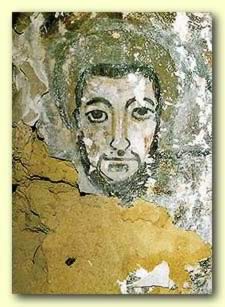
 

January 19: Wulfstan, Bishop of Worcester, 1095

Welcome to the Holy Women, Holy Men blog! We invite you to read about this commemoration, use the collect and lessons in prayer, whether individually or in corporate worship, then tell us what you think. For more information about this project, click here.

###

About this Commemoration

Wulfstan was one of the few Anglo-Saxon bishops to retain his see after the Norman Conquest of England in 1066. Beloved by all classes of society for his humility, charity, and courage, he was born in Warwickshire about 1008, and educated in the Benedictine abbeys of Evesham and Peterborough. He spent most of his life in the cathedral monastery of Worcester as monk, prior, and then as bishop of the see from 1062 until his death on January 18, 1095.  He accepted the episcopate with extreme reluctance, but having resigned himself to it, he administered the diocese with great effectiveness. Since the see of Worcester was claimed by the province of York before its affiliation as a suffragan see of Canterbury in 1070, Wulfstan was consecrated at York. As bishop, he rapidly became famous for his continued monastic asceticism and personal sanctity.

Even though Wulfstan had been sympathetic to King Harold of Wessex, he was among those who submitted to William the Conqueror at Berkhamstead in 1066. He therefore was allowed to retain his see. At first, the Normans tended to disparage him for his lack of learning and his inability to speak French, but he became one of William’s most trusted advisers and administrators, and remained loyal in support of William I and William II in their work of reform and orderly government. He assisted in the compilation of the Domesday Book, and supported William I against the rebellious barons in 1075.  William came to respect a loyalty based on principle and not on self-seeking.  Archbishop Lanfranc also recognized the strength of  Wulfstan’s character, and the two men worked together to end the practice at Bristol of kidnaping Englishmen and selling them as slaves in Ireland.

Because he was the most respected prelate of the Anglo-Saxon Church, Wulfstan’s profession of canonical obedience to William the Conqueror’s Archbishop of Canterbury, Lanfranc, proved to be a key factor in the transition from Anglo-Saxon to Anglo-Norman Christianity. William’s policy, however, was to appoint his own fellow-Normans to the English episcopate, and by the time of William’s death, in 1087, Wulfstan was the only English-born bishop still living.

Collects

i Almighty God, whose only-begotten Son hath led captivity captive and given gifts to thy people: Multiply among us faithful pastors, who, like thy holy bishop Wulfstan, will give courage to those who are oppressed and held in bondage; and bring us all, we pray, into the true freedom of thy kingdom; through Jesus Christ our Lord, who liveth and reigneth with thee and the Holy Spirit, one God, forever and ever. Amen.

ii Almighty God, your only-begotten Son led captivity captive and gave gifts to your people: Multiply among us faithful pastors, who, like your holy bishop Wulfstan, will give courage to those who are oppressed and held in bondage; and bring us all, we pray, into the true freedom of your kingdom; through Jesus Christ our Lord, who lives and reigns with you and the Holy Spirit, one God, for ever and ever. Amen.

Lessons

Genesis 26:26–31

1 Corinthians 4:1–5

John 15:5–8, 14–16

Psalm

146:4–9

Preface of  Baptism

Text from Holy, Women, Holy Men: Celebrating the Saints © 2010 by The Church Pension Fund. Used by permission.

###

We invite your reflections about this commemoration and its suitability for the official calendar and worship of The Episcopal Church. How did this person’s life witness to the Gospel? How does this person inspire us in Christian life today?

If you’d like to participate in the official online trial use survey, click here. For more information about the survey, click here.

To post a comment, your first and last name and email address are required. Your name will be published; your email address will not. The first time you post, a moderator will need to approve your submission; after that, your comments will appear instantly.
January 17: Antony, Abbot in Egypt, 356

Welcome to the Holy Women, Holy Men blog! We invite you to read about this commemoration, use the collect and lessons in prayer, whether individually or in corporate worship, then tell us what you think. For more information about this project, click here.

###

About this Commemoration

In the third century, many young men turned away from the corrupt and decadent society of the time, and went to live in deserts or mountains, in solitude, fasting, and prayer.  Antony of Egypt was an outstanding example of this movement, but he was not merely a recluse. He was a founder of monasticism, and wrote a rule for anchorites. Antony’s parents were Christians, and he grew up to be quiet, devout, and meditative. When his parents died, he and his younger sister were left to care for a sizable estate. Six months later, in church, he heard the reading about the rich young ruler whom Christ advised to sell all he had and give to the poor.  Antony at once gave his land to the villagers, and sold most of his goods, giving the proceeds to the poor. Later, after meditating on Christ’s bidding, “Do not be anxious about tomorrow,” he sold what remained of his possessions, placed his sister in a “house of maidens,” and became an anchorite (solitary ascetic).

Athanasius, who knew Antony personally, writes that he spent his days praying, reading, and doing manual labor. For a time, he was tormented by demons in various guises. He resisted, and the demons fled. Moving to the mountains across the Nile from his village, Antony dwelt alone for twenty years. In 305, he left his cave and founded a“monastery,” a series of cells inhabited by ascetics living under his rule. Athanasius writes of such colonies: “Their cells like tents were filled with singing, fasting, praying, and working that they might give alms, and having love and peace with one another.”

Antony visited Alexandria, first in 321, to encourage those suffering martyrdom under the Emperor Maximinus; later, in 355, to combat the Arians by preaching, conversions, and the working of miracles. Most of his days were spent on the mountain with his disciple Macarius.

He willed a goat-skin tunic and a cloak to Athanasius, who said of him: “He was like a physician given by God to Egypt. For who met him grieving and did not go away rejoicing? Who came full of anger and was not turned to kindness? … What monk who had grown slack was not strengthened by coming to him? Who came troubled by doubts and failed to gain peace of mind?”

Collects

I O God, who by thy Holy Spirit didst enable thy servant Antony to withstand  the temptations of the world, the flesh, and the devil: Give us grace, with pure hearts and minds, to follow thee, the only God; through Jesus Christ our Lord, who liveth and reigneth with thee and the same Spirit, one God, for ever and ever. Amen.

II O God, by your Holy Spirit you enabled your servant Antony to withstand the temptations of the world, the flesh, and the devil: Give us grace, with pure hearts and minds, to follow you, the only God; through Jesus Christ our Lord, who lives and reigns with you and the Holy Spirit, one God, for ever and ever. Amen.

Lessons

1 Kings 17:1–9

1 Peter 5:6–10

Mark 10:17–21

Psalm

91:9–16

Preface of  a Saint (2)

Text from Holy, Women, Holy Men: Celebrating the Saints © 2010 by The Church Pension Fund. Used by permission.

###

We invite your reflections about this commemoration and its suitability for the official calendar and worship of The Episcopal Church. How did this person’s life witness to the Gospel? How does this person inspire us in Christian life today?

If you’d like to participate in the official online trial use survey, click here. For more information about the survey, click here.

To post a comment, your first and last name and email address are required. Your name will be published; your email address will not. The first time you post, a moderator will need to approve your submission; after that, your comments will appear instantly.
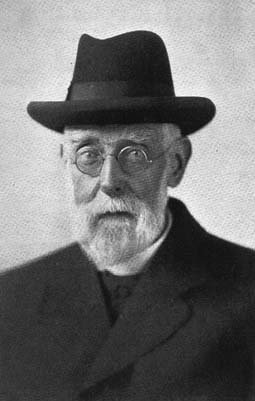
January 16: Richard Meux Benson and Charles Gore, Religious; 1915, Bishop of Worcester, of Birmingham, and of Oxford, 1932

Welcome to the Holy Women, Holy Men blog! We invite you to read about this commemoration, use the collect and lessons in prayer, whether individually or in corporate worship, then tell us what you think. For more information about this project, click here.

###

About this Commemoration

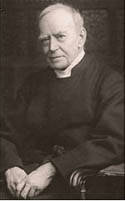
Richard Meux Benson and Charles Gore are remembered for their role in the revival of Anglican monasticism in the nineteenth century.

Richard Meux Benson, the principal founder of the Society of Saint John the Evangelist, was born on July 6, 1824, in London.  As a student at Christ Church, Oxford, he came under the influence of Edward Bouverie Pusey, who became his spiritual mentor and lifelong friend.

In 1849 Benson was ordained a priest and became rector of Cowley, a village neighboring Oxford.  In 1866, together with two other priests, he founded the Society of Saint John the Evangelist (SSJE), “a smallbody to realize and intensify the gifts and energies belonging to the whole Church.” SSJE became the first stable religious communityfor men in the Anglican Church since the Reformation, styled as a missionary order patterned on St. Vincent de Paul’s Company of Mission Priests. A branch house was established in Boston in 1870. In 1874 work began in Bombay, and later Poona.  By 1880 SSJE had opened a mission house in Cape Town, South Africa, and in 1903 in the Transkei.  Benson wrote the original SSJE Rule and served as Superior until 1890.

Charles Gore was born in 1853 in Wimbledon and educated mainly at Oxford. He was ordained in 1876 and served in positions at Cuddeston and Pusey House, Oxford, both of which were focused upon theological education and the formation of clergy. While at Pusey House, Gore founded the Community of the Resurrection, a community for men that sought to combine the rich traditions of the religious life with a lively concern for the demands of ministry in the modern world.

Gore, a prolific writer, was a principal progenitor of liberal Anglo-Catholicism in late nineteenth and early twentieth century Anglicanism. He was concerned to make available to the church the critical scholarship of the age, particularly with respect to the Bible. A second but no less important concern was to prick the conscience of the church and plead for its engagement in the work of social justice for all. Between 1902 and 1919, Gore served successively as bishop of the dioceses of Worcester, Birmingham, and Oxford.

Collects

I Gracious God, who hast inspired a rich variety of ministries in thy Church: We offer thanks for Richard Meux Benson and Charles Gore, instruments in the revival of Anglican monasticism. Grant that we, following their example, may call for perennial renewal in thy Church through conscious union with Christ, witnessing to the social justice that is a mark of the reign of our Savior Jesus, who is the light of the world; and who liveth and reigneth with thee and the Holy Spirit, one God, for ever and ever. Amen.

II Gracious God, you have inspired a rich variety of ministries in your Church: We give you thanks for Richard Meux Benson and Charles Gore, instruments in the revival of Anglican monasticism. Grant that we, following their example, may call for perennial renewal in your Church through conscious union with Christ, witnessing to the social justice that is a mark of the reign of our Savior Jesus, who is the light of the world; and who lives and reigns with you and the Holy Spirit, one God, for ever and ever. Amen.

Lessons

1 Kings 19:9–12

1 John 4:7–12

John 17:6–11

Psalm

27:5–11

Preface of  a Saint (2)

Text from Holy, Women, Holy Men: Celebrating the Saints © 2010 by The Church Pension Fund. Used by permission.

###

We invite your reflections about this commemoration and its suitability for the official calendar and worship of The Episcopal Church. How did this person’s life witness to the Gospel? How does this person inspire us in Christian life today?

If you’d like to participate in the official online trial use survey, click here. For more information about the survey, click here.

To post a comment, your first and last name and email address are required. Your name will be published; your email address will not. The first time you post, a moderator will need to approve your submission; after that, your comments will appear instantly.
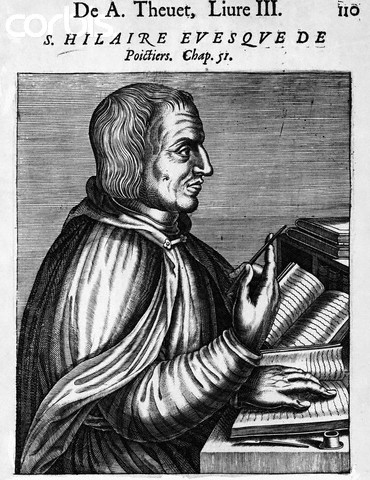
 

January 13: Hilary, Bishop of Poitiers, 367

Welcome to the Holy Women, Holy Men blog! We invite you to read about this commemoration, use the collect and lessons in prayer, whether individually or in corporate worship, then tell us what you think. For more information about this project, click here.

###

About this Commemoration

Hilary, Bishop of Poitiers, was a prolific writer on Scripture and doctrine, an orator, and a poet to whom some of the earliest Latin hymns have been attributed. Augustine called him “the illustrious doctor of the Churches.” Jerome considered him “the trumpet of the Latins against the Arians.”

Hilary was born in Poitiers in Gaul, about 315, into a pagan familyof wealth and power. In his writings, he describes the stages of the spiritual journey that led him to the Christian faith. He was baptized when he was about thirty.

In 350, Hilary was made Bishop of Poitiers. Although he demurred, he was finally persuaded by the people’s acclamations. He proved to be a bishop of skill and courage. His Orthodoxy was shown when, in 355, the Emperor Constantius ordered all bishops to sign a condemnation of Athanasius, under pain of exile.  Hilary wrote to Constantius, pleading for peace and unity. His plea accomplished nothing, and,when he dissociated himself from three Arian bishops in the West, Constantius ordered Julian (later surnamed the Apostate) to exile him to Phrygia. There he remained for three years, without complaining, writing scriptural commentaries and his principal work, On the Trinity.

Hilary was then invited by a party of “semi-Arians,” who hoped for his support, to a Council at Seleucia in Asia, largely attended by Arians; but with remarkable courage, in the midst of a hostile gathering, Hilary defended the Council of Nicaea and the Trinity, giving no aid to the “semi-Arians.” He wrote again to Constantius, offering to debate Saturninus, the Western bishop largely responsible for his exile. The Arians feared the results of such an encounter and persuaded Constantius to return Hilary to Poitiers.

In 360, Hilary was welcomed back to his see with great demonstrations of joy and affection. He continued his battle against Arianism, but he never neglected the needs of his people. Angry in controversy with heretical bishops, he was always a loving and compassionate pastor to his diocese. Among his disciples was Martin, later Bishop of Tours, whom Hilary encouraged in his endeavors to promote the monastic life.

Collects

I O Lord our God, who didst raise up thy servant Hilary to be a champion of the catholic faith: Keep us steadfast in that true faith which we professed at our baptism, that we may rejoice in having thee for our Father, and may abide in thy Son, in the fellowship of the Holy Spirit; thou who livest and reignest for ever and ever. Amen.

II O Lord our God, you raised up your servant Hilary to be a champion of the catholic faith: Keep us steadfast in that true faith which we professed at our baptism, that we may rejoice in having you for our Father, and may abide in your Son, in the fellowship of the Holy Spirit; who live and reign for ever and ever. Amen.

Lessons

Zechariah 6:9–15

1 John 2:18–25

Luke 12:8–12

Psalm

37:3–6,32–33

Preface of  Trinity Sunday

Text from Holy, Women, Holy Men: Celebrating the Saints © 2010 by The Church Pension Fund. Used by permission.

###

We invite your reflections about this commemoration and its suitability for the official calendar and worship of The Episcopal Church. How did this person’s life witness to the Gospel? How does this person inspire us in Christian life today?

If you’d like to participate in the official online trial use survey, click here. For more information about the survey, click here.

To post a comment, your first and last name and email address are required. Your name will be published; your email address will not. The first time you post, a moderator will need to approve your submission; after that, your comments will appear instantly.
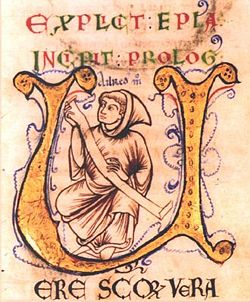
January 12: Aelred, Abbot of Rievaulx, 1167

Welcome to the Holy Women, Holy Men blog! We invite you to read about this commemoration, use the collect and lessons in prayer, whether individually or in corporate worship, then tell us what you think. For more information about this project, click here.

###

About this Commemoration

Aelred was born in 1109, of a family which had long been treasurers of the shrine of Cuthbert of Lindisfarne at Durham Cathedral. While still a youth, he was sent for education in upper-class life to the court of King David of Scotland, son of Queen Margaret. The King’s stepsons Simon and Waldef were his models and intimate friends. After intense disillusion and inner struggle, Aelred went to Yorkshire,where he became a Cistercian monk at the abbey of Rievaulx in 1133.

Aelred soon became a major figure in English church life. Sent toRome on diocesan affairs of Archbishop William of York, he returned by way of Clairvaux. Here he made a deep impression on Bernard, who encouraged the young monk to write his first work, Mirror of Charity, on Christian perfection. In 1143, Aelred led the founding of a new Cistercian house at Revesby. Four years later he was appointed abbot of Rievaulx. By the time of his death from a painful kidney disease in 1167, the abbey had over 600 monks, including Aelred’s biographer and friend, Walter Daniel. During this period, Aelred wrote his best known work, Spiritual Friendship.

Friendship, Aelred teaches, is both a gift from God and a creation of human effort. While love is universal, freely given to all, friendship is a particular love between individuals, of which the example is Jesus and John the Beloved Disciple. As abbot, Aelred allowed his monks to hold hands and give other expressions of friendship. In the spirit of Anselm of Canterbury and Bernard of Clairvaux, Aelred writes:

There are four qualities which characterize a friend: Loyalty, right intention, discretion, and patience. Right intention seeks for nothing other than God and natural good. Discretion brings understanding of what is done on a friend’s behalf, and ability to know when to correct faults. Patience enables one to be justly rebuked, or to bear adversity on another’s behalf. Loyalty guards and protects friendship, in good or bitter times.

Collects

I Almighty God, who didst endow thy abbot Aelred with the gift of Christian friendship and the wisdom to lead others in the way of holiness: Grant to thy people that same spirit of mutual affection, that, in loving one another, we may know the love of Christ and rejoice in the gift of thy eternal goodness; through the same Jesus Christ our Savior, who liveth and reigneth with thee and the Holy Spirit, one God, now and for ever. Amen.

II Almighty God, you endowed the abbot Aelred with the gift of Christian friendship and the wisdom to lead others in the way of holiness: Grant to your people that same spirit of mutual affection, that, in loving one another, we may know the love of Christ and rejoice in the gift of your eternal goodness; through the same Jesus Christ our Savior, who lives and reigns with you and the Holy Spirit, one God, now and for ever. Amen.

Lessons

Ruth 1:15–18

Philippians 2:1–4

Mark 12:28–34a

Psalm

36:5–10

Preface of  of a Saint (2)

Text from Holy, Women, Holy Men: Celebrating the Saints © 2010 by The Church Pension Fund. Used by permission.

###

We invite your reflections about this commemoration and its suitability for the official calendar and worship of The Episcopal Church. How did this person’s life witness to the Gospel? How does this person inspire us in Christian life today?

If you’d like to participate in the official online trial use survey, click here. For more information about the survey, click here.

To post a comment, your first and last name and email address are required. Your name will be published; your email address will not. The first time you post, a moderator will need to approve your submission; after that, your comments will appear instantly.

Hymnal Revision Survey

The Episcopal Church Standing Commission on Liturgy and Music (SCLM) is inviting input and comments about a possible revision of The Hymnal 1982.

An online survey is available until January 31, 2011. The survey was distributed this fall to a stratified random sample of congregations in the Episcopal Church. If you’ve already completed a survey, you don’t need to do it again.

Resolution B004 of the 2009 General Convention “authorize(s) Church Publishing Incorporated, working with the Standing Commission on Liturgy and Music, to conduct a feasibility study on the need for revision of The Hymnal 1982 by speaking to congregations, dioceses and all seminaries of this Church, and to report its findings to the 77th General Convention.”

From the December press release: “The study seeks answers to two basic questions,” said Dr. Matthew J. Price, Church Pension Group Director of Analytical Research.  “First, do the hymnal and the other authorized resources that the Church has for worship music meet the needs of the Church? If the answer to the first question is ‘no’, then the question should be asked as to whether a new Hymnal is the most efficacious means of answering these new needs.”

Following the January 31 deadline, the responses from the initial phase along with the general survey info, will be collated and all data reviewed. These results, along with recommendations for next steps, will be presented to General Convention 2012 as part of the SCLM report.

Theological Principles and Liturgical Principles


The 2009 General Convention of The Episcopal Church acknowledged the changing circumstances in the United States and in other nations, as legislation authorizing or forbidding marriage, civil unions or domestic partnerships for gay and lesbian persons is passed in various civil jurisdictions that call forth a renewed pastoral response from this Church. In light of these circumstances, the General Convention directed the Standing Commission on Liturgy and Music to collect and develop theological and liturgical resources for blessing same-gender relationships. At the same time, we were asked to invite theological reflection from throughout the Anglican communion. The Commission has begun its work by articulating Theological Principles and Liturgical Principles to guide the development of resources.

 # # #

We invite your participation in this dialogue about blessing same-gender relationships. Your responses and observations here will help inform the work of the Standing Commission on Liturgy and Music in our work of developing theological and liturgical resources for such blessings. We hope that this conversation will also be a way to renew and enliven a shared vision of the church’s mission in the world.

To post a comment, your first and last name and email address are required. Your name will be published; your email address will not. The first time you post, a moderator will need to approve your submission; after that, your comments will appear instantly.

Our rules for posting are fairly simple. Express yourself with courtesy, civility, and respect for others, whether or not you agree with them.