Welcome to the Holy Women, Holy Men blog! We invite you to read about this commemoration, use the collect and lessons in prayer, whether individually or in corporate worship, then tell us what you think. For more information about this project, click here.
###
 About this Commemoration
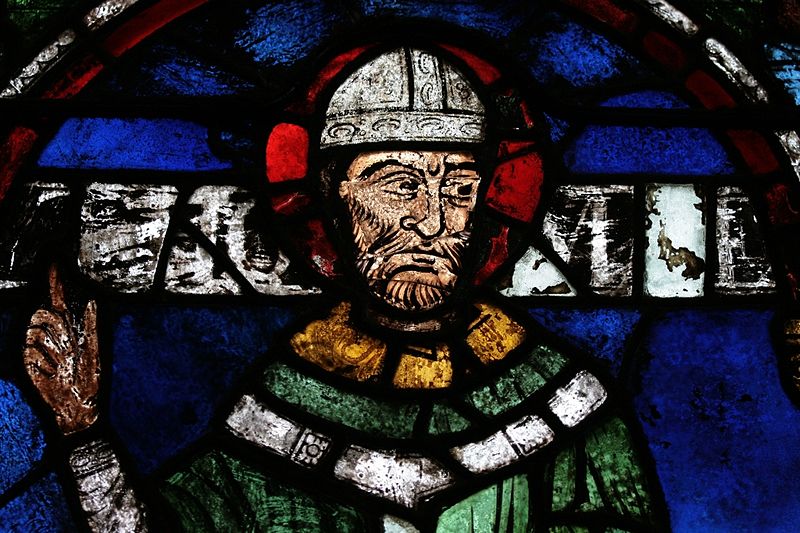
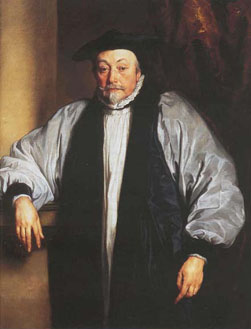
William Laud, born in 1573, became Archbishop of Canterbury in 1633, having been Charles I’s principal ecclesiastical adviser for several years before. He was the most prominent of a new generation of Churchmen who disliked many of the ritual practices which had developed during the reign of Elizabeth I, and who were bitterly opposed by the “Puritans.”
Laud believed the Church of England to be in direct continuity with the medieval Church, and he stressed the unity of Church and State, exalting the role of the king as the supreme governor. He emphasized the priesthood and the Sacraments, particularly the Eucharist, and caused consternation by insisting on the reverencing of the Altar, returning it to its pre-Reformation position against the east wall of the church, and hedging it about with rails.
As head of the courts of High Commission and Star Chamber, Laud was abhorred for the harsh sentencing of prominent Puritans. His identification with the unpopular policies of King Charles, his support of the war against Scotland in 1640, and his efforts to make the Church independent of Parliament, made him widely disliked. He was impeached for treason by the Long Parliament in 1640, and finally beheaded on January 10, 1645.
Laud’s reputation has remained controversial to this day. Honored as a martyr and condemned as an intolerant bigot, he was compassionate in his defense of the rights of the common people against the landowners. He was honest, devout, loyal to the king and to the rights and privileges of the Church of England. He tried to reform and protect the Church in accordance with his sincere convictions. But in many ways he was out of step with the views of the majority of his countrymen, especially about the “Divine Right of Kings.”
He made a noble end, praying on the scaffold: “The Lord receive my soul, and have mercy upon me, and bless this kingdom with peace and charity, that there may not be this effusion of Christian blood amongst them.”
Collects
I Keep us, O Lord, constant in faith and zealous in witness, that, like thy servant William Laud, we may live in thy fear, die in thy favor, and rest in thy peace; for the sake of Jesus Christ thy Son our Lord, who liveth and reigneth with thee and the Holy Spirit, one God, for ever and ever. Amen.
II Keep us, O Lord, constant in faith and zealous in witness, that, like your servant William Laud, we may live in your
fear, die in your favor, and rest in your peace; for the sake of Jesus Christ your Son our Lord, who lives and reigns
with you and the Holy Spirit, one God, for ever and ever. Amen.
Lessons
Isaiah 6:1–8
Hebrews 12:5–7,11–14
Matthew 10:32–39
Psalm
73:24–29
Preface of of a Saint (2)
Text from Holy, Women, Holy Men: Celebrating the Saints © 2010 by The Church Pension Fund. Used by permission.
###
We invite your reflections about this commemoration and its suitability for the official calendar and worship of The Episcopal Church. How did this person’s life witness to the Gospel? How does this person inspire us in Christian life today?
If you’d like to participate in the official online trial use survey, click here. For more information about the survey, click here.
To post a comment, your first and last name and email address are required. Your name will be published; your email address will not. The first time you post, a moderator will need to approve your submission; after that, your comments will appear instantly.