Close

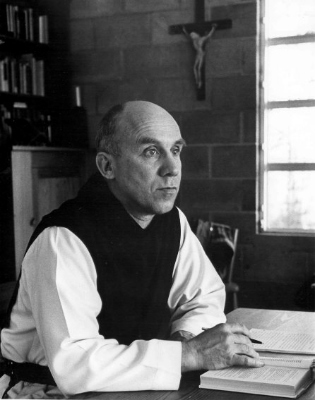
December 10: Thomas Merton, Contemplative and Writer, 1968

Welcome to the Holy Women, Holy Men blog! We invite you to read about this commemoration, use the collect and lessons in prayer, whether individually or in corporate worship, then tell us what you think. For more information about this project, click here.

###
About this commemoration

Thomas Merton was among the most influential Catholic writers of the twentieth century. His writings cover a broad range of subject matter: spirituality and the contemplative life, prayer, and religious biography. He was also deeply interested in issues of social justice and Christian responsibility. He did not shy away from controversy and addressed race relations, economic injustice, war, violence, and the nuclear arms race.

Merton was born in France in 1915. His father was from New Zealand and his mother from the United States. After a brief sojourn in England, where Merton was baptized in the Church of England, the family settled in New York. The birth of his brother, the death of his mother, and the long-distance romances of his father created an unsettling life for Merton for some years.After a brief enrollment at Clare College, Cambridge, Merton settled into life as a student at Columbia University in New York. Merton developed relationships at Columbia that would nurture him for the rest of his life.

Though nominally an Anglican, Merton underwent a dramatic conversion experience in 1938 and became a Roman Catholic. Merton recounts the story of his conversion in The Seven Storey Mountain, an autobiography published in 1948, immediately a classic.

Merton entered the Order of Cistercians of the Strict Observance, the Trappists, at the Abbey of Gethsemani, near Bardstown, Kentucky, in 1941. Known in the community as Brother Louis, Merton’s gifts as a writer were encouraged by the abbot. In addition to his translations of Cistercian sources and his original works Merton carried on a prolific correspondence with people around the world on a wide range of subjects. Some of his correspondence takes the form of spiritual direction, some shows his deep affections for friends outside the community, and much of it demonstrates Merton’s ability to be fully engaged in the world even though he lived a cloistered life.

Merton died in Bangkok, Thailand, on December 10, 1968, by accidental electrocution, while attending a meeting of religious leaders during a pilgrimage to the Far East.

Collects

I Gracious God, who didst call thy monk Thomas Merton
to proclaim thy justice out of silence, and moved him in
his contemplative writings to perceive and value Christ at
work in the faiths of others: Keep us, like him, steadfast in
the knowledge and love of Jesus Christ; who with thee and
the Holy Spirit liveth and reigneth, one God, for ever and
ever. Amen.

II Gracious God, you called your monk Thomas Merton to
proclaim your justice out of silence, and moved him in
his contemplative writings to perceive and value Christ at
work in the faiths of others: Keep us, like him, steadfast
in the knowledge and love of Jesus Christ; who with you
and the Holy Spirit lives and reigns, one God, for ever and
ever. Amen.

Lessons

Isaiah 57:14–19
Colossians 2:2–10
John 12:27–36

Psalm

62

Preface of a Saint (2)

Text from Holy, Women, Holy Men: Celebrating the Saints © 2010 by The Church Pension Fund. Used by permission.

###

We invite your reflections about this commemoration and its suitability for the official calendar and worship of The Episcopal Church. How did this person’s life witness to the Gospel? How does this person inspire us in Christian life today?

If you’d like to participate in the official online trial use survey, click here. For more information about the survey, click here.

To post a comment, your first and last name and email address are required. Your name will be published; your email address will not. The first time you post, a moderator will need to approve your submission; after that, your comments will appear instantly.
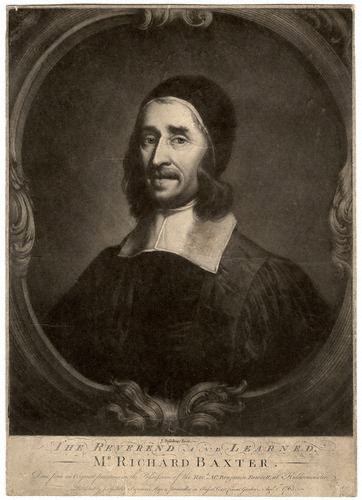
December 8: Richard Baxter, Pastor and Writer, 1691

Welcome to the Holy Women, Holy Men blog! We invite you to read about this commemoration, use the collect and lessons in prayer, whether individually or in corporate worship, then tell us what you think. For more information about this project, click here.

###

About this commemoration

Richard Baxter was born in Shropshire in 1615 and educated in the local schools. He was ordained in 1638 and spent the early years of his ministry as a schoolmaster and curate, becoming a chaplain to the parliamentary army at the outbreak of the English Civil War in 1642. Although aligned with the Puritan cause, Baxter was a moderate and stood against the excessive destructiveness of Cromwell’s legions.

In 1647, Baxter became the Vicar of Kidderminster. It was there that his pastoral ministry thrived. He set up new patterns for parish catechesis, increased the size of parish buildings to welcome the larger numbers coming to hear him preach, and pioneered a style of pastoral ministry that has enriched the Anglican tradition to this day. Baxter provides his own narrative of his pastoral work in his book The Reformed Pastor, of 1656.

When episcopacy was re-established in England after the Civil War, Charles II offered Baxter an appointment to the see of Hereford. Although more moderate than many, Baxter’s Puritan convictions kept him from accepting the post, a decision that made it impossible for him to continue as a priest of the Church of England.

Baxter is remembered in the history of the Book of Common Prayer for the role he played at the Savoy Conference of 1661. There he argued for the changes that needed to be made in the next prayer book from the vantage point of the Puritans, the so-called “Exceptions.”The resulting 1662 Prayer Book shows few of the marks of Baxter’s agenda, but his strong advocacy of the Puritan position certainly influenced the shape of the revision.

From 1662 until his death in 1691, Baxter resided in the environs of London. The re-establishment of the monarchy in the state and episcopacy in the church unfortunately made Baxter, remembered for his moderate Puritan posture, a target of unkindness and petty revenge.

A profound example of Baxter’s deep joy and piety can be found in the words of the hymn Ye holy angels bright (The Hymnal 1982, #625).

Collects

I We offer thanks, most gracious God, for the devoted witness of Richard Baxter, who out of love for thee followed his conscience at cost to himself, and at all times rejoiced to sing thy praises in word and deed; and we pray that our lives, like his, may be well-tuned to sing the songs of love, and all our days be filled with praise of Jesus Christ our Lord; who with thee and the Holy Spirit liveth and reigneth, one God, now and for ever. Amen.

II We give you thanks, most gracious God, for the devoted witness of Richard Baxter, who out of love for you followed his conscience at cost to himself, and at all times rejoiced to sing your praises in word and deed; and we pray that our lives, like his, may be well-tuned to sing the songs of love, and all our days be filled with praise of Jesus Christ our Lord; who with you and the Holy Spirit lives and reigns, one God, now and for ever. Amen.

Lessons

Exodus 20:1–171

Corinthians 9:24–27

Matthew 6:6–15

Psalm

102:11–13,19–22

Preface of a Advent

Text from Holy, Women, Holy Men: Celebrating the Saints © 2010 by The Church Pension Fund. Used by permission.

###

We invite your reflections about this commemoration and its suitability for the official calendar and worship of The Episcopal Church. How did this person’s life witness to the Gospel? How does this person inspire us in Christian life today?

If you’d like to participate in the official online trial use survey, click here. For more information about the survey, click here.

To post a comment, your first and last name and email address are required. Your name will be published; your email address will not. The first time you post, a moderator will need to approve your submission; after that, your comments will appear instantly.

December 7: Ambrose, Bishop of Milan, 397

Welcome to the Holy Women, Holy Men blog! We invite you to read about this commemoration, use the collect and lessons in prayer, whether individually or in corporate worship, then tell us what you think. For more information about this project, click here.

###

Saint Ambrose in His Study, ca. 1500. Spanish, Palencia. Metropolitan Museum of Art, New York City.

About this commemoration

Ambrose was the son of a Roman governor in Gaul, and in 373 he himself was governor in Upper Italy. Though brought up in a Christian family, Ambrose had not been baptized. He became involved in the election of a Bishop of Milan only as mediator between the battling factions of Arians and orthodox Christians. The election was important, because the victorious party would control the powerful see of Milan.

Ambrose exhorted the nearly riotous mob to keep the peace and to obey the law. Suddenly both sides raised the cry, “Ambrose shall be our bishop!” He protested, but the people persisted. Hastily baptized, he was ordained bishop on December 7, 373.

Ambrose rapidly won renown as a defender of orthodoxy against Arianism and as a statesman of the Church. He was also a skillful hymnodist.  He introduced antiphonal chanting to enrich the liturgy, and wrote straightforward, practical discourses to educate his people in such matters of doctrine as Baptism, the Trinity, the Eucharist, and the Person of Christ. His persuasive preaching was an important factor in the conversion of Augustine of Hippo.

Ambrose did not fear to rebuke emperors, including the hot-headed Theodosius, whom he forced to do public penance for the slaughter of several thousand citizens of Salonika. About Baptism, Ambrose wrote: “After the font (of baptism), the Holy Spirit is poured on you, ‘the spirit of wisdom and understanding, the spirit of counsel and strength, the spirit of knowledge and godliness, and the spirit of holy fear’” (De Sacramentis 3.8).

A meditation attributed to him includes these words: “Lord Jesus Christ, you are for me medicine when I am sick; you are my strength when I need help; you are life itself when I fear death; you are the way when I long for heaven; you are light when all is dark; you are my food when I need nourishment.”Among hymns attributed to Ambrose are “The eternal gifts of Christ the King,” “O Splendor of God’s glory bright,” and a series of hymns for the Little Hours.

Collects

I O God, who didst give to thy servant Ambrose grace eloquently to proclaim thy righteousness in the great congregation, and fearlessly to bear reproach for the honor of thy Name: Mercifully grant to all bishops and pastors such excellency in preaching, and fidelity in ministering thy Word, that thy people may be partakers with them of the glory that shall be revealed; through Jesus Christ our Lord,who liveth and reigneth with thee and the Holy Spirit, one God, now and for ever. Amen.

II O God, you gave your servant Ambrose grace eloquently to proclaim your righteousness in the great congregation, and fearlessly to bear reproach for the honor of your Name: Mercifully grant to all bishops and pastors such excellence in preaching and faithfulness in ministering your Word, that your people may be partakers with them of the glory that shall be revealed; through Jesus Christ our Lord, who lives and reigns with you and the Holy Spirit, one God, now and for ever. Amen.

Lessons

Sirach (Ecclesiasticus) 2:7–11,16–18

Acts 4:23–31

Luke 12:35–37,42–44

Psalm

27:5-11

Preface of a Saint (1)

Text from Holy, Women, Holy Men: Celebrating the Saints © 2010 by The Church Pension Fund. Used by permission.

###

We invite your reflections about this commemoration and its suitability for the official calendar and worship of The Episcopal Church. How did this person’s life witness to the Gospel? How does this person inspire us in Christian life today?

If you’d like to participate in the official online trial use survey, click here. For more information about the survey, click here.

To post a comment, your first and last name and email address are required. Your name will be published; your email address will not. The first time you post, a moderator will need to approve your submission; after that, your comments will appear instantly.
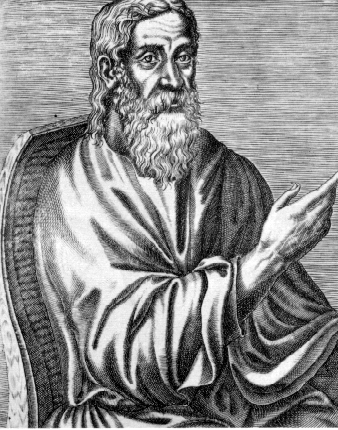
December 6: Nicholas, Bishop of Myra, c. 342

Welcome to the Holy Women, Holy Men blog! We invite you to read about this commemoration, use the collect and lessons in prayer, whether individually or in corporate worship, then tell us what you think. For more information about this project, click here.

###

About this commemoration

Very little is known about the life of Nicholas, except that he suffered torture and imprisonment during the persecution under the Emperor Diocletian. It is possible that he was one of the bishops attending the First Ecumenical Council of Nicaea in 325. He was honored as a saint in Constantinople in the sixth century by the Emperor Justinian. His veneration became immensely popular in the West after the supposed removal of his body to Bari, Italy, in the late eleventh century. In England almost 400 churches were dedicated to him.

Nicholas is famed as the traditional patron of seafarers and sailors, and, more especially, of children. As a bearer of gifts to children, his name was brought to America by the Dutch colonists in New York, from whom he is popularly known as Santa Claus.


Collects

I Almighty God, who in thy love didst give to thy servant Nicholas of Myra a perpetual name for deeds of kindness both on land and sea: Grant, we pray thee, that thy Church may never cease to work for the happiness of children, the safety of sailors, the relief of the poor, and the help of those tossed by tempests of doubt or grief; through Jesus Christ our Lord, who liveth and reigneth with thee and the Holy Spirit, one God, for ever and ever. Amen.

II Almighty God, in your love you gave your servant Nicholas of Myra a perpetual name for deeds of kindness both on land and sea: Grant, we pray, that your Church may never cease to work for the happiness of children, the safety of sailors, the relief of the poor, and the help of those tossed by tempests of doubt or grief; through Jesus Christ our Lord, who lives and reigns with you and the Holy Spirit, one God, for ever and ever. Amen.

Lessons

Proverbs 19:17,20–23

1 John 4:7–14

Mark 10:13–16

Psalm

145:8-13

Preface of a Saint (1)

Text from Holy, Women, Holy Men: Celebrating the Saints © 2010 by The Church Pension Fund. Used by permission.

###

We invite your reflections about this commemoration and its suitability for the official calendar and worship of The Episcopal Church. How did this person’s life witness to the Gospel? How does this person inspire us in Christian life today?

If you’d like to participate in the official online trial use survey, click here. For more information about the survey, click here.

To post a comment, your first and last name and email address are required. Your name will be published; your email address will not. The first time you post, a moderator will need to approve your submission; after that, your comments will appear instantly.
December 5: Clement of Alexandria, Priest, c. 210

Welcome to the Holy Women, Holy Men blog! We invite you to read about this commemoration, use the collect and lessons in prayer, whether individually or in corporate worship, then tell us what you think. For more information about this project, click here.

###

About this commemoration:

Clement was born in the middle of the second century. He was a cultured Greek philosopher who sought truth in many schools until he met Pantheons, founder of the Christian Catechetical School at Alexandria in Egypt. Clement succeeded Pantheons as head of that school in about 190, and was for many years an apologist for the Christian faith to both pagans and Christians. His learning and allegorical exegesis of the Bible helped to commend Christianity to the intellectual circles of Alexandria. His work prepared the way for his pupil Origen, the most eminent theologian of early Greek Christianity,and his liberal approach to secular knowledge laid the foundations of Christian humanism.

During the persecution under the Emperor Severus in 202, he fled Alexandria. The exact time and place of his death are unknown. Clement lived in the age of “Gnosticism,” a comprehensive term for many theories or ways of salvation current in the second and third centuries, all emphasizing “Gnosis” or “knowledge.” Salvation, for Gnostics, was to be had through a secret and rather esoteric knowledge accessible only to a few. It was salvation from the world, rather than salvation of the world. Clement asserted that there was a true Christian Gnosis, to be found in the Scriptures, available to all. Although his understanding of this Christian knowledge—ultimately knowledge of Christ—incorporated several notions of Greek philosophy which the Gnostics also held, Clement dissented from the negative Gnostic view of the world and its denial of the role of free will.

What Rich Man Will Be Saved? was the title of a treatise by Clementon Mark 10:17–31, and the Lord’s words, “Go, sell what you have, and give to the poor, and you will have treasure in heaven.” His interpretation sanctioned the “right use” of material goods and wealth. It has been contrasted to the interpretation of Athanasius in his Life of Antony, which emphasized strict renunciation. Both interpretations can be found in early Christian spirituality: Clement’s, called “liberal,” and that of Athanasius, “literal.” Among Clement’s writings are the hymns, “Sunset to sunrise changes now” and “Master of eager youth.”

Collects
I O God of unsearchable wisdom, who didst give thy servant Clement grace to understand and teach the truth as it is in Jesus Christ, the source of all truth: Grant to thy Church the same grace to discern thy Word wherever truth is found; through Jesus Christ our unfailing light, who liveth and reigneth with thee and the Holy Spirit, one God, for ever and ever. Amen.

II O God of unsearchable wisdom, you gave your servant Clement grace to understand and teach the truth as it is in Jesus Christ, the source of all truth: Grant to your Church the same grace to discern your Word wherever truth is found; through Jesus Christ our unfailing light, who lives and reigns with you and the Holy Spirit, one God, for ever and ever. Amen.

Lessons

1 Samuel 12:20–24

Colossians 1:11–20

John 6:57–63

Psalm

34:9–14

Preface of Baptism

Text from Holy, Women, Holy Men: Celebrating the Saints © 2010 by The Church Pension Fund. Used by permission.

###

We invite your reflections about this commemoration and its suitability for the official calendar and worship of The Episcopal Church. How did this person’s life witness to the Gospel? How does this person inspire us in Christian life today?

To post a comment, your first and last name and email address are required. Your name will be published; your email address will not. The first time you post, a moderator will need to approve your submission; after that, your comments will appear instantly.
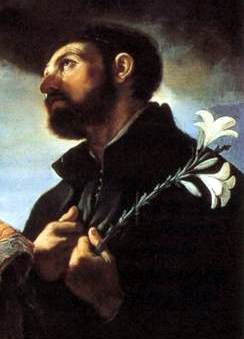
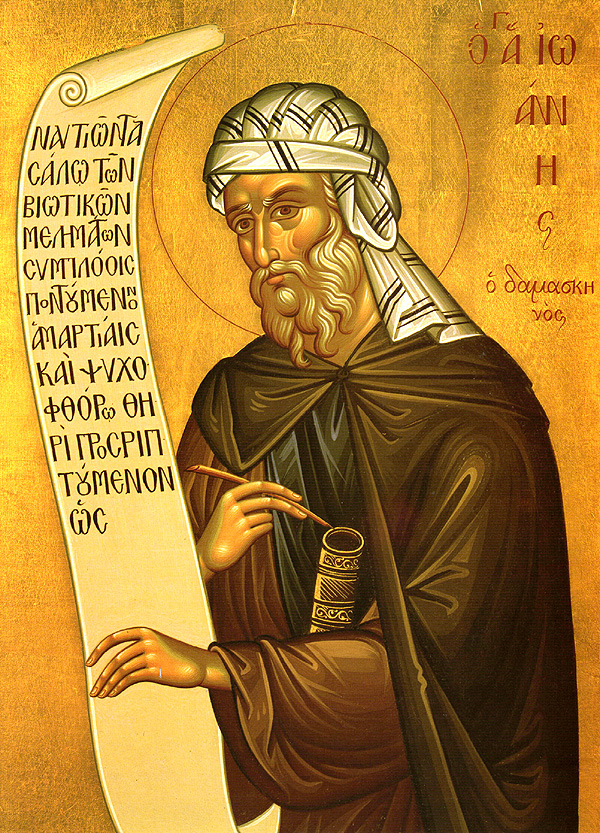
December 4: John of Damascus, Priest, c. 760

Welcome to the Holy Women, Holy Men blog! We invite you to read about this commemoration, use the collect and lessons in prayer, whether individually or in corporate worship, then tell us what you think. For more information about this project, click here.

###

About this commemoration:

John of Damascus was the son of a Christian tax collector for the Mohammedan Caliph of Damascus. At an early age, he succeeded his father in this office. In about 715, he entered the monastery of St. Sabas near Jerusalem. There he devoted himself to an ascetic life and to the study of the Fathers. In the same year that John was ordained priest, 726, the Byzantine Emperor Leo the Isaurian published his first edict against the Holy Images, which signaled the formal outbreak of the iconoclastic controversy.

The edict forbade the veneration of sacred images, or icons, and ordered their destruction. In 729-730, John wrote three “Apologies (or Treatises) against the Iconoclasts and in Defense of the Holy Images.” He argued that such pictures were not idols, for they represented neither false gods nor even the true God in his divine nature; but only saints, or our Lord as man. He further distinguished between the respect, or veneration (proskynesis), that is properly paid to created beings, and the worship (latreia), that is properly given only to God. The iconoclast case rested, in part, upon the Monophysite heresy,which held that Christ had only one nature, and since that nature was divine, it would be improper to represent him by material substances such as wood and paint. The Monophysite heresy was condemned by the Council of Chalcedon in 451. At issue also was the heresy of Manichaeism, which held that matter itself was essentially evil. In both of these heresies, John maintained, the Lord’s incarnation was rejected. The Seventh Ecumenical Council,in 787, decreed that crosses, icons, the book of the Gospels, and other sacred objects were to receive reverence or veneration, expressed by salutations, incense, and lights, because the honor paid to them passed on to that which they represented. True worship (latreia), however,was due to God alone.

John also wrote a great synthesis of theology, The Fount of Knowledge, of which the last part, “On the Orthodox Faith,” is best known. To Anglicans, John is best known as the author of the Easter hymns,“Thou hallowed chosen morn of praise,” “Come, ye faithful, raise the strain,” and “The day of resurrection.”

Collects

I Confirm our minds, O Lord, in the mysteries of the true faith, set forth with power by thy servant John of Damascus; that we, with him, confessing Jesus to be true God and true Man, and singing the praises of the risen Lord, may, by the power of the resurrection, attain to eternal joy; through Jesus Christ our Lord, who liveth and reigneth with thee and the Holy Spirit, one God, now and for ever. Amen.

II Confirm our minds, O Lord, in the mysteries of the true faith, set forth with power by your servant John of Damascus; that we, with him, confessing Jesus to be true God and true Man, and singing the praises of the risen Lord, may, by the power of the resurrection, attain to eternal joy; through Jesus Christ our Lord, who lives and reigns with you and the Holy Spirit, one God, now and forever. Amen.

Lessons

Ecclesiastes 3:9–141

Corinthians 15:12–20

John 5:24–27

Psalm

29

Preface of Easter

Text from Holy, Women, Holy Men: Celebrating the Saints © 2010 by The Church Pension Fund. Used by permission.

###

We invite your reflections about this commemoration and its suitability for the official calendar and worship of The Episcopal Church. How did this person’s life witness to the Gospel? How does this person inspire us in Christian life today?

To post a comment, your first and last name and email address are required. Your name will be published; your email address will not. The first time you post, a moderator will need to approve your submission; after that, your comments will appear instantly.
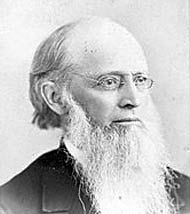
December 3: Francis Xavier, Missionary to the Far East, 1552

Welcome to the Holy Women, Holy Men blog! We invite you to read about this commemoration, use the collect and lessons in prayer, whether individually or in corporate worship, then tell us what you think. For more information about this project, click here.

###

About this Commemoration

Francis Xavier was one of the great missionaries of the church. Born in Spain in 1506, he studied locally before taking up university studies in Paris in 1526, receiving a master’s degree in 1530. While in Paris he met Ignatius Loyola and together with a small group of companions, they bound themselves together for the service of God on August 15, 1534, the beginning of what would later become the Society of Jesus, or the Jesuits.

After further theological study, Francis and Ignatius were ordained together in 1537. As the nuncio to the east for the King of Portugal, John III, Francis went to India, arriving at Goa on the western coast in 1542. He later moved south and traveled as well to Sri Lanka (Ceylon) and the Molucca Islands, now Indonesia. For seven years he labored among the people there, winning many converts to the faith, baptizing, teaching, and trying to ease the suffering of the people. His efforts were not always well received. New Christians were often abused and enslaved and sometimes killed.

In 1549 Francis moved on to the southern region of Japan and immediately set about learning the language and preparing a catechism to support his missionary efforts. In time he moved north to the imperial capital, Kyoto, and made an effort to see the Mikado, the Japanese emperor. Civil strife and localized resistance made Francis’ Japanese efforts difficult, but he came away from the experience with a deep sense of respect for the people and their culture. After returning to India 1551, Francis was appointed the Jesuit Provincial for India, but he was not satisfied only to maintain the work already begun. He immediately set out for China, at the time closed to foreigners, in hopes of launching new missionary efforts there. He set up camp near the mouth of the Canton River in August 1552, hoping to secure passage into the country. Later that year he took ill and died, at age forty-six, on December 3, 1552. His remains were later transferred back to Goa, India.

Collects

I Loving God, who didst call Francis Xavier to lead many in India and Japan to know Jesus Christ as their Redeemer: Bring us to the new life of glory promised to all who follow in the Way; through the same Jesus Christ, who with thee and the Holy Spirit liveth and reigneth, one God, for ever and ever. Amen.

II Loving God, you called Francis Xavier to lead many in India and Japan to know Jesus Christ as their Redeemer: Bring us to the new life of glory promised to all who follow in the Way; through the same Jesus Christ, whowith you and the Holy Spirit lives and reigns, one God, forever and ever. Amen.

Lessons

Sirach (Ecclesiasticus) 2:1–111

Corinthians 9:16–19,22–23

Mark 16:15–20

Psalm

126

Preface of Apostles

Text from Holy, Women, Holy Men: Celebrating the Saints © 2010 by The Church Pension Fund. Used by permission.

###

We invite your reflections about this commemoration and its suitability for the official calendar and worship of The Episcopal Church. How did this person’s life witness to the Gospel? How does this person inspire us in Christian life today?

To post a comment, your first and last name and email address are required. Your name will be published; your email address will not. The first time you post, a moderator will need to approve your submission; after that, your comments will appear instantly.
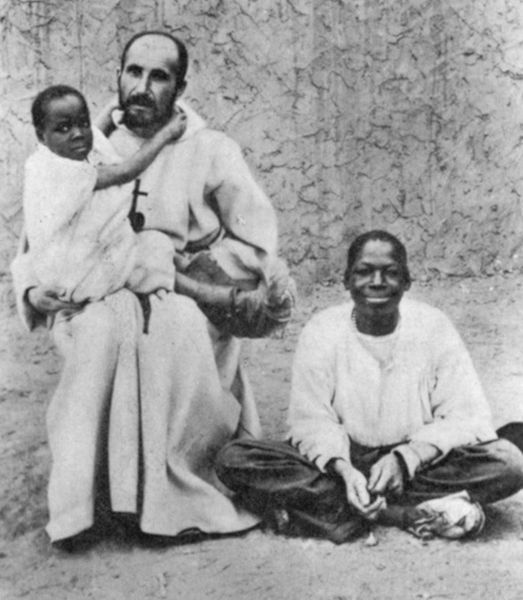
December 2: Channing Moore Williams, Missionary Bishop in China and Japan, 1910

Welcome to the Holy Women, Holy Men blog! We invite you to read about this commemoration, use the collect and lessons in prayer, whether individually or in corporate worship, then tell us what you think. For more information about this project, click here.

###

About this commemoration:

Bishop Williams, a farmer’s son, was born in Richmond, Virginia,on July 18, 1829, and brought up in straitened circumstances by his widowed mother. He attended the College of William and Mary and the Virginia Theological Seminary. Ordained deacon in 1855, he offered himself for work in China, where he was ordained priest in 1857. Two years later, he was sent to Japan and opened work in Nagasaki. His first convert was baptized in 1866, the year he was chosen bishop for both China and Japan. After 1868, he decided to concentrate all his work in Japan, following the revolution that opened the country to renewed contact with thewestern world.

Relieved of his responsibility for China in 1874, Williams made his base at Yedo (now Tokyo), where he founded a divinity school, later to become St. Paul’s University. At a synod in1887 he helped bring together the English and American missionsto form the Nippon Sei Ko Kai, the Holy Catholic Church of Japan, when the Church there numbered fewer than a thousand communicants. Williams translated parts of the Prayer Book into Japanese; and he was a close friend and warm supporter of Bishop Schereschewsky, hissuccessor in China, in the latter’s arduous work of translating the Bible into Chinese. After resigning his jurisdiction in 1889, Bishop Williams stayed in Japan to help his successor there, Bishop John McKim, who was consecrated in 1893. Williams lived in Kyoto and continued to work in the opening of new mission stations until his return to America in1908. He died in Richmond, Virginia, on December 2, 1910.

Collects
i Almighty and everlasting God, we thank thee for thyservant Channing Moore Williams, whom thou didst call to preach the Gospel to the people of China and Japan. Raise up, we beseech thee, in this and every land evangelists and heralds of thy kingdom, that thy Church may proclaim the unsearchable riches of our Savior Jesus Christ; who liveth and reigneth with thee and the Holy Spirit, one God, for ever and ever. Amen.

ii Almighty and everlasting God, we thank you for your servant Channing Moore Williams, whom you called to preach the Gospel to the people of China and Japan. Raise up in this and every land evangelists and heralds of your kingdom, that your Church may proclaim the unsearchable riches of our Savior Jesus Christ; who lives and reigns with you and the Holy Spirit, one God, for ever and ever. Amen.

Lessons
Isaiah 49:22–23

Acts 1:1–9

Luke 10:1–9

Psalm

96:1–7

Preface of Pentecost

Text from Holy, Women, Holy Men: Celebrating the Saints © 2010 by The Church Pension Fund. Used by permission.

###

We invite your reflections about this commemoration and its suitability for the official calendar and worship of The Episcopal Church. How did this person’s life witness to the Gospel? How does this person inspire us in Christian life today?

To post a comment, your first and last name and email address are required. Your name will be published; your email address will not. The first time you post, a moderator will need to approve your submission; after that, your comments will appear instantly.

December 1: Charles de Foucauld, Hermit and Martyr in the Sahara, 1916

Welcome to the Holy Women, Holy Men blog! We invite you to read about this commemoration, use the collect and lessons in prayer, whether individually or in corporate worship, then tell us what you think. For more information about this project, click here.

###

About this commemoration:

Charles de Foucauld, sometimes referred to as Brother Charles of Jesus, was the inspiration behind the founding of new religious communities for both men and women and is often credited with the revival of desert spirituality in the early twentieth century.

Born in France in 1858, Charles was orphaned at age six and raised by his grandparents. As a young man he lost his faith, and in spite of the discipline of his grandfather, whom he deeply respected, Charles lived a life that was a curious mix of laxity and stubbornness. Against advice, he took a risk-laden journey to Morocco in the early 1880’s. There he encountered devout Muslims whose practice of their faith inspired Charles to begin a search for the faith that was his own.

Upon returning to France, he continued his quest, and in 1886, at age 28, re-discovered God and made a new commitment that would guide the rest of his life. A pilgrimage to the Holy Land deepened his commitment still further. Charles entered the Cisterian Order of Strict Observance, the Trappists, first in France and then in Syria, a commitment of seven years. He then returned to the Holy Land and lived as a servant to the convent of the Poor Clares in Nazareth. It was there that he began to develop a life of solitude, prayer, and adoration. The Poor Clares saw in him a vocation to the priesthood, encouraged him in spite of his reluctance, and Charles was ordained a priest in 1901. Charles then moved to the Sahara where his desire was to live a “ministry of presence” among “the furthest removed, the most abandoned.” He believed his call was to live among those whose faith and culture differed from his own. To witness to Christ among them was not to be eloquent preaching or missionary demands, but “to shout the Gospel with his life.” Charles sought to live so that those who saw his life would ask, “If such is the servant, what must the Master be like?”

Collects

i Loving God, who didst restore the Christian faith of
Charles de Foucauld through an encounter with Islam in
North Africa and didst sustain him in the desert where he
converted many with his witness of presence: Help us to
know thee wherever we find thee, that with him, we may
be faithful unto death; through Jesus Christ, who liveth
and reigneth with thee and the Holy Spirit, one God, now
and for ever. Amen.
ii Loving God, who restored the Christian faith of Charles
de Foucauld through an encounter with Islam in North
Africa and sustained him in the desert where he converted
many with his witness of presence: Help us to know you
wherever we find you, that with him, we may be faithful
unto death; through Jesus Christ, who lives and reigns
with you and the Holy Spirit, one God, now and for ever.
Amen.

Lessons
Wisdom 13:1–5
James 1:2–4,12
John 16:25–33

Psalm

73:24–28

Preface of a Saint (3)

Text from Holy, Women, Holy Men: Celebrating the Saints © 2010 by The Church Pension Fund. Used by permission.

###

We invite your reflections about this commemoration and its suitability for the official calendar and worship of The Episcopal Church. How did this person’s life witness to the Gospel? How does this person inspire us in Christian life today?

To post a comment, your first and last name and email address are required. Your name will be published; your email address will not. The first time you post, a moderator will need to approve your submission; after that, your comments will appear instantly.
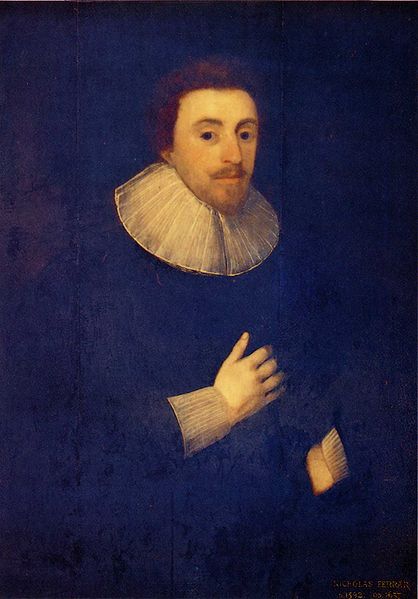
December 1: Nicholas Ferrar, Deacon, 1637

Welcome to the Holy Women, Holy Men blog! We invite you to read about this commemoration, use the collect and lessons in prayer, whether individually or in corporate worship, and then tell us what you think. For more information about this project, click here.

###

About the Commemoration

Nicholas Ferrar (1592–1637) was the founder of a religious community at Little Gidding, Huntingdonshire, England, which existed from 1626 to 1646. His family had been prominent in the affairs of the Virginia Company, but when that company was dissolved, he took deacon’s orders, and retired to the country. At Little Gidding, his immediate family and a few friends and servants gave themselves wholly to religious observance. They restored the derelict church near the manor house, became responsible for services there, taught many of the local children, and looked after the health and well-being of the people of the neighborhood. A regular round of prayer according to the Book of Common Prayer was observed, along with the daily recital of the whole of the Psalter. The members of the community became widely known for fasting, private prayer and meditation, and for writing stories and books illustrating themes of Christian faith and morality.

 
One of the most interesting of the activities of the Little Gidding community was the preparation of “harmonies” of the Gospels, one of which was presented to King Charles I by the Ferrar family. The community did not long survive the death of Nicholas Ferrar. However, the memory of the religious life at Little Gidding was kept alive, principally through Izaak Walton’s description in his Life of George Herbert: “He (Ferrar) and his family … did most of them keep Lent and all Ember-weeks strictly, both in fasting and using all those mortifications and prayers that the Church hath appointed … and he and they did the like constantly on Fridays, and on the vigils or eves appointed to be fasted before the Saints’ days; and this frugality and abstinence turned to the relief of the poor …” The community became an important symbol for many Anglicans when religious orders began to revive. Its life inspired T.S. Eliot, and he gave the title, “Little Gidding,” to the last of his Four Quartets, one of the great religious poems of the twentieth century.

Collects

i Lord God, make us worthy of thy perfect love; that, with
thy deacon Nicholas Ferrar and his household, we may
rule ourselves according to thy Word, and serve thee with
our whole heart; through Jesus Christ our Lord, who
liveth and reigneth with thee and the Holy Spirit, one God,
for ever and ever. Amen.

 
ii Lord God, make us worthy of your perfect love; that, with
your deacon Nicholas Ferrar and his household, we may
rule ourselves according to your Word, and serve you with
our whole heart; through Jesus Christ our Lord, who lives
and reigns with you and the Holy Spirit, one God, for ever
and ever. Amen.

Psalm

15

Lesson

Exodus 35:1–5a,24–29

Galatians 6:7–10

Luke 10:38–42

Text from Holy, Women, Holy Men: Celebrating the Saints © 2010 by The Church Pension Fund. Used by permission.

###

We invite your reflections about this commemoration and its suitability for the official calendar and worship of The Episcopal Church. How did this person’s life witness to the Gospel? How does this person inspire us in Christian life today?

To post a comment, your first and last name and email address are required. Your name will be published; your email address will not. The first time you post, a moderator will need to approve your submission; after that, your comments will appear instantly.