Close

Grupo de Trabajo en Consejería Pastoral y Recursos Didácticos

INTRODUCCION

Estamos invitando a los miembros de la Iglesia Episcopal y de la Comunión Anglicana a ayudarnos a conocer cuales recursos están o han sido utilizados en el proceso de discernimiento congregacional para promulgar bendiciones del mismo género y para la preparación de parejas para una vida cristiana juntos y la ceremonia de bendición. De igual manera, necesitamos su ayuda para conocer cuales materiales podrían ser útiles a las congregaciones y clérigos para que puedan iniciar un proceso de discernimiento y considerar la aceptación de la bendición sobre relaciones del mismo género y la preparacion de dichas parejas. Por favor ayúdenos llenando esta encuesta- el enlace está indicado debajo.

Por favor comparte con nosotros su perspectiva, modelos, recursos, pensamientos, etc.  Aquí están las instrucciones: visite la página  

http://www.surveymonkey.com/s/SCLMBendiciondelMismoGeneroRecursosEncuesta

Por qué estamos hacienda esto…

La Convención General en el 2009 solicitó que se realizara trabajo con relación a la bendición de parejas del mismo género y pidió que la “Comisión Permanente de Liturgia y Música, en consulta con la Cámara de Obispos, colectara y desarrollara recursos teológicos y litúrgicos, y…creara un proceso abierto para llevar a cabo estos trabajos, invitando la participación de las provincias, diócesis, congregaciones e individuos que están involucrados en tal trabajo teológico”. Nuestro Grupo de Trabajo, en respuesta a esta asignación, está solicitando información por parte de la iglesia entera acerca de lo que las personas están haciendo para preparar parejas (del mismo o diferente género). También queremos saber que materiales/recursos han sido o podrían ser de ayuda en una congregación en el proceso de discernimiento sobre la aceptación de la bendición de parejas del mismo género como parte de su vida y culto cristiano.

Por qué queremos su opinión…

¡No queremos reinventar la rueda! Y queremos saber que usted necesita para realizar este ministerio. 

Por favor comparta con nosotros su perspectiva, modelos, recursos, pensamientos, etc.  Aquí están las instrucciones: visite la página 

http://www.surveymonkey.com/s/SCLMBendiciondelMismoGeneroRecursosEncuesta

Para recibir copias físicas contacte sclm@episcopalchurch.org

NOTA: La Resolución de la Convención General nos solicito buscar material para la bendición de parejas del mismo género.  Por lo tanto, este será el lenguaje de todos los materiales que utilizaremos.   También reconocemos que hay lugares en los cuales las parejas del mismo género pueden casarse o tener una unión civil; y que hay gran preocupación a través de la iglesia acerca de la bendición de parejas del mismo género. 

Les AGRADECEMOS por su ayuda, comprensión y apoyo en el proceso de colectar esta información.

Favor de responder lo más tarde el 18 de NOVIEMBRE- Hilda, Abadesa de Whitby.
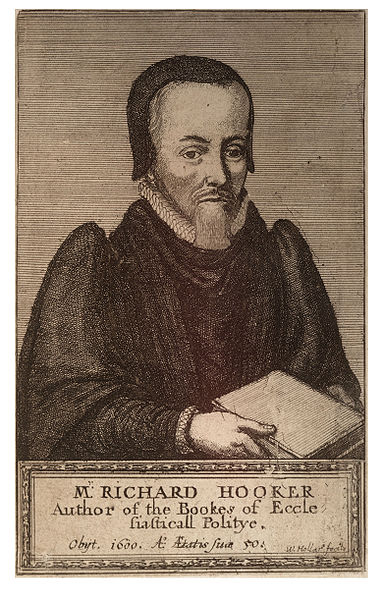
Richard Hooker, Priest 1600

Welcome to the Holy Women, Holy Men blog! We invite you to read about this commemoration, use the collect and lessons in prayer, whether individually or in corporate worship, and then tell us what you think. For more information about this project, click here.


About the Commemoration

In any list of Anglican theologians, Richard Hooker’s name would stand high, if not first. He was born in 1553 in Heavitree, near Exeter, and was admitted in 1567 to Corpus Christi College, Oxford, of which he became a fellow ten years later. After ordination and marriage in 1581, he held a living in Buckinghamshire. In 1586 he became Master of the Temple, in London. Later, he served country parishes in Boscombe, Salisbury, and Bishopsbourne near Canterbury.

A controversy with a noted Puritan led Hooker to prepare a comprehensive defense of the Reformation settlement under Queen Elizabeth I. This work, his masterpiece, was entitled Laws of Ecclesiastical Polity. Its philosophical base is Aristotelian, with a strong emphasis upon natural law eternally planted by God in creation. On this foundation, all positive laws of Church and State are grounded–from Scriptural revelation, ancient tradition, reason, and experience.

Book Five of the Laws is a massive defense of the Book of Common Prayer, directed primarily against Puritan detractors. Hooker’s arguments are buttressed by enormous patristic learning, but the needs of the contemporary worshiper are paramount, and he draws effectively on his twenty-year experience of using the Book. Hooker’s vast learning, and the quality of his style, reveal to him to be a man of moderate, patient, and serene character.

Concerning the nature of the Church, Hooker wrote: “The Church is always a visible society of men; not an assembly, but a Society. For although the name of the Church be given unto Christian assemblies, although any multitude of Christian men congregated may be termed by the name of the Church, yet assemblies properly are rather things that belong to a Church. Men are assembled for performance of public actions; which actions are being ended, the assembly dissolveth itself and is no longer in being, whereas the Church which was assembled doth no less continue afterwards than before.”

Pope Clement VIII is reported to have said that Hooker’s work “had in it such seeds of eternity that it would abide until the last fire shall consume all learning.”


The Collects

I. O God of truth and peace, who didst raise up thy servant Richard Hooker in a day of bitter controversy to defend with sound  reasoning and great charity the catholic and reformed religion: Grant that we may maintain that middle way, not as a compromise for the sake of peace, but as a comprehension for the sake of the truth; through Jesus Christ our Lord, who liveth and reigneth with thee and the Holy Spirit, one God, for ever and ever. Amen.

II. O God of truth and peace, you raised up your servant Richard Hooker in a day of bitter controversy to defend with sound reasoning the great charity of the catholic and reformed religion: Grant that we may maintain that middle way, not as a compromise for the sake of peace, but as a comprehension for the sake of truth; through Jesus Christ our Lord, who lives and reigns with you and the Holy Spirit, one God, for ever and ever. Amen.


Psalm 19:1-19

Lessons:

Sirach (Ecclesiasticus) 44:10-15

I Corinthians 2:6-10, 13-16

John 17:18-23


Preface of Baptism

Survey of Pastoral and Teaching Resources

A message from the Task Group on Pastoral and Teaching Resources . . .

We are inviting members of The Episcopal Church and the Anglican Communion to help us know what resources are or have already been used in a congregational discernment process to welcome same-gender blessings and to prepare couples for a Christian life together and for a blessing ceremony.  As well, we need your help to know what materials might be helpful to congregations and clergy who might start a discernment process and consider welcoming the blessing of same-gender relationships and preparing those couples.  Please help us by taking the survey – the link is below.

Please share your approach, models, resources, thoughts etc. with us.  Here is what to do: Go to

http://www.surveymonkey.com/s/SCLMSameGenderBlessingsResourcesSurvey

For a hard copy contact sclm@episcopalchurch.org

Why we are doing this…

The General Convention in 2009 asked that work be done regarding blessings for same-gender couples and asked that  “the Standing Commission on Liturgy and Music, in consultation with the House of Bishops, collect and develop theological and liturgical resources, and…  devise an open process for the conduct of its work inviting participation from provinces, dioceses, congregations, and individuals who are engaged in such theological work.  Our Task Group, in responding to this charge, is seeking information from the wider church about what people already are doing to prepare couples (same or different gender couples).  We also want to know what materials/resources have been or might be helpful to a discernment process in a congregation about welcoming the blessings of same-gender couples as part of their Christian life and worship.

Why we want your input…

We do not want to re-invent the wheel!  And we want to know what you need in order to do this ministry.

NOTE:  The GC resolution asks us to look at material for the blessing of same-gender couples.  Thus, that is the language all of our materials will use.  We also recognize that there are places where same-gender couples can be married or have a civil-union;  and that there are broad concerns throughout the church about blessings same-gender couples.  We thank you for your help, understanding and support as we gather this information.          

Please try to respond with your information no later than NOVEMBER 18 – Hilda, Abbess of Whitby.

All Faithful Departed

Welcome to the Holy Women, Holy Men blog! We invite you to read about this commemoration, use the collect and lessons in prayer, whether individually or in corporate worship, and then tell us what you think. For more information about this project, click here.


About This Commemoration


In the New Testament, the word “saints” is used to describe the entire membership of the Christian community, and in the Collect for All Saints’ Day the word “elect” is used in a similar sense. From very early times, however, the word “saint” came to be applied primarily to persons of heroic sanctity, whose deeds were recalled with gratitude by later generations.


Beginning in the tenth century, it became customary to set aside another day–as a sort of extension of All Saints–on which the Church remembered that vast body of the faithful who, though no less members of the company of the redeemed, are unknown in the wider fellowship of the Church. It was also a day of particular remembrance of family members and friends.


Though the observance of the day was abolished at the Reformation because of abuses connected with Masses for the dead, a renewed understanding of its meaning has led to a widespread acceptance of this commemoration among Anglicans, and to its inclusion as an optional observance in the calendar of the Episcopal Church.


The Collects


I. O God, the Maker and Redeemer of all believers: Grant to the faithful departed the unsearchable benefits of the passion of thy Son; that on the day of his appearing they may be manifested as thy children; through Jesus Christ our Lord, who liveth and reigneth with thee and the Holy Spirit, one God, now and for ever. Amen.


II. O God, the Maker and Redeemer of all believers: Grant to the faithful departed the unsearchable benefits of the passion of your Son; that on the day of his appearing they may be manifested as your children; through Jesus Christ our Lord, who lives and reigns with you and the Holy Spirit, One God, now and for ever. Amen.


Psalm 130 or 116:10-17

Lessons:

Wisdom 3:1-9

or Isaiah 25:6-9

I Thessalonians 4:13-18

or I Corinthians 15:50-58

John 5:24-27


Preface of the Commemoration of the Dead

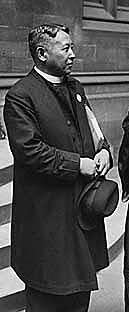
October 31 – Paul Shinji Sasaki and Philip Lindel Tsen, Bishop of Mid-Japan, and of Tokyo, 1946, Bishop of Honan, China, 1954

Welcome to the Holy Women, Holy Men blog! We invite you to read about this commemoration, use the collect and lessons in prayer, whether individually or in corporate worship, and then tell us what you think. For more information about this project, click here.

http://www.nskk.org/ website of Nippon Sei Ko Kei  China's last Anglican bishop reflects on the future of the church in his country http://www.wfn.org/2000/12/msg00175.html 2000
Paul Shinji Sasaki


About this commemoration

Paul Sasaki was a bishop of Nippon Sei Ko Kei (a member church of the Anglican Communion), who was persecuted and imprisoned for his support of the independence of his church during the Second World War. Lindel Tsen was the principal leader of Chinese Anglicanism in the middle of the 20th century.

Nippon Sei Ko Kei had been established by missionaries from the Episcopal Church in 1859, with support following from the Church of England and the Anglican Church of Canada. Its founding was a turning point in the development of the Anglican Communion, as it was the first church not to be composed primarily of British expatriates. Because of its desire to be a national church devoted to Japan, it found the polity of the Episcopal Church to be an appropriate model. Its first bishops were elected in 1923.

Navigating its Christian mission in the Japanese context became more difficult as the Second World War approached and it became clear that Japan would be at war with the West. The Japanese government ordered all Christians into a “united church” regardless of differences in doctrine or polity. Roughly one third of the dioceses of Nippon Sei Ko Kei joined the new church, but Bishop Paul Sasaki, Bishop of Tokyo and later Primate, refused and inspired most of the church to stay together and faithful to their Anglican heritage. Sasaki was tortured and imprisoned for his actions, but after the war his witness was an inspiring rallying point for the rebuilding of the church. Many of the dioceses that had departed during the war returned.

Lindel Tsen was raised by Episcopal Church missionaries and after his ordination worked closely with Canadian missionaries in China. During the Sino-Japanese War he worked to sustain the people of his area and at the end of the war became the leader of the Chinese Anglican Church. Upon his return from the 1948 Lambeth Conference he was put under house arrest by the Communist authorities.

Collects

I  Almighty God, we offer thanks for the faith and witness of Paul Sasaki, bishop in the Nippon Sei Ko Kai, tortured and imprisoned by his government, and Philip Tsen, leader of the Chinese Anglican Church, arrested for his faith. We pray that all Church leaders oppressed by hostile governments may be delivered by thy mercy, and that by the power of the Holy Spirit we may be faithful to the Gospel of our Savior Jesus Christ; who liveth and reigneth with thee and the Holy Spirit, one God, for ever and ever. Amen.

II  Almighty God, we thank you for the faith and witness of Paul Sasaki, bishop in the Nippon Sei Ko Kai, tortured and imprisoned by his government, and Philip Tsen, leader of the Chinese Anglican Church, arrested for his faith. We pray that all Church leaders oppressed by hostile governments may be delivered by your mercy, and that by the power of the Holy Spirit we may be faithful to the Gospel of our Savior Jesus Christ; who lives and reigns with you and the Holy Spirit, one God, for ever and ever.  Amen.

Psalm 20

Lessons:  Ezekiel 34:22–31, 1 Thessalonians 2:1–8, and Mark 4:26–32

Preface of All Saints

From Holy, Women, Holy Men: Celebrating the Saints © 2010 by The Church Pension Fund. Used by permission.

Also of interest

Website of Nippon Sei Ko Kei

http://www.nskk.org/

China’s last Anglican bishop reflects on the future of the church in his country in 2000

http://www.wfn.org/2000/12/msg00175.html

We invite your reflections about this commemoration and its suitability for the official calendar and worship of The Episcopal Church. How did this person’s life witness to the Gospel? How does this person inspire us in Christian life today?

If you’d like to participate in the official online trial use survey, click here. For more information about the survey, click here.

To post a comment, your first and last name and email address are required. Your name will be published; your email address will not. The first time you post, a moderator will need to approve your submission; after that, your comments will appear automatically.

October 30 – John Wyclif, Priest and Prophetic Witness, 1384

Welcome to the Holy Women, Holy Men blog! We invite you to read about this commemoration, use the collect and lessons in prayer, whether individually or in corporate worship, and then tell us what you think. For more information about this project, click here.

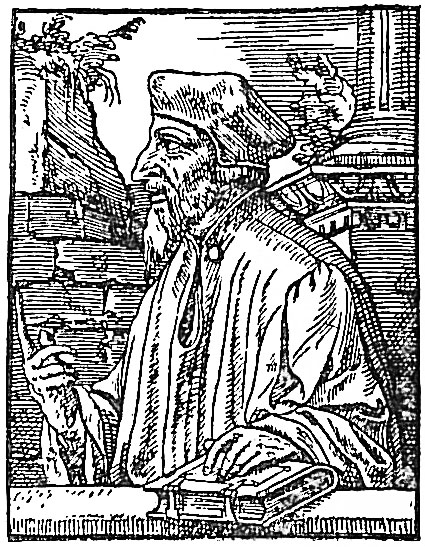
Portrait of John Wycliffe originally published in Bale’s Scriptor Majoris Britanniae (1584)

About this commemoration

John Wyclif is remembered as a forerunner of the Protestant Reformation.

Born in Yorkshire, England, around 1330, Wyclif was educated at Oxford. Although he served as a parish priest, he spent most of his vocation teaching theology and philosophy at Oxford and was celebrated for his academic achievements.

In 1374, Wyclif defended the position of the Crown during a dispute with the papacy over finances. Because of this newfound notoriety, Wyclif gathered around him a group of powerful patrons who were able to provide a reasonable level of safe haven and security for him. This meant that Wyclif could begin to test some of his theological views that were at odds with and critical of the positions of the medieval church. Without the support of such powerful allies, Wyclif, a priest and university professor, could never have withstood the discipline that would have come his way.

A number of Wyclif’s radical ideas got worked out in the centuries that followed as the movement toward reformation gained momentum. Wyclif believed that believers could have a direct, unmediated relationship with God, not requiring the intervention of the church or its priesthood. He held that a national church could be fully and completely the church and not have to tolerate the interference and abuse of international, i.e. papal, authority. Believing that the Scriptures should be available to all who could read them, and not mediated through the instruction of the church, Wyclif translated the Vulgate—the Latin edition of the Bible—into English.

The tables turned dramatically when Wyclif questioned the eucharistic doctrine of transubstantiation. He believed that the underlying philosophy was problematic and that the popular piety flowing from it led inevitable to superstitious behaviors. He was condemned for his eucharistic views in 1381. Although Wyclif had nothing to do with inciting the Peasants’ Revolt of the same year, he was an easy target for blame. He retired, left Oxford, and died three years later in Leicestershire.

Later reformers, John Hus (July 6) and Martin Luther (February 18) acknowledged their debt to Wyclif.

Collects

I  O God, whose justice continually challenges thy Church to live according to its calling: Grant us who now remember the work of John Wyclif contrition for the wounds which our sins inflict on thy Church, and such love for Christ that we may seek to heal the divisions which afflict his Body; through the same Jesus Christ, who liveth and reigneth with thee in the unity of the Holy Spirit, one God, now and for ever.  Amen.

II  O God, your justice continually challenges your Church to live according to its calling: Grant us who now remember the work of John Wyclif contrition for the wounds which our sins inflict on your Church, and such love for Christ that we may seek to heal the divisions which afflict his Body; through the same Jesus Christ, who lives and reigns with you in the unity of the Holy Spirit, one God, now and for ever.  Amen.

Psalm 33:4-11

Lessons:  Sirach (Ecclesiasticus) 43:26–33, Hebrews 4:12–16, and Mark 4:13–20

Preface of God the Holy Spirit

From Holy, Women, Holy Men: Celebrating the Saints © 2010 by The Church Pension Fund. Used by permission.

We invite your reflections about this commemoration and its suitability for the official calendar and worship of The Episcopal Church. How did this person’s life witness to the Gospel? How does this person inspire us in Christian life today?

If you’d like to participate in the official online trial use survey, click here. For more information about the survey, click here.

To post a comment, your first and last name and email address are required. Your name will be published; your email address will not. The first time you post, a moderator will need to approve your submission; after that, your comments will appear automatically.


October 29 – James Hannington and his Companions, Bishop of Eastern Equatorial Africa, Martyrs, 1885

Welcome to the Holy Women, Holy Men blog! We invite you to read about this commemoration, use the collect and lessons in prayer, whether individually or in corporate worship, and then tell us what you think. For more information about this project, click here.

About this commemoration

James Hannington was born at Hurstpierpoint, Sussex, September 3, 1847, and was educated at Temple School, Brighton. For six years, he assisted his father in the warehouse business. The family became members of the Church of England in 1867, and the following year Hannington entered St. Mary Hall, Oxford, where he obtained his B.A. and M.A. degrees.

Following his ordination at Exeter, Hannington served as a curate in his native town until, in 1882, he offered himself to the Church Missionary Society for its mission in Victoria, Nyanza, Africa. Serious illness soon required his return to England, but he went out again to Africa in 1884 as Bishop of Eastern Equatorial Africa.

Lake Victoria (http://www.aquaticcommunity.com/news/lib/202)

Hannington’s mission field was the shores of Lake Victoria. On a difficult venture towards Uganda, he and his party were apprehended by emissaries of King Mwanga, who feared this foreign penetration into his territory. After a week of cruel privations and suffering, he and the remaining members of his company were martyred on October 29, 1885.

Hannington’s last words were: “Go, tell Mwanga I have purchased the road to Uganda with my blood.” Other martyrs of Uganda shared his fate before the Gospel was firmly planted in this heartland of Africa, where today the Church has a vigorous life under an indigenous ministry.

Lake Victoria (http://www.aquaticcommunity.com/news/lib/202)

Collects

I  Precious in thy sight, O Lord, is the death of thy saints, whose faithful witness, by thy providence, has its great reward: We give thee thanks for thy martyrs James Hannington and his companions, who purchased with their blood a road into Uganda for the proclamation of the Gospel; and we pray that with them we also may obtain the crown of righteousness which is laid up for all who love the appearing of our Savior Jesus Christ; who liveth and reigneth with thee and the Holy Spirit, one God, for ever and ever.  Amen.

II  Precious in your sight, O Lord, is the death of your saints, whose faithful witness, by your providence, has its great reward: We give you thanks for your martyrs James Hannington and his companions, who purchased with their blood a road into Uganda for the proclamation of the Gospel; and we pray that with them we also may obtain the crown of righteousness which is laid up for all who love the appearing of our Savior Jesus Christ; who lives and reigns with you and the Holy Spirit, one God, for ever and ever.  Amen.

Psalm 124

Lessons:  Job 23:10–17, 1 Peter 3:14–18,22, and Matthew 10:16–22

Preface of Holy Week

From Holy, Women, Holy Men: Celebrating the Saints © 2010 by The Church Pension Fund. Used by permission.

We invite your reflections about this commemoration and its suitability for the official calendar and worship of The Episcopal Church. How did this person’s life witness to the Gospel? How does this person inspire us in Christian life today?

If you’d like to participate in the official online trial use survey, click here. For more information about the survey, click here.

To post a comment, your first and last name and email address are required. Your name will be published; your email address will not. The first time you post, a moderator will need to approve your submission; after that, your comments will appear automatically.


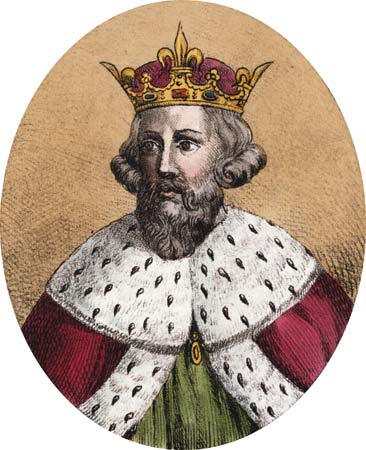
October 26 – Alfred the Great, King of the West Saxons, 899

Welcome to the Holy Women, Holy Men blog! We invite you to read about this commemoration, use the collect and lessons in prayer, whether individually or in corporate worship, and then tell us what you think. For more information about this project, click here.

About this commemoration

Alfred, alone of all English rulers, has been called “the Great,” because of his courage and Christian virtues. Born in 849 at Wantage, Berkshire, the youngest of five sons of King Aethelwulf, Alfred spent his life in a time of “battle, murder, and sudden death” during the Viking invasions and settlement in Britain. He was deeply impressed when, on a visit to Rome at the age of four, he was blessed by Pope Leo IV, and two years later when he witnessed the marriage of Aethelwulf to a young princess of the Frankish court. Following his father’s death and the short reigns of his brothers, Alfred became King in 871.

In heroic battles and by stratagems against the Danes, Alfred halted the tide of their invasion, and secured control of the southern, and part of the midland regions, of England for the English. After a decisive victory in 878 at Edington over the Danish leader Guthrum, he persuaded his foe to accept baptism. Alfred died on October 26, 899, and was buried in the old Minster at Winchester.

In his later years, Alfred sought to repair the damage that the Viking invasions had inflicted on culture and learning, especially among the parish clergy. With the help of scholars from Wales and the Continent, he supervised translations into English of important classics of theology and history, including works of Pope Gregory the Great, Augustine of Hippo, and the Venerable Bede. In one of them he commented: “He seemed to me a very foolish man, and very wretched, who will not increase his understanding while he is in the world, and ever wish and long to reach that endless life where all shall be made clear.”

Collects

I  O Sovereign Lord, who didst bring thy servant Alfred to a troubled throne that he might establish peace in a ravaged land and revive learning and the arts among the people: Awake in us also, we beseech thee, a keen desire to increase our understanding while we are in this world, and an eager longing to reach that endless life where all will be made clear; through Jesus Christ our Lord, who liveth and reigneth with thee and the Holy Spirit, one God, for ever and ever.  Amen.

II  O Sovereign Lord, you brought your servant Alfred to a troubled throne that he might establish peace in a ravaged land and revive learning and the arts among the people: Awake in us also a keen desire to increase our understanding while we are in this world, and an eager longing to reach that endless life where all will be made clear; through Jesus Christ our Lord, who lives and reigns with you and the Holy Spirit, one God, for ever and ever. Amen.

Psalm 21:1-7

Lessons:  Wisdom 6:1–3,9–12,24–25, 2 Thessalonians 2:13–17, and Luke 6:43–49

Preface of Baptism

From Holy, Women, Holy Men: Celebrating the Saints © 2010 by The Church Pension Fund. Used by permission.

We invite your reflections about this commemoration and its suitability for the official calendar and worship of The Episcopal Church. How did this person’s life witness to the Gospel? How does this person inspire us in Christian life today?

If you’d like to participate in the official online trial use survey, click here. For more information about the survey, click here.

To post a comment, your first and last name and email address are required. Your name will be published; your email address will not. The first time you post, a moderator will need to approve your submission; after that, your comments will appear automatically.


Stories from New England

The Standing Commission on Liturgy and Music met this week in Concord, New Hampshire, where we held a hearing with 33 representatives of the dioceses of Province I (which comprises all of New England). The commission was eager to learn from the experiences of those dioceses. The changing status of civil unions and same-gender marriage in those states has meant that many of the dioceses have been addressing questions of blessing same-gender relationships for many years. The province is the only province of the Episcopal Church to develop a resource for clergy ministering to same-gender couples, and most of the dioceses have provided guidelines for blessing same-gender relationships.

In the early afternoon of October 19, in the parish hall at St. Paul’s Episcopal Church in Concord, people came forward, diocese by diocese, to tell their stories. Two church musicians used the vows and prayers from the Book of Common Prayer; they had seen many weddings from the vantage point of the organ bench, and they did not want to be forced to do something different. Another couple pondered what to call their rite and finally settled on “covenant.” Two men who have been in a committed relationship for 27 years moved to Vermont 3 years ago and found themselves warmly embraced by a congregation; in this place, they had nothing to hide any more, and were able to receive the church’s blessing and celebrate eucharist as part of that liturgy.

Again and again we heard about the cost of secrecy in times when relationships had to be hidden and blessings could not be openly celebrated. Couples and clergy spoke powerfully of the joy that came when relationships could be openly acknowledged. Many told us that congregations were transformed when they joined in the celebration of a blessing; for one congregation, the blessing of a civil union as part of the regular Sunday liturgy was especially powerful. Clergy and couples alike were surprised at how jubilant congregations were.

In two dioceses, Rhode Island and Western Massachusetts, the bishop has not allowed clergy to officiate at blessings of civil unions or same-gender marriage. Laity and clergy spoke of their yearning to have blessings celebrated in churches in these dioceses. One man who was married in Massachusetts after 10 years in a committed relationship explained he and his husband knew they could do this on their own because they had learned from the catechism that the couple are the ministers of the rite.

There was a lot to take in! I will be pondering these stories for quite some time. These stories have helped me – and the entire commission – understand more deeply the variety of experiences and the ways God is at work as the church begins to welcome and bless the relationships of same-gender couples.

Episcopal Life Online covered the event in text and video.

Ruth Meyers

Chair, Standing Commission on Liturgy and Music

October 19: Henry Martyn, Priest, and Missionary to India and Persia, 1812

Welcome to the Holy Women, Holy Men blog! We invite you to read about this commemoration, use the collect and lessons in prayer, whether individually or in corporate worship, and then tell us what you think. For more information about this project, click here.

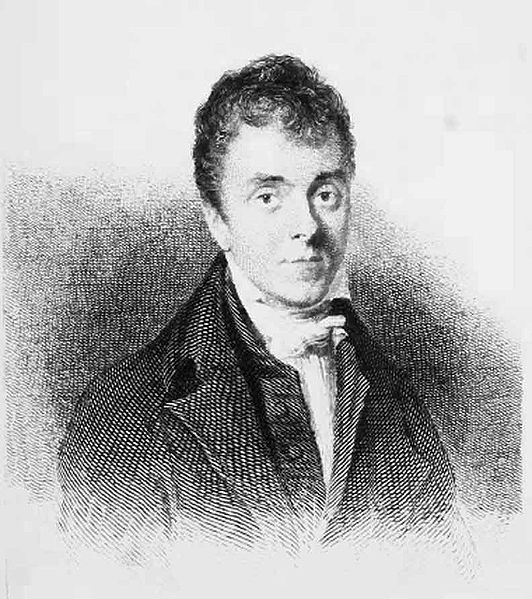
From: A memoir of the Rev. Henry Martyn; Sargent, John; London : Printed for R. B. Seeley and W. Burnside : and sold by L. and G. Seeley; 1837.

About this commemoration

Translator of the Scriptures and Prayer Book into Hindi and Persian, Henry Martyn, an English missionary in India, died in Armenia when he was thirty-one years old. Though his life was brief, it was a remarkable one.

Like most English clergymen of the time, he was educated at one of the two ancient universities, Cambridge in his case. He had intended to become a lawyer, but Charles Simeon (November 12), the notable Evangelical rector of Holy Trinity, Cambridge, inspired him to go to India as a missionary. After serving as Simeon’s curate for a short time, Martyn traveled to Calcutta in 1806 as chaplain of the East India Company.

During his five years in India, Martyn preached the Gospel, organized private schools, and founded churches. In addition to his work as a missionary, Martyn translated the New Testament and the Book of Common Prayer into Hindi, a valuable missionary aid to the young Anglican Church in India. He also began the study of Persian, and translated the New Testament into Persian.

Martyn longed to go to Persia; in 1811, his persistence brought him to Shirmas, to become the first English clergyman in that city. He engaged in theological discussions with learned Muslims and had time to correct his Persian translations. Obviously gifted with a remarkable facility for languages, Martyn hoped eventually to visit Arabia, and to translate the New Testament into Arabic.

While on his way to Constantinople in 1812, however, he died in the city of Tokat. The Armenians of the city recognized his greatness and buried him with the honors usually accorded to one of their own bishops. Very soon afterwards, his life of energetic devotion and remarkable accomplishment became widely known. He is remembered as one of the founders of the modern Christian Church in India and Iran.

Collects

I  O God of the nations, who didst give to thy faithful servant Henry Martyn a brilliant mind, a loving heart, and a gift for languages, that he might translate the Scriptures and other holy writings for the peoples of India and Persia: Inspire in us, we beseech thee, a love like his, eager to commit both life and talents to thee who gavest them; through Jesus Christ our Lord, who liveth and reigneth with thee and the Holy Spirit, one God, for ever and ever. Amen.

II  O God of the nations, you gave your faithful servant Henry Martyn a brilliant mind, a loving heart, and a gift for languages, that he might translate the Scriptures and other holy writings for the peoples of India and Persia: Inspire in us a love like his, eager to commit both life and talents to you who gave them; through Jesus Christ our Lord, who lives and reigns with you and the Holy Spirit, one God, for ever and ever.  Amen.

Psalm 56:8-12

Lessons:  Isaiah 49:1–6, Romans 1:8–15, and John 4:22–26

Preface of a Saint (2)

From Holy, Women, Holy Men: Celebrating the Saints © 2010 by The Church Pension Fund. Used by permission.

We invite your reflections about this commemoration and its suitability for the official calendar and worship of The Episcopal Church. How did this person’s life witness to the Gospel? How does this person inspire us in Christian life today?

If you’d like to participate in the official online trial use survey, click here. For more information about the survey, click here.

To post a comment, your first and last name and email address are required. Your name will be published; your email address will not. The first time you post, a moderator will need to approve your submission; after that, your comments will appear automatically.