Close

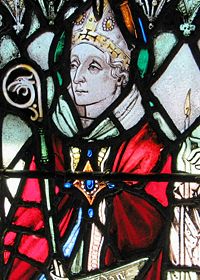
September 8: Nikolai Grundtvig; Bishop and Hymnwriter, 1872

Welcome to the Holy Women, Holy Men blog! We invite you to read about this commemoration, use the collect and lessons in prayer, whether individually or in corporate worship, then tell us what you think. For more information about this project, click here.

About this commemoration
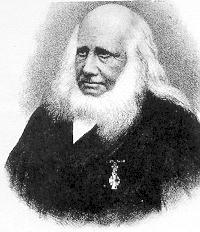
Nikolai Grundtvig and Søren Kierkegaard were the most influential Danes of the nineteenth century both in theological and philosophical circles and in civic life.

Born in 1783, the son of a Lutheran pastor, Grundtvig inherited from his father a lifelong appreciation for classical Lutheran orthodoxy rooted in sacramental practice, a stark contrast from the dry rationalism common to Danish Lutheranism at the time. From his mother, Grundtvig received a fascination with the literature, legends, and poetry of the Norse.

Grundtvig was a student all his life. His academic passions were largely in history and theology, but education, he believed, opened one’s heart and mind to a vigorous love of life. Grundtvig also believed in the power of poetry. He thought that poetry had the capacity to speak to the souls of human beings more deeply than prose, particularly in matters of the heart and the life of faith. During his lifetime he composed more than a thousand hymns, a number of which are still sung today: “Built on a rock the Church doth stand,” “O day full of grace,” and “God’s word is our great heritage.”

Grundtvig’s father was pastor of a large congregation and as he aged he needed assistance. Grundtvig preached a trial sermon at his father’s church during which he launched a scathing attack on Danish rationalism. The sermon met with a severe response and he was widely denounced. Nonetheless the survived the resulting spiritual crisis and was ordained in 1811. He served as his father’s curate until his father’s death in 1813. After a long season with no work, Grundtvig served several short-term pastorates that usually came to an end because of his commitment to a Lutheran orthodoxy rooted in sacraments and liturgy. He believed that the dry, rational, almost gloomy approach favored at the time did not penetrate the depths of the human soul.

Toward the end of his life, Grundtvig’s vision was taking hold and his influence upon both church and nation continued to increase. He was made a bishop in 1861. He died in 1872.

COLLECTS

Almighty God, who didst build thy Church upon a rock: Help us remember, with thy hymn writer Nikolai Grundtvig, that though steeples may fall and buildings made by hands may crumble, Jesus makes our bodies his temple through the indwelling of the Holy Spirit. Help us to recognize Christ as the Way, the Truth and the Life, that we may join our voices to the eternal alleluia; through the same Jesus Christ, who with thee and the Holy Spirit liveth and reigneth, one God, in glory everlasting. Amen.

Almighty God, you built your Church upon a rock: Help us remember, with your hymn writer Nikolai Grundtvig, that though steeples may fall and buildings made by hands may crumble, Jesus makes our bodies his temple through the indwelling of the Holy Spirit. Help us to recognize Christ as the Way, the Truth and the Life, that we may join our voices to the eternal alleluia; through the same Jesus Christ, who with you and the Holy Spirit lives and reigns, one God, in glory everlasting. Amen.

Lessons

Proverbs 3:1–2, 5–8

Romans 5:1–5

Matthew 8:5–10

Psalm 86:1–12

Preface of God the Holy Spirit

Text From Holy, Women, Holy Men: Celebrating the Saints © 2010 by The Church Pension Fund. Used by permission.

We invite your reflections about this commemoration and its suitability for the official calendar and worship of The Episcopal Church. How did this person’s life witness to the Gospel? How does this person inspire us in Christian life today?

If you’d like to participate in the official online trial use survey, click here. For more information about the survey, click here.

To post a comment, your first and last name and email address are required. Your name will be published; your email address will not. The first time you post, a moderator will need to approve your submission; after that, your comments will appear automatically
September 7: Elie Naud, Huguenot Witness to the Faith, 1722

Welcome to the Holy Women, Holy Men blog! We invite you to read about this commemoration, use the collect and lessons in prayer, whether individually or in corporate worship, then tell us what you think. For more information about this project, click here.

About this commemoration

Elie Naud was a French Huguenot (French Reformed) born in 1661. It was an era when French Roman Catholicism was increasingly dominant and the persecution of Protestants was becoming more violent. Naud fled France and landed in England, where he sojourned briefly before settling permanently in New York. During his early years in New York, he traveled frequently to Europe to raise money for Huguenot causes, having to survive in stowage because he was not a Roman Catholic. His unwillingness to renounce his French Reformed faith resulted in his imprisonment for nearly two years in the infamous Chateau d’If.

In New York he became acquainted with Episcopalians and fell in love with The Book of Common Prayer. He became a member of Trinity Church, Wall Street, where he served for fifteen years as a catechist among black slaves and native Americans, preparing them for baptism. He was later a member of L’Eglise du Saint-Esprit, a French speaking Episcopal parish in New York City.

Naud founded a school for the children of the poor and for the children of slaves. Upon the recommendation of the Rector of Trinity Church, the Bishop of London, acting for the Society for the Propagation of the Gospel (SPG), licensed Naud as a missioner “to slaves and ragged people in the New World.” Naud also got involved in colonial politics by trying to influence Parliament for the passage of British laws that would demand Christian instruction for the children of slaves and Native Americans as well as the formation of schools for their education. It was only through these means, he believed, that an equal and free society could be created. During the New York slave riot of 1712, Naud remained faithful to his vision. The outraged people of New York who believed education of slaves fueled such uprisings threatened him with death.

Naud continued to write hymns and poetry in his native French throughout his life. He died on September 7, 1722, and was buried in the churchyard at Trinity Church, Wall Street.

Collects

I. Blessed God, whose Son Jesus calmed the waves and knelt to serve his disciples: We give thee honor for the witness of the Huguenot Elie Naud, remembered as Mystic of the Galleys and Servant of Slaves; praying that, with him, we may proclaim Christ in suffering and joy alike, and call others to join us in ministry to those littlest and least, following Jesus who came not to be ministered to but to minister; who liveth and reigneth with thee and the Holy Spirit, one God, to whom be honor and glory for ever and ever. Amen.

II. Blessed God, whose Son Jesus calmed the waves and knelt to serve his disciples: We honor you for the witness of the Huguenot Elie Naud, remembered as Mystic of the Galleys and Servant of Slaves; and we pray that we, with him, may proclaim Christ in suffering and joy alike, and call others to join us in ministry to those littlest and least, following Jesus who came not to be ministered to but to minister; who lives and reigns with you and the Holy Spirit, one God, to whom be honor and glory for ever and ever. Amen.

Lessons

Daniel 6:10b–16,19–23

James 1:2–4,12a

Matthew 15:21–28

Psalm 30

Preface of Baptism

Text From Holy, Women, Holy Men: Celebrating the Saints © 2010 by The Church Pension Fund. Used by permission.

We invite your reflections about this commemoration and its suitability for the official calendar and worship of The Episcopal Church. How did this person’s life witness to the Gospel? How does this person inspire us in Christian life today?

If you’d like to participate in the official online trial use survey, click here. For more information about the survey, click here.

To post a comment, your first and last name and email address are required. Your name will be published; your email address will not. The first time you post, a moderator will need to approve your submission; after that, your comments will appear instantly.

September 5: Gregorio Aglipay, Priest and Founder of the Philippine Independent Church, 1940

Welcome to the Holy Women, Holy Men blog! We invite you to read about this commemoration, use the collect and lessons in prayer, whether individually or in corporate worship, then tell us what you think. For more information about this project, click here.

About this commemoration


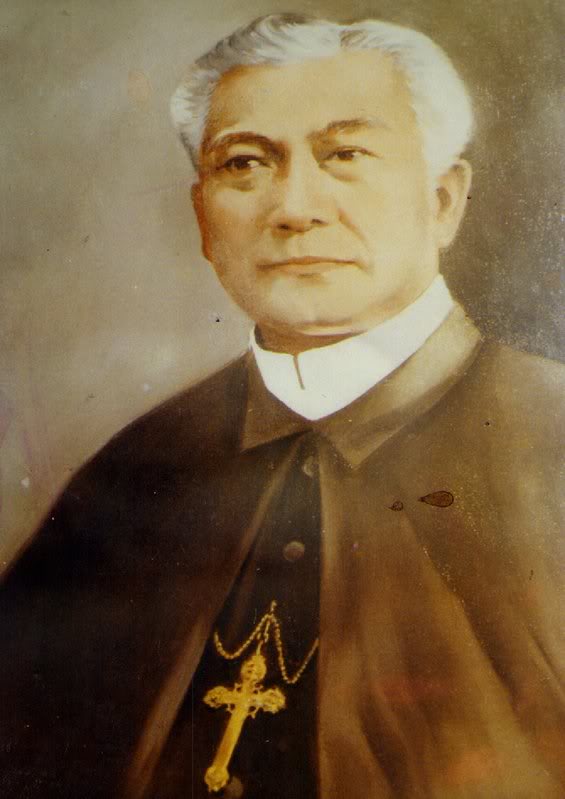
Gregorio Agilpay was the principal founder and first Supreme Bishop of the Philippine Independent Church.

Agilpay was born in 1860 and orphaned at an early age. As a boy he worked in the tobacco fields during the Spanish occupation of his homeland and for the rest of his life bore hard feelings toward the Spanish colonialists. He took a degree in law before embarking on theological studies in preparation for the priesthood. He was ordained in 1890, but seems to have been something of a free spirit from the beginning, illustrated by his joining the Freemasons, an affiliation that was forbidden to Catholic priests.

In 1898, the Philippine Revolution began to bring an end to Spanish colonization. Because church and state were deeply intertwined, any revolutionary activity in the state was destined to have impact as well on the church. Matters were compounded by the fact that the Spanish hierarchy did not allow native Filipinos to rise through the ranks of their own church. Agilpay quickly took the side of the Filipino nationalists and recognized that national independence would also mean independence from the Roman Catholic Church because it was strongly allied with Spanish interests. Agilpay called upon his fellow Catholic priests to occupy the parishes and support the revolution. Many followed his lead.

Agilpay was at first threatened with excommunication and later he was tempted with a deal that would have made him a Roman Catholic bishop with enormous resources at his personal disposal. Agilpay refused the deal and with his Filipino supporters formed a new national church. Subsequently, Agilpay and the whole of the Philippine Independent Church would be excommunicated from the Roman Catholic Church.

In 1960, the Philippine Independent Church entered into full communion with the Episcopal Church and through that affiliation is recognized as being in full communion with the churches of the Anglican Communion.

Collects

Eternal God, who didst call Gregorio Aglipay to witness to thy truth in the renewal of thy Church in the Philippines: Help us, like him, to be guided by thy Holy Spirit, that people everywhere may hear the saving words of our Savior, so that all may believe and find eternal life; through the same Jesus Christ who, with thee and the Holy Spirit, liveth and reigneth, one God, for ever and ever. Amen.

Eternal God, you called Gregorio Aglipay to witness to your truth in the renewal of your Church in the Philippines: Help us, like him, to be guided by your Holy Spirit, that people everywhere may hear the saving words of our Savior, so that all may believe and find eternal life; through the same Jesus Christ who, with you and the Holy Spirit, lives and reigns, one God, for ever and ever. Amen.

Lessons

1 Chronicles 28:19–29:2

1 Peter 4:7–11

Matthew 20:1–16

Psalm

126

Preface for the Dedication of a Church

Text From Holy, Women, Holy Men: Celebrating the Saints © 2010 by The Church Pension Fund. Used by permission.
 
 We invite your reflections about this commemoration and its suitability for the official calendar and worship of The Episcopal Church. How did this person’s life witness to the Gospel? How does this person inspire us in Christian life today?

If you’d like to participate in the official online trial use survey, click here. For more information about the survey, click here.

To post a comment, your first and last name and email address are required. Your name will be published; your email address will not. The first time you post, a moderator will need to approve your submission; after that, your comments will appear instantly.

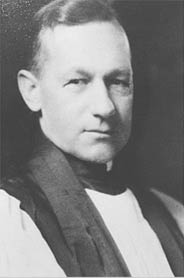
September 4: Paul Jones, 1941

Welcome to the Holy Women, Holy Men blog! We invite you to read about this commemoration, use the collect and lessons in prayer, whether individually or in corporate worship, then tell us what you think. For more information about this project, click here.

About this commemoration

Paul Jones was born in 1880 in the rectory of St. Stephen’s Church, Wilkes-Barre, Pennsylvania. After graduating from Yale University and the Episcopal Divinity School in Cambridge, Massachusetts, he accepted a call to serve a mission in Logan, Utah. In 1914 Paul Jones was appointed Archdeacon of the Missionary District of Utah and, later that year, was elected its Bishop. Meanwhile, World War I had begun.

As Bishop of Utah, Paul Jones did much to expand the Church’s mission stations and to strengthen diocesan institutions. At the same time he spoke openly about his opposition to war. With the United States entry into the war, the Bishop of Utah’s views became increasingly controversial. At a meeting of the Fellowship of Reconciliation in Los Angeles in 1917, Bishop Jones expressed his belief that “war is unchristian,” for which he was attacked with banner headlines in the Utah press. As a result of the speech and the reaction it caused in Utah, a commission of the House of Bishops was appointed to investigate the situation. In their report, the commission concluded that “The underlying contention of the Bishop of Utah seems to be that war is unchristian. With this general statement the Commission cannot agree … ” The report went on to recommend that “The Bishop of Utah ought to resign his office,” thus rejecting Paul Jones’ right to object to war on grounds of faith and conscience.

 In the spring of 1918, Bishop Jones, yielding to pressure, resigned as Bishop of Utah. For the next 23 years, until his death on September 4, 1941, he continued a ministry within the Church dedicated to peace and conscience, speaking always with a conviction and gentleness rooted in the Gospel.

 In his farewell to the Missionary District of Utah in 1918, Bishop Jones said: “Where I serve the Church is of small importance, so long as I can make my life count in the cause of Christ … Expediency may make necessary the resignation of a Bishop at this time, but no expedience can ever justify the degradation of the ideals of the episcopate which these conclusions seem to involve.”

 Collects

I. Merciful God, who didst send thy beloved Son to preach peace to those who are far off and to those who anear: Raise up in this and every land witnesses, who, after the example of thy servant Paul Jones, will stand firm in proclaiming the Gospel of the Prince of Peace, our Savior Jesus Christ, who liveth and reigneth with thee and the Holy Spirit, one God, now and for ever. Amen.

II. Merciful God, you sent your beloved Son to preach peace to those who are far off and to those who are near: Raise up in this and every land witnesses who, after the example of your servant Paul Jones, will stand firm in proclaiming the Gospel of the Prince of Peace, our Savior Jesus Christ, who lives and reigns with you and the Holy Spirit, one God, now and for ever. Amen.

Lessons

76 Malachi 2:17–3:5

1 Peter 3:8–14 a

John 8:31

Psalm  32

 Preface of a Saint (3)

Text From Holy, Women, Holy Men: Celebrating the Saints © 2010 by The Church Pension Fund. Used by permission.
 
 We invite your reflections about this commemoration and its suitability for the official calendar and worship of The Episcopal Church. How did this person’s life witness to the Gospel? How does this person inspire us in Christian life today?

If you’d like to participate in the official online trial use survey, click here. For more information about the survey, click here.

To post a comment, your first and last name and email address are required. Your name will be published; your email address will not. The first time you post, a moderator will need to approve your submission; after that, your comments will appear instantly.

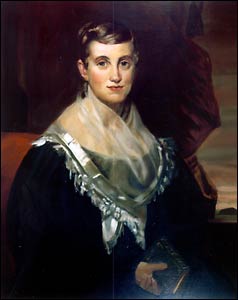
September 3: Prudence Crandall, Teacher and Prophetic Witness, 1890

Welcome to the Holy Women, Holy Men blog! We invite you to read about this commemoration, use the collect and lessons in prayer, whether individually or in corporate worship, then tell us what you think. For more information about this project, click here.

About this commemoration

 Born to a Quaker family in Rhode Island in 1803, Prudence Crandall was educated in arithmetic, the sciences, and Latin at the New England Friend’s Boarding School in Rhode Island. The Quakers, or “Friends,” believed that women should be educated, and it was in the environment of the Friend’s Boarding School that Prudence Crandall’s passion for teaching was first awakened. In 1831, Crandall started a girl’s school in Canterbury, Connecticut, where she educated the daughters of the town’s wealthy families. In 1833 she admitted to her school a young African American girl named Sarah Harris. Harris wanted an education so that she could in turn teach other African American children. The parents of the white children at Crandall’s school were outraged and demanded Harris’s expulsion, but Crandall refused and decided to open a new school for African American girls.

 Despite repeated attempts by town members to close the school, and even threats to destroy it, Crandall persevered in her labors. She enlisted the help of William Lloyd Garrison, editor of The Liberator, the nation’s major antislavery newspaper. Through his paper and advocacy, Garrison spread awareness of her cause all over the nation. However, later in 1833, the state legislature passed the so-called “Black Law,” which made it a crime to open a school that taught black children from any state other than Connecticut. Crandall, who had received pupils from other states, was arrested, jailed, and tried. She was eventually convicted, but a higher court reversed the decision. Far from subsiding, the harassment she endured grew worse, and, fearing for the safety of her students, she closed her school in 1834. After her husband died in 1874, Crandall moved to Elk Falls, Kansas. In 1886 the Connecticut stage legislature awarded her a pension. In a petition signed by more than a hundred citizens of that state, many expressed their regret and shame over her treatment. Mark Twain attempted to persuade the state to buy back her original home in Canterbury. Prudence Crandall died in 1890, and today she is recognized as the official State Heroine of Connecticut.

Collects

I. God, the wellspring of justice and strength: We thank thee for raising up in Prudence Crandall a belief in education and a resolute will to teach girls of every color and race, that alongside her they might take their place in working for the nurture and well-being of all society, undaunted by prejudice or adversity. Grant that we, following her example, may participate in the work of building up the human family in Christ, thy Word and Wisdom; who with thee and the Holy Spirit liveth and reigneth, one God, now and for ever. Amen.

II.  God, the wellspring of justice and strength: We thank you for raising up in Prudence Crandall a belief in education and a resolute will to teach girls of every color and race, that alongside her they might take their place in working for the nurture and well-being of all society, undaunted by prejudice or adversity. Grant that we, following her example, may participate in the work of building up the human family in Christ, your Word and Wisdom; who with you and the Holy Spirit lives and reigns, one God, now and for ever. Amen.

Lessons

Habakkuk 3:16–19

Acts 24:10–21

Luke 9:62–10:2

 Psalm

86:11–17

 Preface of a Saint (2)

Text From Holy, Women, Holy Men: Celebrating the Saints © 2010 by The Church Pension Fund. Used by permission.
 
 We invite your reflections about this commemoration and its suitability for the official calendar and worship of The Episcopal Church. How did this person’s life witness to the Gospel? How does this person inspire us in Christian life today?

If you’d like to participate in the official online trial use survey, click here. For more information about the survey, click here.

To post a comment, your first and last name and email address are required. Your name will be published; your email address will not. The first time you post, a moderator will need to approve your submission; after that, your comments will appear instantly.

September 2: The Martyrs of New Guinea, 1942

Welcome to the Holy Women, Holy Men blog! We invite you to read about this commemoration, use the collect and lessons in prayer, whether individually or in corporate worship, then tell us what you think. For more information about this project, click here.

About this commemoration

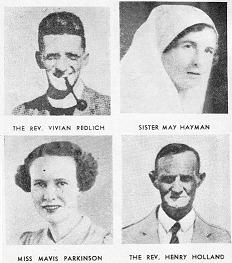
 New Guinea, the second largest island in the world, is still one of the main frontiers of Christian mission, because of its difficult terrain and the cultural diversity of its peoples, who speak some 500 distinct languages. Christian missionaries first began work there in the 1860s and 1870s, with only limited success. The Anglican mission began in 1891, and the first bishop was consecrated in 1898.

During World War II, the suffering of missionaries and of native people was severe. This feast day, observed in the Diocese of New Guinea and in many dioceses of the Church of Australia, marks the witness of eight missionaries and two Papuan martyrs, who were betrayed by non-Christians to the Japanese invaders. But the day also includes remembrance of the faith and devotion of Papuan Christians of all Churches, who risked their own lives to care for the wounded, and to save the lives of many who otherwise would have perished.

 Collects

I. Almighty God, we remember before thee this day the blessed martyrs of New Guinea, who, following the example of their Savior, laid down their lives for their friends; and we pray thee that we, who honor their memory, may imitate their loyalty and faith; through Jesus Christ our Lord, who liveth and reigneth with thee and the Holy Spirit, one God, for ever and ever. Amen.

II. Almighty God, we remember before you this day theblessed martyrs of New Guinea, who, following the example of their Savior, laid down their lives for their friends; and we pray that we who honor their memory may imitate their loyalty and faith; through Jesus Christ our Lord, who lives and reigns with you and the Holy Spirit, one God, for ever and ever. Amen. 

Lessons
 
I Chronicles 22:11-13
I. Thessalonians 5:21 b – 24
Luke 12:4-12
 
Psalm
126
 
Preface of Apostles
 
Text From Holy, Women, Holy Men: Celebrating the Saints © 2010 by The Church Pension Fund. Used by permission.
 
 We invite your reflections about this commemoration and its suitability for the official calendar and worship of The Episcopal Church. How did this person’s life witness to the Gospel? How does this person inspire us in Christian life today?

If you’d like to participate in the official online trial use survey, click here. For more information about the survey, click here.

To post a comment, your first and last name and email address are required. Your name will be published; your email address will not. The first time you post, a moderator will need to approve your submission; after that, your comments will appear instantly.

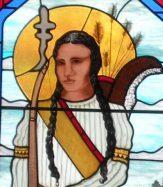
September 1: David Pendleton Oakerhater, Deacon and Missionary, 1931

Welcome to the Holy Women, Holy Men blog! We invite you to read about this commemoration, use the collect and lessons in prayer, whether individually or in corporate worship, then tell us what you think. For more information about this project, click here.

About this commemoration


“God’s warrior” is an epithet by which David Pendleton Oakerhater is known among the Cheyenne Indians of Oklahoma. The title is an apt one, for this apostle of Christ to the Cheyenne was originally a soldier who fought against the United States government with warriors of other tribes in the disputes over Indian land rights. By the late 1860s Oakerhater had distinguished himself for bravery and leadership as an officer in an elite corps of Cheyenne fighters. In 1875, after a year of minor uprisings and threats of major violence, he and twenty-seven other warrior leaders were taken prisoner by the U.S. Army, charged with inciting rebellion, and sent to a disused military prison in Florida.
 
Under the influence of a concerned Army captain, who sought to educate the prisoners, Oakerhater and his companions learned English, gave art and archery lessons to the area’s many visitors, and had their first encounter with the Christian faith. The captain’s example, and that of other concerned Christians, from as far away as New York, had their effect on the young warrior. He was moved to answer the call to transform his leadership in war into a lifelong ministry of peace.
 
With sponsorship from the Diocese of Central New York and financial help from a Mrs. Pendleton of Cincinnati, he and three other prisoners went north to study for the ministry. At his baptism in Syracuse in 1878 he took the name David Pendleton Oakerhater, in honor of his benefactress.
 
Soon after his ordination to the diaconate in 1881, David returned to Oklahoma. There, he was instrumental in founding and operating schools and missions, through great personal sacrifice and often in the face of apathy from the Church hierarchy and resistance from the government. He continued his ministry of service, education, and pastoral care among his people until his death on August 31, 1931.
 
Half a century before, the young deacon had told his people: “You all know me. You remember when I led you out to war I went first, and what I told you was true. Now I have been away to the East and I have learned about another captain, the Lord Jesus Christ, and he is my leader. He goes first, and all he tells me is true. I come back to my people to tell you to go with me now in this new road, a war that makes all for peace.”
 
Collects
 
I. O God of unserchable wisdom and infinite mercy, thou didst choose a captive warrior, David Oakerhater, to be thy servant, and didst send him to be a missionary to his own people and to execute the office of a deacon among them: Liberate us, who commemorate him today, from bondage to self, and empower us for service to thee and to the neighbors thou hast given us; through Jesus Christ, the captain of our salvation; who liveth and reigneth with thee and the Holy Spirit, one God for ever and ever. Amen
 
II. O God of unsearchable wisdom and infinite mercy, you chose a captive warrior, David Oakerhater, to be your servant, and sent him to be a missionary to his own people, and to exercise the office of a deacon among them: Liberate us, who commemorate him today, from bondage to self, and empower us for service to you and to the neighbors you have given us; through Jesus Christ, the captain of our salvation; who lives and reigns with you and the Holy Spirit, one God, for ever and ever. Amen.
 
Lessons
 
Isaiah 52:7-10
Romans 8:1-6
Luke 10:1-9
 
Psalm
96:1-7
 
Preface of Apostles
 
Text From Holy, Women, Holy Men: Celebrating the Saints © 2010 by The Church Pension Fund. Used by permission.
 
 We invite your reflections about this commemoration and its suitability for the official calendar and worship of The Episcopal Church. How did this person’s life witness to the Gospel? How does this person inspire us in Christian life today?

If you’d like to participate in the official online trial use survey, click here. For more information about the survey, click here.

To post a comment, your first and last name and email address are required. Your name will be published; your email address will not. The first time you post, a moderator will need to approve your submission; after that, your comments will appear instantly.

August 31: Aidan, 651, and Cuthbert, 687, Bishops of Lindisfarne

Welcome to the Holy Women, Holy Men blog! We invite you to read about this commemoration, use the collect and lessons in prayer, whether individually or in corporate worship, then tell us what you think. For more information about this project, click here.

About this commemoration

Aidan
Aidan

The Gospel first came to the northern English in 627, when King Edwin of Northumbria was converted by missionaries from Canterbury. Edwin’s death in battle in 632 was followed by a severe pagan reaction. A year later, Edwin’s exiled nephew Oswald gained the kingdom, and proceeded at once to restore the Christian mission.

During his exile, Oswald had lived at Columba’s monastery of Iona, where he had been converted and baptized. Hence he sent to Iona, rather than to Canterbury, for missionaries. The head of the new mission was a gentle monk named Aidan, who centered his work on Lindisfarne, an island off the northeast coast of England. Aidan and his companions restored Christianity in Northumbria and extended the mission through the midlands as far south as London.

Aidan died at Bamborough, on August 31, 651. Bede said of him: “He neither sought nor loved anything of this world, but delighted in distributing immediately to the poor whatever was given him by kings or rich men of the world. He traversed both town and country on foot, never on horseback, unless compelled by some urgent necessity. Wherever in his way he saw any, either rich or poor, he invited them, if pagans, to embrace the mystery of the faith; or if they were believers, to strengthen them in the faith and stir them up by words and actions to alms and good works.”

Cuthbert was the most popular saint of the pre-Conquest Anglo- Saxon Church. He was born about 625. In response to a vision of the death of Aidan of Lindisfarne, Cuthbert entered religious life and was formed in the austere traditions of Celtic monasticism. He was Prior of Melrose Abbey from 651-664 and was then Prior of Lindisfarne. Made Bishop of Hexham in 684, Cuthbert continued to live in Lindisfarne. He died at his hermitage on March 20, 687.

Cuthbert accepted the decisions of the Synod of Whitby in 663 that brought the usages of the English Church in line with Roman practice. He was, therefore, a “healer of the breach” that threatened to divide the church into Celtic and Roman factions.

Collect of the Day

Everliving God, you called your servants Aidan and Cuthbert to proclaim the Gospel in northern England and gave them loving hearts and gentle spirits: Grant us grace to live as they did, in simplicity, humility and love for the poor; through Jesus Christ, who came among us as one who serves, and who lives and reigns with you and the Holy Spirit, one God, now and for ever. Amen.

Lessons

Isaiah 55:6–12

Romans 12:6–13

John 10:25b–30

Psalm 104: 32–35

Preface of Apostles

We invite your reflections about this commemoration and its suitability for the official calendar and worship of The Episcopal Church. How did this person’s life witness to the Gospel? How does this person inspire us in Christian life today?

To post a comment, your first and last name and email address are required. Your name will be published; your email address will not. The first time you post, a moderator will need to approve your submission; after that, your comments will appear instantly.

From Holy, Women, Holy Men: Celebrating the Saints © 2010 by The Church Pension Fund. Used by permission.

August 30: Charles Chapman Grafton, Bishop of Fond du Lac, and Ecumenist, 1912

Welcome to the Holy Women, Holy Men blog! We invite you to read about this commemoration, use the collect and lessons in prayer, whether individually or in corporate worship, then tell us what you think. For more information about this project, click here.

About this commemoration

Charles Grafton
Charles Grafton

Charles Grafton was born April 12, 1830 in Boston, and attended Harvard Law School. He was confirmed at Church of the Advent— then a leading parish implementing the principles of the Oxford Movement—where he began seriously to explore his vocation. After graduation he moved to Maryland to study with the Tractarian Bishop William Whittington who eventually ordained him deacon on December 23, 1855, and priest on May 30, 1858.

Grafton served a number of parishes in Maryland but experienced a growing attraction to the religious life. In 1865, he left for England specifically to meet Edward Bouverie Pusey. In the following year, after a series of meetings held at All Saints, Margaret Street, Grafton and two others took religious vows and the Society of St. John the Evangelist had its beginning. In 1872, Grafton returned and was elected fourth Rector of the Church of the Advent, Boston.

In 1888, Grafton was elected second bishop of Fond du Lac. His consent process was difficult as many thought him too ritualistic, but he soon became known not only as an Anglo-Catholic but also as an ecumenist, deeply committed to improve relations with the Orthodox and Old Catholics. He founded the Sisters of the Holy Nativity.

Perhaps the most famous event during Grafton’s long episcopate was the ordination of his successor in 1900. He invited the Russian Orthodox Bishop Tikhon and the Old Catholic Bishop Anthony Kozlowski to participate. The service stirred up furor across the country with the publication of a photograph (called derisively “The Fond du Lac Circus”) that showed all eight Episcopal bishops and the two visiting bishops in cope and miter. It caused a church-wide furor over ritual and vestments that lasted for over six months, with accusations and threats of ecclesiastical trial flying from all corners, and with scurrilous attacks and virulent justifications. When the dust finally settled, the legitimacy of traditional catholic ritual and vestments had thereafter gained a permanent place in the liturgy in the Episcopal Church.

Bishop Grafton died August 30, 1912.

Collect of the Day

Loving God, you called Charles Chapman Grafton to be a bishop in your Church and endowed him with a burning zeal for souls: Grant that, following his example, we may ever live for the extension of your kingdom, that your glory may be the chief end of our lives, your will the law of our conduct, your love the motive of our actions, and Christ’s life the model and mold of our own; through the same Jesus Christ, who lives and reigns with you and the Holy Spirit, one God, throughout all ages. Amen.

Lessons

Sirach (Ecclesiasticus) 50:16–21

Revelation 5:7–10

John 10:11–16

Psalm 134

Preface of a Saint (1)

We invite your reflections about this commemoration and its suitability for the official calendar and worship of The Episcopal Church. How did this person’s life witness to the Gospel? How does this person inspire us in Christian life today?

To post a comment, your first and last name and email address are required. Your name will be published; your email address will not. The first time you post, a moderator will need to approve your submission; after that, your comments will appear instantly.

From Holy, Women, Holy Men: Celebrating the Saints © 2010 by The Church Pension Fund. Used by permission.

August 28: Augustine, Bishop of Hippo, and Theologian, 430

Welcome to the Holy Women, Holy Men blog! We invite you to read about this commemoration, use the collect and lessons in prayer, whether individually or in corporate worship, then tell us what you think. For more information about this project, click here.

About this commemoration

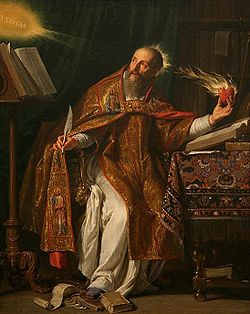
Saint Augustine, by Philippe de Champaigne

Augustine, perhaps the greatest theologian in the history of Western Christianity, was born in 354 at Tagaste in North Africa. In his restless search for truth, he was attracted by Manichaeism and Neoplatonism, and was constantly engaged in an inner struggle with his personal morals. Finally, under the influence of his mother Monnica, Augustine surrendered to the Christian faith in the late summer of 386. He

was baptized by Ambrose, Bishop of Milan, on Easter Eve in 387. After returning to North Africa in 391, Augustine found himself unexpectedly chosen by the people of Hippo to be a presbyter. Four years later he was chosen bishop of that city. His spiritual autobiography, The Confessions of St. Augustine, written shortly before 400 in the form of an extended prayer, is a classic of Western spirituality.

Augustine wrote countless treatises, letters, and sermons. They have provided a rich source of new and fresh insights into Christian truth.

The Manichaeans had attempted to solve the problem of evil by positing the existence of an independent agency eternally opposed to God. In refutation, Augustine affirmed that all creation is essentially good, having been created by God; and that evil is, properly speaking, the privation of good. A rigorist sect, the Donatists, had split from the Great Church after the persecution of Diocletian in the early fourth century. Against them, Augustine asserted that the Church was “holy,” not because its members could be proved holy, but because holiness was the purpose of the Church, to which all its members are called.

Stirred by Alaric the Visigoth’s sack of Rome in 410, Augustine wrote his greatest work, The City of God. In it he writes: “Two cities have been formed by two loves: the earthly by love of self, even to the contempt of God, the heavenly by the love of God, even to the contempt of self. The earthly city glories in itself, the heavenly city glories in the Lord … In the one, the princes, and the nations it subdues, are ruled by the love of ruling; in the other, the princes and the subjects serve one another in love.”

Augustine died on August 28, 430, as the Vandals were besieging his own earthly city of Hippo.

Collect of the Day

Lord God, the light of the minds that know you, the life of the souls that love you, and the strength of the hearts that serve you: Help us, following the example of your servant Augustine of Hippo, so to know you that we may truly love you, and so to love you that we may fully serve you, whom to serve is perfect freedom; through Jesus Christ our Lord, who lives and reigns with you and the Holy Spirit, one God, now and for ever. Amen.

Lessons

Isaiah 62:6–12

Hebrews 12:22–24,28–29

John 14:6–15

Psalm 87

Preface of Baptism

We invite your reflections about this commemoration and its suitability for the official calendar and worship of The Episcopal Church. How did this person’s life witness to the Gospel? How does this person inspire us in Christian life today?

To post a comment, your first and last name and email address are required. Your name will be published; your email address will not. The first time you post, a moderator will need to approve your submission; after that, your comments will appear instantly.

From Holy, Women, Holy Men: Celebrating the Saints © 2010 by The Church Pension Fund. Used by permission.