Welcome to the Holy Women, Holy Men blog! We invite you to read about this commemoration, use the collect and lessons in prayer, whether individually or in corporate worship, then tell us what you think. For more information about this project, click here.
•
About this commemoration
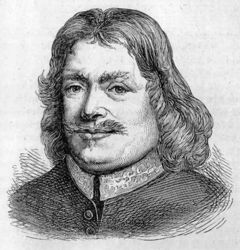
John Bunyan was born in 1628 at Elstow in Bedfordshire England. Little is known about his early life. His parents were poor; his father was a brazier, a trade that Bunyan also followed for a time. Bunyan had little to no formal education, and he may have learned to read English from reading the Bible. He served as a soldier in the Parliamentary army during the English Civil War, after which he married. His wife introduced him to Arthur Dent’s Plain Man’s Pathway to Heaven and Bishop Lewis Bayly’s Practice of Piety, devotional books that set him on the religious path.
In 1653 he was baptized into the Bedford Baptist (Independent) Church, and was soon thereafter recognized as a preacher, a vocation at which he excelled. He claimed to have had visions similar to those of Teresa of Avila. After the Restoration of the monarchy in 1660, Bunyan was targeted and slandered by the new royalist government along with many others who had supported the revolutionary cause during the Civil War. Under the laws of the restored Stuart regime, congregational meeting houses were closed and citizens were required to attend their Anglican parishes. It was punishable by law for anyone, except those who had been ordained according to Episcopal orders, to conduct services or preach. Bunyan was arrested while preaching in 1660 and spent most of the next twelve years imprisoned in Bedford.
While imprisoned, Bunyan wrote the first part of his most famous work, The Pilgrim’s Progress, an allegorical story that was completed in 1684. The Pilgrim’s Progress tells the story of Christian, a lonely pilgrim who must cross such treacherous terrain as the Slough of Despond and the River of Death before finally reaching the Land of Beulah. Along with John Milton’s Paradise Lost, it was one of the most influential works of the seventeenth century, and retained its influence for several centuries thereafter.
Collect of the Day
God of peace, you called John Bunyan to be valiant for truth: Grant that as strangers and pilgrims we may at the last rejoice with all the faithful in your heavenly city; through Jesus Christ our Savior, who with you and the Holy Spirit lives and reigns, one God, for ever and ever. Amen.
Lessons
Job 33:14–19,26–28
Hebrews 4:12–15
Matthew 7:12–14
Psalm 49:4–15
Preface of All Saints
We invite your reflections about this commemoration and its suitability for the official calendar and worship of The Episcopal Church. How did this person’s life witness to the Gospel? How does this person inspire us in Christian life today?
To post a comment, your first and last name and email address are required. Your name will be published; your email address will not. The first time you post, a moderator will need to approve your submission; after that, your comments will appear instantly.
From Holy, Women, Holy Men: Celebrating the Saints © 2010 by The Church Pension Fund. Used by permission.