Welcome to the Holy Women, Holy Men blog! We invite you to read about this commemoration, use the collect and lessons in prayer, whether individually or in corporate worship, then tell us what you think. For more information about this project, click here.
•
About this commemoration
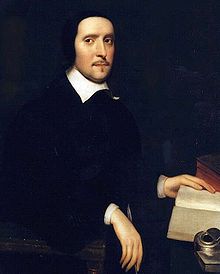
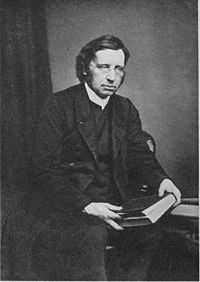
Jeremy Taylor, one of the most influential of the “Caroline Divines,” was educated at Cambridge and, through the influence of William Laud, became a Fellow of All Souls at Oxford. He was still quite young when he became chaplain to Charles I and, later, during the Civil War, a chaplain in the Royalist army.
The successes of Cromwell’s forces brought about Taylor’s imprisonment and, after Cromwell’s victory, Taylor spent several years in forced retirement as chaplain to the family of Lord Carberry in Wales. It was during this time that his most influential works were written, especially Holy Living and Holy Dying (1651).
Among his other works, Liberty of Prophesying proved to be a seminal work in encouraging the development of religious toleration in the seventeenth century. The principles set forth in that book rank with those of Milton’s Areopagitica in its plea for freedom of thought.
Despite Taylor’s unquestioned literary genius, he was, unfortunately, not asked to have a part in the Prayer Book revision of 1662. The first American Prayer Book, however, incorporated one of his prayers, part of which has been adapted to serve as the Collect of his commemoration; and another has been added in the present Prayer Book.
Taylor’s theology has sometimes been criticized, most bitingly by Samuel Taylor Coleridge, who claims that Taylor seems to “present our own holy life as the grounds of our religious hope, rather than as the fruit of that hope, whose ground is the mercies of Christ.” No such complaint, however, was ever made about his prayers, which exemplify the best of Caroline divinity, blended with great literary genius.
In later life, Taylor and his family moved to the northeastern part of Ireland where, after the restoration of the monarchy, he became Bishop of Down and Connor. To this was later added the small adjacent diocese of Dromore. As Bishop, he labored tirelessly to rebuild churches, restore the use of the Prayer Book, and overcome continuing Puritan opposition. As Vice-chancellor of Trinity College, Dublin, he took a leading part in reviving the intellectual life of the Church of Ireland. He remained to the end a man of prayer and a pastor.
Collect of the Day
O God, whose days are without end, and whose mercies cannot be numbered: Make us, like your servant Jeremy Taylor, deeply aware of the shortness and uncertainty of human life; and let your Holy Spirit lead us in holiness and righteousness all our days; through Jesus Christ our Lord, who lives and reigns with you and the Holy Spirit, one God, now and for ever. Amen.
Lessons
Proverbs 7:1–4
Romans 14:7–9,10b–12
John 3:11–21
Psalm 16:5–11
Preface of a Saint (1)
We invite your reflections about this commemoration and its suitability for the official calendar and worship of The Episcopal Church. How did this person’s life witness to the Gospel? How does this person inspire us in Christian life today?
To post a comment, your first and last name and email address are required. Your name will be published; your email address will not. The first time you post, a moderator will need to approve your submission; after that, your comments will appear instantly.
From Holy, Women, Holy Men: Celebrating the Saints © 2010 by The Church Pension Fund. Used by permission.