Close

August 3: William Edward Burghardt DuBois, Sociologist, 1963

Welcome to the Holy Women, Holy Men blog! We invite you to read about this commemoration, use the collect and lessons in prayer, whether individually or in corporate worship, then tell us what you think. For more information about this project, click here.

About this commemoration

WEB DuBois
WEB DuBois

William Edward Burghardt Dubois was born in 1868 in Great Barrington, Massachusetts. As a young man he had already developed a deep concern for the advancement of his race, and at 15, he began to advocate for black Americans in his capacity as the local correspondent for the New York Globe.
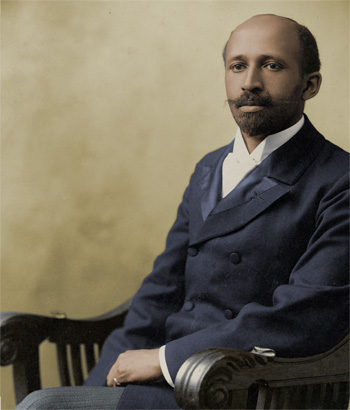
In 1896, following the completion of his doctoral degree, Dubois received a fellowship to conduct research in the seventh ward slums of Philadelphia. His work with the urban black population there marked the first scientific approach to sociological study, and for that reason, Dubois is hailed as the father of Social Science.

In 1903, while teaching at Atlanta University, he published his book The Souls of Black Folks, in which he outlined his philosophical disagreement with important figures such as Booker T. Washington, who argued that Black people should forego political equality and civil rights and focus instead on industrial evolution. DuBois believed instead in the higher education of a “talented tenth” whose education would naturally help other African Americans achieve.

In 1906, he sought others to aid him in his efforts toward “organized determination and aggressive action on the part of men who believe in Negro freedom and growth.” The result was the so-called “Niagara Movement” (named for the group’s first meeting site, which was shifted to Canada when they were prevented from meeting in the U.S.), the objectives of which were to advocate civil justice and oppose discrimination. In 1909, most of the group members merged with white supporters and the National Association for the Advancement of Colored People was formed. DuBois advanced his causes, sometimes at odds with the white leadership of the NAACP, in the magazine Crisis.

A leading participant in several Pan-African meetings, DuBois renounced his American citizenship and moved to Ghana, where he died in 1963, on the eve of the March on Washington. Dr. Martin Luther King Jr. wrote of DuBois, “His singular greatness lay in his quest for truth about his own people. There were very few scholars who concerned themselves with honest study of the black man and he sought to fill the immense void.”

Collect of the Day

Gracious God, we thank you for the witness of William Edward Burghardt DuBois, passionate prophet of civil rights, whose scholarship advanced the dignity of the souls of black folk; and we pray that we, like him, may use our gifts to do justice in the Name of Jesus Christ our Liberator and Advocate; who with you and the Holy Spirit lives and reigns, one God for ever and ever. Amen.

Lessons

Jeremiah 34:8–18

Galatians 2:15–20

Mark 3:23–29

Psalm 113:1–7

Preface of Baptism

We invite your reflections about this commemoration and its suitability for the official calendar and worship of The Episcopal Church. How did this person’s life witness to the Gospel? How does this person inspire us in Christian life today?

To post a comment, your first and last name and email address are required. Your name will be published; your email address will not. The first time you post, a moderator will need to approve your submission; after that, your comments will appear instantly.

From Holy, Women, Holy Men: Celebrating the Saints © 2010 by The Church Pension Fund. Used by permission.

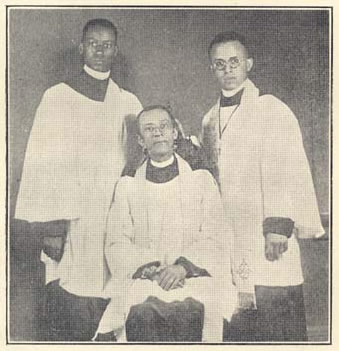
August 3: George Freeman Bragg, Jr., Priest, 1940

Welcome to the Holy Women, Holy Men blog! We invite you to read about this commemoration, use the collect and lessons in prayer, whether individually or in corporate worship, then tell us what you think. For more information about this project, click here.

About this commemoration

George Freeman Bragg, Jr.

An historian whose work gives us invaluable insight into the early history of African Americans in the Episcopal Church, George Freeman Bragg served for 35 years as the secretary of the Conference for Church Workers Among the Colored People and authored important studies such as A History of the Afro-American Group of The Episcopal Church and Richard Allen and Absalom Jones.

The grandson of a slave, Bragg was born into an Episcopalian family in Warrenton, North Carolina in 1863. As a young man he campaigned for the Readjuster Party in Virginia, which advocated for voting rights and state supported higher education for African- Americans. He was the editor of the influential black weekly paper The Lancet, which he renamed the Afro-American Churchman upon his entrance into divinity school in 1885. Through this paper, Bragg called attention to the fact that African Americans were treated as recipients of mission work but were not supported in raising up self- sustaining institutions that would have fostered their presence in the church.

George Bragg was ordained a deacon in 1887 in Norfolk, Virginia. He challenged the diocese’s policy of requiring black men to remain in deacon’s orders for five or more years, much longer than their white counterparts, and in 1888 he was ordained a priest. He served as the rector of St. James’ First African Church in Baltimore for 49 years, from 1891 until his death in 1940. He helped establish the Maryland Home for Friendless Colored Children, and did not cease in his advocacy for black Episcopalians and their full inclusion in the larger life of the church. He vehemently challenged the exclusion of African Americans from the church’s society for mission work. He was instrumental in fostering over twenty priestly vocations in an environment in which black Episcopalians were often left to fend for themselves without the support and resources of the larger church.

Collect of the Day

Almighty God, we thank you for the strength and courage of George Freeman Bragg, who rose from slavery to freedom, documented African-American history, and helped to found the first advocacy group for black people. Grant that we may tell the story of your wondrous works in ways that proclaim your justice in our own time, to the glory of Jesus Christ; who with you and the Holy Spirit lives and reigns, one God, for ever and ever. Amen.

Lessons

Wisdom 10:9–17

2 Corinthians 10:3–7

Luke 17:20–31

Psalm 143:5–10

Preface of Baptism

We invite your reflections about this commemoration and its suitability for the official calendar and worship of The Episcopal Church. How did this person’s life witness to the Gospel? How does this person inspire us in Christian life today?

To post a comment, your first and last name and email address are required. Your name will be published; your email address will not. The first time you post, a moderator will need to approve your submission; after that, your comments will appear instantly.

From Holy, Women, Holy Men: Celebrating the Saints © 2010 by The Church Pension Fund. Used by permission.

August 2: Samuel Ferguson, Missionary Bishop for West Africa, 1916

Welcome to the Holy Women, Holy Men blog! We invite you to read about this commemoration, use the collect and lessons in prayer, whether individually or in corporate worship, then tell us what you think. For more information about this project, click here.

About this commemoration

Samuel Ferguson
Samuel Ferguson

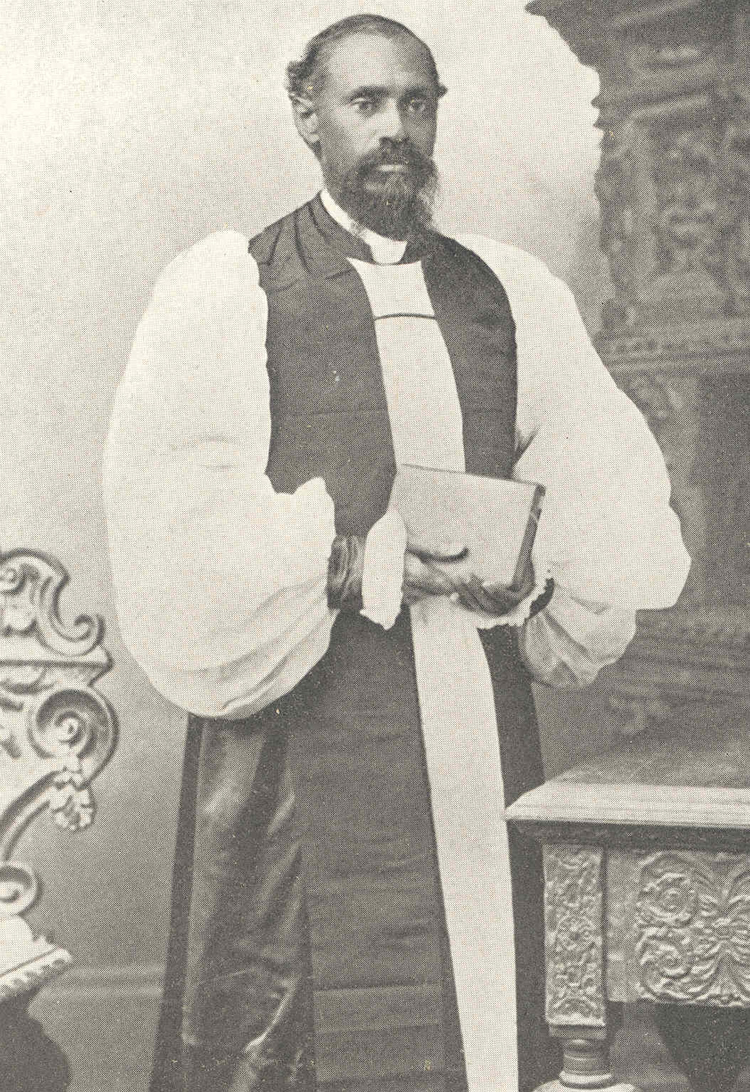
Samuel David Ferguson was born in Charleston, South Carolina, on January 1, 1842. He grew up in Liberia, West Africa, having moved there with his family at the age of six. He attended mission schools that were sponsored by the Episcopal Church and eventually became a teacher.

Ferguson was ordained to the diaconate in 1865 and to the priesthood in 1867, serving first as curate and then as rector of St. Mark’s Church, Harper, Liberia.

Perhaps due to his own upbringing and his first vocation as a teacher, Ferguson emphasized the importance of education throughout his ministry. He was the founder of schools throughout Liberia and his passion for education influenced other parts of West Africa. His efforts at starting schools were supported through funds given by the Women’s Auxiliary [later to be the United Thank Offering (UTO) of the Episcopal Church Women] under the leadership of Julia Chester Emery.

Ferguson was called to be the fourth bishop of Cape Palmas, later the Diocese of Liberia, in 1885. His ordination to the episcopate took place at Grace Church in New York City. He was the first American- born black to become Bishop of Liberia. Although not the first Episcopal bishop of African-American heritage, he was the first to sit in the House of Bishops.

With the generous support of Robert Fulton Cutting, a wealthy New York financier who served for a time as the treasurer of the Domestic and Foreign Missionary Society, Bishop Ferguson founded Cuttington College in 1889. In addition to basic studies, theological, agricultural, and industrial education were emphasized. Ferguson believed that establishing a strong spiritual and educational foundation was the best way for Liberia’s young people to transform society. Although closed for two decades during the Liberian civil war, the college, now Cuttington University, continues to serve the people of Liberia thus fulfilling Bishop Ferguson’s vision.

Bishop Ferguson remained in Liberia for the rest of his life. He died in Monrovia on August 2, 1916.

Collect of the Day

Almighty God, we bless you for moving your servant Samuel Ferguson to minister in Liberia, expanding the missionary vision of your Church in education and ministry. Stir up in us a zeal for your mission and a yearning for your holy Word; through Jesus Christ, who with you and the Holy Spirit lives and reigns, one God, for ever and ever. Amen.

Lessons

Sirach (Ecclesiasticus) 51:13–26

2 Peter 1:16–21

John 3:1–15

Psalm 119:9–16

Preface of a Saint (2)

We invite your reflections about this commemoration and its suitability for the official calendar and worship of The Episcopal Church. How did this person’s life witness to the Gospel? How does this person inspire us in Christian life today?

To post a comment, your first and last name and email address are required. Your name will be published; your email address will not. The first time you post, a moderator will need to approve your submission; after that, your comments will appear instantly.

From Holy, Women, Holy Men: Celebrating the Saints © 2010 by The Church Pension Fund. Used by permission.

August 1: Joseph of Arimathaea

Welcome to the Holy Women, Holy Men blog! We invite you to read about this commemoration, use the collect and lessons in prayer, whether individually or in corporate worship, then tell us what you think. For more information about this project, click here.

About this commemoration

Joseph of Arimathaea
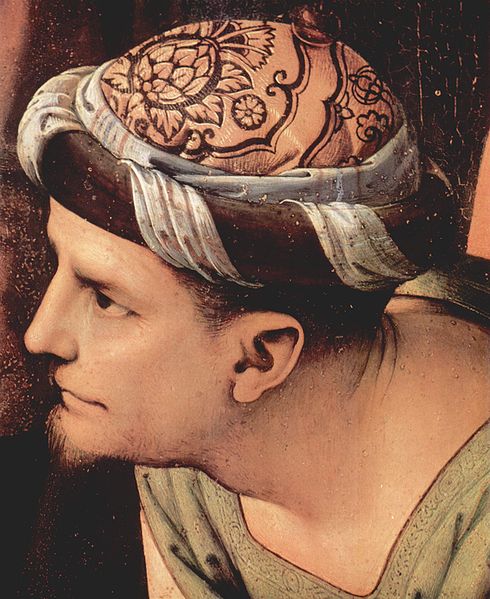
Joseph of Arimathaea, by Pietro Perugino

All that is certainly known of Joseph of Arimathaea comes from the narratives of the burial of Jesus in the Gospels. Though John speaks of Joseph as a secret disciple of our Lord, and associates him with Nicodemus, another member of the Jewish Sanhedrin who was drawn to Jesus, we know nothing of any further activity of these men in

the early Christian community. Later, however, legends developed about their leadership in the Church. One of the more attractive is the story of Joseph’s coming to the ancient Church of Glastonbury in Britain and bringing with him the Holy Grail (the cup used at the Last Supper). This tradition cannot be dated earlier than the thirteenth century. Although this and other stories obtained wide credence, they are not based on historical facts.

Joseph’s claim for remembrance does not depend upon such legends, however beautiful and romantic. When our Lord’s intimate disciples were hiding for fear of the authorities, Joseph came forward boldly and courageously to do, not only what was demanded by Jewish piety, but to act generously and humanely by providing his own tomb for the decent and proper burial of our Lord’s body, thus saving it from further desecration.

Collect of the Day

Merciful God, whose servant Joseph of Arimathaea with reverence and godly fear prepared the body of our Lord and Savior for burial, and laid it in his own tomb: Grant to us, your faithful people, grace and courage to love and serve Jesus with sincere devotion all the days of our life; through Jesus Christ our Lord, who lives and reigns with you and the Holy Spirit, one God, for ever and ever. Amen.

Lessons

Genesis 23:3–9,17–19

James 1:17–18

Luke 23:50–56

Psalm 16:5–11

Preface of the Commemoration of the Dead

We invite your reflections about this commemoration and its suitability for the official calendar and worship of The Episcopal Church. How did this person’s life witness to the Gospel? How does this person inspire us in Christian life today?

To post a comment, your first and last name and email address are required. Your name will be published; your email address will not. The first time you post, a moderator will need to approve your submission; after that, your comments will appear instantly.

From Holy, Women, Holy Men: Celebrating the Saints © 2010 by The Church Pension Fund. Used by permission.
July 31: Ignatius of Loyola, Priest and Monastic, 1556

Welcome to the Holy Women, Holy Men blog! We invite you to read about this commemoration, use the collect and lessons in prayer, whether individually or in corporate worship, then tell us what you think. For more information about this project, click here.

###

About this commemoration

Vision of St. Ignatius of Loyola by Peter Paul Rubens

Ignatius was born into a noble Basque family in 1491. In his
autobiography he tells us, “Up to his twenty-sixth year, he was a man
given over to the vanities of the world and took special delight in the
exercise of arms with a great and vain desire of winning glory.” An
act of reckless heroism at the Battle of Pamplona in 1521 led to his
being seriously wounded. During his convalescence at Loyola, Ignatius
experienced a profound spiritual awakening. Following his recovery
and an arduous period of retreat, a call to be Christ’s knight in the
service of God’s kingdom was deepened and confirmed.

Ignatius began to share the fruits of his experience with others, making
use of a notebook which eventually became the text of the Spiritual
Exercises
. Since his time, many have found the Exercises to be a way
of encountering Christ as intimate companion and responding to
Christ’s call: “Whoever wishes to come with me must labor with me.”

The fact that Ignatius was an unschooled layman made him suspect in
the eyes of church authorities and led him, at the age of 37, to study
theology at the University of Paris in preparation for the priesthood.
While there, Ignatius gave the Exercises to several of his fellow
students; and in 1534, together with six companions, he took vows
to live lives of strict poverty and to serve the needs of the poor.
Thus, what later came to be known as the Society of Jesus was born.

In 1540 the Society was formally recognized, and Ignatius became
its first Superior General. According to his journals and many of his
letters, a profound sense of sharing God’s work in union with Christ
made the season of intense activity which followed a time of great
blessing and consolation.

Ignatius died on July 31, 1556, in the simple room which served both
as his bedroom and chapel, having sought to find God in all things
and to do all things for God’s greater glory. His life and teaching, as
Evelyn Underhill and others have acknowledged, represents the best of
the Counter-Reformation.

Collects

I Almighty God, from whom all good things come: Thou
didst call Ignatius of Loyola to the service of thy Divine
Majesty and to find thee in all things. Inspired by his
example and strengthened by his companionship, may we
labor without counting the cost and seek no reward other
than knowing that we do thy will; through Jesus Christ
our Savior, who liveth and reigneth with thee and the Holy
Spirit, one God, now and for ever. Amen.

II Almighty God, from whom all good things come: You
called Ignatius of Loyola to the service of your Divine
Majesty and to find you in all things. Inspired by his
example and strengthened by his companionship, may we
labor without counting the cost and seek no reward other
than knowing that we do your will; through Jesus Christ
our Savior, who lives and reigns with you and the Holy
Spirit, now and for ever. Amen.

Lessons

Proverbs 22:1–6
1 Corinthians 10:31–11:1
Luke 9:57–62

Psalm 34:1–8

Preface of a Saint (3)

Text from Holy, Women, Holy Men: Celebrating the Saints © 2010 by The Church Pension Fund. Used by permission.
###

Links related to Ignatius of Loyola

The Society of Jesus in the United States

###

We invite your reflections about this commemoration and its suitability for the official calendar and worship of The Episcopal Church. How did this person’s life witness to the Gospel? How does this person inspire us in Christian life today?

If you’d like to participate in the official online trial use survey, click here. For more information about the survey, click here.

To post a comment, your first and last name and email address are required. Your name will be published; your email address will not. The first time you post, a moderator will need to approve your submission; after that, your comments will appear instantly.

July 30: William Wilberforce and Anthony Ashley Cooper, Lord Shaftesbury, Prophetic Witnesses, 1833, 1885

Welcome to the Holy Women, Holy Men blog! We invite you to read about this commemoration, use the collect and lessons in prayer, whether individually or in corporate worship, then tell us what you think. For more information about this project, click here.

###

About this commemoration

William Wilberforce

William Wilberforce was born into an affluent Yorkshire family
in 1759 and received his education at Cambridge. In 1780 he was
elected to the House of Commons, serving until 1825. Drawn to
the evangelical expression of the church from 1784, his colleagues
convinced him not to abandon his political activism in favor of his
newfound piety, but as a consequence he refused appointment to high
office or to a peerage.

Wilberforce passionately promoted overseas missions, popular
education, and the reformation of public manners and morals.
He supported parliamentary reform and emancipation for
Roman Catholics. Above all, he is remembered for his persistent,
uncompromising, and single-minded crusade for the abolition of slavery
and the slave trade, for which he received the blessing of John Wesley.

Wilberforce’s eloquence as a speaker, his charm in personal address,
and his profound religious spirit made him a formidable power for
good; and his countrymen came to recognize in him as a man of heroic
greatness. Wilberforce died in London on July 29, 1833, and was
buried in Westminster Abbey.

Anthony Ashley Cooper, Lord Shaftesbury

Anthony Ashley Cooper was born in 1801, son of the Sixth Earl of
Shaftsbury. Educated at Harrow and Oxford, he became a Member
of Parliament at the age of 25, representing the pocket borough of
Woodstock that was controlled by the Shaftsbury family.

He soon took up the challenge of social reform with particular
concern for the just treatment of factory workers, particularly
children. Lord Ashley led the charge in Parliament to limit workers’
hours and improve work and safety conditions. He also successfully
pushed through legislation that regulated the working conditions of
women and children in the mines, and restricted the abuse of little
boys as chimney sweeps.

Lord Ashley devoted his parliamentary career to issues of injustice at
all levels of English society, with particular concerns for the oppression
of women and children. He was an outspoken critic of the slave trade.

Like Wilberforce, he was a man of prayer and deep faith, and his
diaries are filled with profound spiritual reflections.

Collects
I Just and eternal God, we offer thanks for the stalwart faith
and persistence of thy servants William Wilberforce and
Anthony Ashley-Cooper, who, undeterred by opposition
and failure, held fast to a vision of justice in which no
child of yours might suffer in enforced servitude and
misery. Grant that we, drawn by that same Gospel vision,
may persevere in serving the common good and caring for
those who have been cast down, that they may be raised
up through Jesus Christ; who with thee and the Holy Spirit
liveth and reigneth, one God, for ever and ever. Amen.

II Just and eternal God, we give you thanks for the stalwart
faith and persistence of your servants William Wilberforce
and Anthony Ashley-Cooper, who, undeterred by
opposition and failure, held fast to a vision of justice in
which no child of yours might suffer in enforced servitude
and misery. Grant that we, drawn by that same Gospel
vision, may persevere in serving the common good and
caring for those who have been cast down, that they may be
raised up through Jesus Christ; who with you and the Holy
Spirit lives and reigns, one God, for ever and ever. Amen.

Lessons
Proverbs 25:11–15
Galatians 3:23–29
Mark 9:33–37,42

Psalm 112:1–9

Preface of the Incarnation

Text from Holy, Women, Holy Men: Celebrating the Saints © 2010 by The Church Pension Fund. Used by permission.

###

We invite your reflections about this commemoration and its suitability for the official calendar and worship of The Episcopal Church. How did this person’s life witness to the Gospel? How does this person inspire us in Christian life today?

If you’d like to participate in the official online trial use survey, click here. For more information about the survey, click here.

To post a comment, your first and last name and email address are required. Your name will be published; your email address will not. The first time you post, a moderator will need to approve your submission; after that, your comments will appear instantly.

July 29: Mary, Martha, and Lazarus of Bethany

Welcome to the Holy Women, Holy Men blog! We invite you to read about this commemoration, use the collect and lessons in prayer, whether individually or in corporate worship, then tell us what you think. For more information about this project, click here.

###

About this commemoration

Friends of Jesus: Martha, Mary and Lazarus Icon, oil on wood, 198?, Sao Paulo, Brazil Claudio Pastro, Brazil Benedictine Priory of Bethany, Loppem, Belgium

Mary, Martha, and Lazarus of Bethany are described in the Gospels
according to Luke and John as close and much-loved friends of Jesus.
Luke records the well-known story of their hospitality, which made
Martha a symbol of the active life and Mary of the contemplative,
though some commentators would take the words of Jesus to be a
defense of that which Mary does best, and a commendation of Martha
for what she does best—neither vocation giving grounds for despising
the other.

Jesus raised Lazarus from the dead which, in John’s Gospel, is a
powerful anticipation of resurrection and sign of eternal life for those
who claim by faith the resurrection of Jesus. The story of the raising
of Lazarus also sheds additional light on Martha. Jesus delays his visit
to their home and arrives only after Lazarus is dead. Martha comes
out to meet Jesus on the road, and while somewhat terse at first, she is
still confident of his power to heal and restore. The exchange between
them evokes Martha’s deep faith and acknowledgment of Jesus as the
Messiah.

John also records the supper at Bethany at which Mary anointed Jesus’
feet with fragrant ointment and wiped them with her hair. This tender
gesture of love evoked criticism from the disciples. Jesus interpreted
the gift as a preparation for his death and burial.

The devotion and friendship of Mary, Martha, and Lazarus have been
an example of fidelity and service to the Lord. Their hospitality and
kindness, and Jesus’ enjoyment of their company, show us the beauty
of human friendship and love at its best. And the raising of Lazarus by
Jesus is a sign of hope and promise for all who are in Christ.

Collects

I Generous God, whose Son Jesus Christ enjoyed the
friendship and hospitality of Mary, Martha and Lazarus
of Bethany: Open our hearts to love thee, our ears to hear
thee, and our hands to welcome and serve thee in others,
through Jesus Christ our risen Lord; who with thee and
the Holy Spirit liveth and reigneth, one God, for ever and
ever. Amen.

II Generous God, whose Son Jesus Christ enjoyed the
friendship and hospitality of Mary, Martha and Lazarus
of Bethany: Open our hearts to love you, our ears to hear
you, and our hands to welcome and serve you in others,
through Jesus Christ our risen Lord; who with you and the
Holy Spirit lives and reigns, one God, for ever and ever.
Amen.

Lessons
Ruth 2:5–12
Romans 12:9–13
John 11:1–7, 17–44

Psalm 36:5–10

Preface of Epiphany

Text from Holy, Women, Holy Men: Celebrating the Saints © 2010 by The Church Pension Fund. Used by permission.

###

We invite your reflections about this commemoration and its suitability for the official calendar and worship of The Episcopal Church. How did this person’s life witness to the Gospel? How does this person inspire us in Christian life today?

If you’d like to participate in the official online trial use survey, click here. For more information about the survey, click here.

To post a comment, your first and last name and email address are required. Your name will be published; your email address will not. The first time you post, a moderator will need to approve your submission; after that, your comments will appear instantly.

July 28: Johann Sebastian Bach, George Frederick Handel, and Henry Purcell, Composers, 1750, 1759, 1695

Welcome to the Holy Women, Holy Men blog! We invite you to read about this commemoration, use the collect and lessons in prayer, whether individually or in corporate worship, then tell us what you think. For more information about this project, click here.

###

About this commemoration

J.S. Bach

Johann Sebastian Bach was born in Eisenach, Germany, in 1685 into
a family of musicians. As a youngster he studied violin and organ
and served as a choirboy at the parish church. By early adulthood,
Bach had already achieved an enviable reputation as a composer and
performer.

His assignments as a church musician began in 1707 and a year
later he became the organist and chamber musician for the court of
the Duke of Weimar. In 1723, Bach was appointed cantor of the St.
Thomas School in Leipzig and parish musician at both St. Thomas
and St. Nicholas churches, where he remained until his death in 1750.
A man of deep Lutheran faith, Bach’s music was an expression of his
religious convictions.

G.F. Handel

George Frederick Handel was also born in 1685, in Halle, Germany.
After studying law, he became organist at the Reformed Cathedral
in Halle in 1702, and in 1703 he went to Hamburg to study and
compose opera. His interest in opera led him to Italy and then on to
England where he became a citizen in 1726.

Once in England, Handel supported himself with court appointments
and private patronage. His energies were devoted to producing Italian
operas and English oratorios, large choral works based upon religious
themes. Handel’s most popular work, Messiah, was first performed in
Dublin in 1741, and is notable for its powerful musical interpretation
of texts from the Holy Scriptures.

A man of great charity and generosity, Handel died in London in 1759
and was buried in the Poets’ Corner of Westminster Abbey.

Henry Purcell

Henry Purcell was born in London in 1659 and became one of the
greatest English composers, flourishing in the period that followed the
Restoration of the monarchy after the Puritan Commonwealth period.
Purcell spent much of his short life in the service of the Chapels
Royal as a singer, composer and organist. With considerable gifts as
a composer, he wrote extensively in a variety of genres for the church
and for popular entertainment. He died in 1695 and is buried adjacent
to the organ near the north aisle of Westminster Abbey.

Collects

I Almighty God, beautiful in majesty and majestic in
holiness, who dost teach us in Holy Scripture to sing thy
praises and who gavest thy musicians Johann Sebastian
Bach, George Frederick Handel and Henry Purcell grace to
show forth thy glory in their music: Be with all those who
write or make music for thy people, that we on earth may
glimpse thy beauty and know the inexhaustible riches of
thy new creation in Jesus Christ our Savior; who liveth and
reigneth with thee and the Holy Spirit, one God, for ever
and ever. Amen.

II Almighty God, beautiful in majesty and majestic in
holiness, who teaches us in Holy Scripture to sing your
praises and who gave your musicians Johann Sebastian
Bach, George Frederick Handel and Henry Purcell grace
to show forth your glory in their music: Be with all
those who write or make music for your people, that
we on earth may glimpse your beauty and know the
inexhaustible riches of your new creation in Jesus Christ
our Savior; who lives and reigns with you and the Holy
Spirit, one God, for ever and ever. Amen.

Lessons

2 Chronicles 7:1–6
Colossians 2:2–6
Luke 2:8–14

Psalm 150

Preface of a Saint (3)

Text from Holy, Women, Holy Men: Celebrating the Saints © 2010 by The Church Pension Fund. Used by permission.

###

We invite your reflections about this commemoration and its suitability for the official calendar and worship of The Episcopal Church. How did this person’s life witness to the Gospel? How does this person inspire us in Christian life today?

If you’d like to participate in the official online trial use survey, click here. For more information about the survey, click here.

To post a comment, your first and last name and email address are required. Your name will be published; your email address will not. The first time you post, a moderator will need to approve your submission; after that, your comments will appear instantly.

July 27: William Reed Huntington, Priest, 1909

Welcome to the Holy Women, Holy Men blog! We invite you to read about this commemoration, use the collect and lessons in prayer, whether individually or in corporate worship, then tell us what you think. For more information about this project, click here.

###

About this commemoration

Wiliam Reed Huntington

“First presbyter of the Church,” was the well-deserved, if unofficial,
title of the sixth rector of Grace Church, New York City. Huntington
provided a leadership characterized by breadth, generosity,
scholarship, and boldness. He was the acknowledged leader in the
House of Deputies of the Episcopal Church’s General Convention
during a period of intense stress and conflict within the Church. His
reconciling spirit helped preserve the unity of the Episcopal Church in
the painful days after the beginning of the schism, led by the Assistant
Bishop of Kentucky, which resulted in the formation of the Reformed
Episcopal Church.

In the House of Deputies, of which he was a member from 1871 until
1907, Huntington showed active and pioneering vision in making
daring proposals. As early as 1871, his motion to revive the primitive
order of “deaconesses” began a long struggle which culminated in
1889 in canonical authorization for that order. Huntington’s parish
immediately provided facilities for this new ministry, and Huntington
House became a training center for deaconesses and other women
workers in the Church.

Christian unity was Huntington’s great passion throughout his
ministry. In his book, The Church Idea (1870), he attempted to
articulate the essentials of Christian unity. The grounds he proposed
as a basis for unity were presented to, and accepted by, the House of
Bishops in Chicago in 1886, and, with some slight modification, were
adopted by the Lambeth Conference in 1888. The “Chicago-Lambeth
Quadrilateral” has become a historic landmark for the Anglican
Communion. It is included on pages 876–878 of the Book of Common
Prayer, among the Historical Documents of the Church.

In addition to his roles as ecumenist and statesman, Huntington is
significant as a liturgical scholar. It was his bold proposal to revise
the Prayer Book that led to the revision of 1892, providing a hitherto
unknown flexibility and significant enrichment. His Collect for
Monday in Holy Week, now used also for Fridays at Morning Prayer,
is itself an example of skillful revision. In it he takes two striking
clauses from the exhortation to the sick in the 1662 Prayer Book,
and uses them as part of a prayer for grace to follow the Lord in his
sufferings.

Collects

I O Lord our God, we thank thee for instilling in the heart
of thy servant William Reed Huntington a fervent love
for thy Church and its mission in the world; and we pray
that, with unflagging faith in thy promises, we may make
known to all people thy blessed gift of eternal life; through
Jesus Christ our Lord, who liveth and reigneth with thee
and the Holy Spirit, one God, for ever and ever. Amen.

II O Lord our God, we thank you for instilling in the heart
of your servant William Reed Huntington a fervent love
for your Church and its mission in the world; and we
pray that, with unflagging faith in your promises, we may
make known to all people your blessed gift of eternal life;
through Jesus Christ our Lord, who lives and reigns with
the Holy Spirit, one God, for ever and ever. Amen.

Lessons

Job 22:21–28
Ephesians 1:3–10
John 17:20–26

Psalm 133

Preface of Baptism

Text from Holy, Women, Holy Men: Celebrating the Saints © 2010 by The Church Pension Fund. Used by permission.

###

We invite your reflections about this commemoration and its suitability for the official calendar and worship of The Episcopal Church. How did this person’s life witness to the Gospel? How does this person inspire us in Christian life today?

If you’d like to participate in the official online trial use survey, click here. For more information about the survey, click here.

To post a comment, your first and last name and email address are required. Your name will be published; your email address will not. The first time you post, a moderator will need to approve your submission; after that, your comments will appear instantly.

July 26: Joachim and Anne, Parents of the Blessed Virgin Mary

Welcome to the Holy Women, Holy Men blog! We invite you to read about this commemoration, use the collect and lessons in prayer, whether individually or in corporate worship, then tell us what you think. For more information about this project, click here.

###

About this commemoration

Joachim and Anne

The Gospels tell us little about the home of our Lord’s mother. She
is thought to have been of Davidic descent and to have been brought
up in a devout Jewish family that cherished the hope of Israel for the
coming kingdom of God, in remembrance of the promise to Abraham
and the forefathers.

In the second century, a devout Christian sought to supply a fuller
account of Mary’s birth and family, to satisfy the interest and curiosity
of believers. An apocryphal gospel, known as the Protevangelium of
James or The Nativity of Mary, appeared. It included legendary stories
of Mary’s parents Joachim and Anne. These stories were built out of
Old Testament narratives of the births of Isaac and of Samuel (whose
mother’s name, Hannah, is the original form of Anne), and from
traditions of the birth of John the Baptist. In these stories, Joachim
and Anne—the childless, elderly couple who grieved that they would
have no posterity—were rewarded with the birth of a girl whom they
dedicated in infancy to the service of God under the tutelage of the
temple priests.

In 550 the Emperor Justinian I erected in Constantinople the first
church to Saint Anne. The Eastern Churches observe her festival on
July 25. Not until the twelfth century did her feast become known in
the West. Pope Urban VI fixed her day, in 1378, to follow the feast of
Saint James. Joachim has had several dates assigned to his memory;
but the new Roman Calendar of 1969 joins his festival to that of Anne
on this day.

Collects

I Almighty God, heavenly Father, we remember in
thanksgiving this day the parents of the Blessed Virgin
Mary; and we pray that we all may be made one in the
heavenly family of thy Son Jesus Christ our Lord; who
with thee and the Holy Spirit liveth and reigneth, one God,
for ever and ever. Amen.

II Almighty God, heavenly Father, we remember in
thanksgiving this day the parents of the Blessed Virgin
Mary; and we pray that we all may be made one in the
heavenly family of your Son Jesus Christ our Lord; who
with you and the Holy Spirit lives and reigns, one God, for
ever and ever. Amen.

Lessons

Genesis 17:1–8
1 Thessalonians 1:1–5
Luke 1:26–33

Psalm 132:11–19

Preface of the Incarnation

Text from Holy, Women, Holy Men: Celebrating the Saints © 2010 by The Church Pension Fund. Used by permission.

###

We invite your reflections about this commemoration and its suitability for the official calendar and worship of The Episcopal Church. How did this person’s life witness to the Gospel? How does this person inspire us in Christian life today?

If you’d like to participate in the official online trial use survey, click here. For more information about the survey, click here.

To post a comment, your first and last name and email address are required. Your name will be published; your email address will not. The first time you post, a moderator will need to approve your submission; after that, your comments will appear instantly.