Welcome to the Holy Women, Holy Menblog! We invite you to read about this commemoration, use the collect and lessons in prayer, whether individually or in corporate worship, then tell us what you think. For more information about this project, click here.
###
About this commemoration:
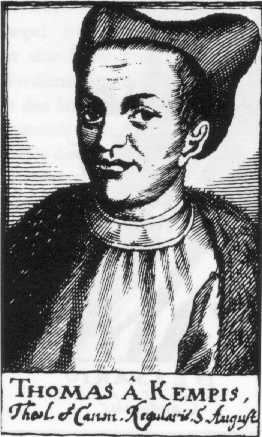
Thomas à Kempis
The name of Thomas à Kempis is perhaps more widely known than
that of any other medieval Christian writer. The Imitation of Christ,
which he composed or compiled, has been translated into more
languages than any other book except the Holy Scriptures. Millions of
Christians have found in this manual a treasured and constant source
of edification.
His name was Thomas Hammerken, and he was born at Kempen in
the Duchy of Cleves about 1380. He was educated at Deventer by the
Brethren of the Common Life, and joined their order in 1399 at their
house of Mount St. Agnes in Zwolle (in the Low Countries). He took
his vows (those of the Augustinian Canons Regular) there in 1407,
was ordained a priest in 1415, and was made sub-prior in 1425. He
died on July 25, 1471.
The Order of the Brethren of the Common Life was founded by
Gerard Groote (1340–1384) at Deventer. It included both clergy and
lay members who cultivated a biblical piety of a practical rather than
speculative nature, with stress upon the inner life and the practice
of virtues. They supported themselves by copying manuscripts and
teaching. One of their most famous pupils was the humanist Erasmus.
Many have seen in them harbingers of the Reformation; but the
Brethren had little interest in the problems of the institutional Church.
Their spirituality, known as the “New Devotion” (Devotio moderna),
has influenced both Catholic and Protestant traditions of prayer and
meditation.
Collects
I Holy Father, who hast nourished and strengthened thy
Church by the inspired writings of thy servant Thomas à
Kempis: Grant that we may learn from him to know what
is necessary to be known, to love what is to be loved, to
praise what highly pleaseth thee, and always to seek to
know and follow thy will; through Jesus Christ our Lord,
who liveth and reigneth with thee and the Holy Spirit, one
God, for ever and ever. Amen.
II Holy Father, you have nourished and strengthened your
Church by the inspired writings of your servant Thomas
à Kempis: Grant that we may learn from him to know
what is necessary to be known, to love what is to be loved,
to praise what highly pleases you, and always to seek to
know and follow your will; through Jesus Christ our Lord,
who lives and reigns with you and the Holy Spirit, one
God, for ever and ever. Amen.
Lessons
Ecclesiastes 9:11–18
Ephesians 4:32–5:2
Luke 6:17–23
We invite your reflections about this commemoration and its suitability for the official calendar and worship of The Episcopal Church. How did this person’s life witness to the Gospel? How does this person inspire us in Christian life today?
If you’d like to participate in the official online trial use survey, click here. For more information about the survey, click here.
To post a comment, your first and last name and email address are required. Your name will be published; your email address will not. The first time you post, a moderator will need to approve your submission; after that, your comments will appear instantly.
The 2009 General Convention of the Episcopal Church directed the Standing Commission on Liturgy and Music to collect and develop theological and liturgical resources for blessing same-sex relationships (Resolution C056). The Commission is eager to engage the wider church in theological conversation as one among many sources that will inform our work.
In the first blog entry here last month, I reflected on some of the challenges and opportunities I have encountered during pre-marital counseling sessions when the couples I work with have not paused to reflect on the spiritual significance of the commitment they were making to each other. At least one of the comments posted here in response to my observations made a connection between the covenant of marriage and the baptismal covenant. I find that very helpful as a way to consider the covenantal aspects of committed relationships.
Even though it’s still common today to talk about “falling in love” with someone, a commitment is not something one “falls into.” Committing one’s self to a covenantal relationship is a deliberate decision involving significant promises. In fact, it might be helpful to think of that kind of commitment as something one is called into, as a vocation. Much like the vocational call to ordained ministry, not everyone is called into a covenantal relationship with another person. Those who are called into covenants certainly need the blessing of divine grace to keep their promises, to live out their commitment “with God’s help.”
So I’m wondering if those who are in long-term committed relationships have a sense of being called into that commitment. Would you describe your relationship as a divine vocation? Do you see similarities here to the baptismal covenant? How might the vocational aspect of covenantal relationships encourage deeper theological reflection in our congregations?
# # #
We invite your participation in this dialogue about blessing same-sex relationships. Your responses and observations here will help inform the work of the Standing Commission on Liturgy and Music in our work of developing theological and liturgical resources for such blessings. We hope that this conversation will also be a way to renew and enliven a shared vision of the church’s mission in the world.
To post a comment, your first and last name and email address are required. Your name will be published; your email address will not. The first time you post, a moderator will need to approve your submission; after that, your comments will appear instantly.
Our rules for posting are fairly simple. Express yourself with courtesy, civility, and respect for others, whether or not you agree with them.
Welcome to the Holy Women, Holy Menblog! We invite you to read about this commemoration, use the collect and lessons in prayer, whether individually or in corporate worship, then tell us what you think. For more information about this project, click here.
###
About this commemoration
Albert John Luthuli
Mvumbi Luthuli was the first African to receive the Nobel Peace Prize
in recognition of his leadership in South Africa’s non-violent struggle
against apartheid. A man of noble bearing, charitable, intolerant of
hatred, and adamant in his demands for equality and peace among
all men, Luthuli forged a philosophical compatibility between two
cultures—the Zulu culture of his native Africa and the Christian
democratic culture of Europe.
Born into a Christian family around the turn of the twentieth century,
Luthuli was educated in mission schools, took a college degree in
Durban, and spent the first fifteen years of his working life as a school
teacher before taking on the responsibilities of political activism. In
1936, he was elected a Zulu chief and was made responsible for a
five thousand person community in the sugar lands of Natal. This led
to a number of other elected and appointed positions related to the
struggle for civil rights in South Africa, culminating in his election
as President of the Natal region of the African National Congress in
1945, becoming National President in 1952.
Luthuli’s increasing prominence as a leader of the anti-apartheid
movement was met with significant resistance by the white South
African government. His movements were restricted, his publications
banned, and he was imprisoned on several occasions.
Luthuli believed the struggle for civil rights was a Christian struggle
and his participation and leadership grew out of his understanding
of Christian discipleship. “My own urge because I am a Christian, is
to get into the thick of the struggle with other Christians, taking my
Christianity with me and praying that it may be used to influence for
good the character of the resistance.” When confronted by the South
African government with an appeal to suspend his activism, Luthuli is
reported to have said, “The road to freedom is via the cross.”
Although Luthuli’s death in 1967 was nearly a quarter century before
the end of apartheid in South Africa, he is remembered as a Christian
statesman in the fight against political, racial, and religious oppression.
Collects
I Eternal God, we offer thanks for the witness of Chief
Luthuli, Nobel Laureate for Peace, who was sustained by
his Christian faith as he led the struggle against apartheid
in South Africa. Strengthen us, after his example, to make
no peace with oppression and to witness boldly for our
Deliverer, Jesus Christ; who with thee and the Holy Spirit
liveth and reigneth, one God, for ever and ever. Amen.
II Eternal God, we thank you for the witness of Chief
Luthuli, Nobel Laureate for Peace, who was sustained by
his Christian faith as he led the struggle against apartheid
in South Africa. Strengthen us, after his example, to make
no peace with oppression and to witness boldly for our
Deliverer, Jesus Christ; who with you and the Holy Spirit
lives and reigns, one God, for ever and ever. Amen.
Lessons
Numbers 20:9–11
Ephesians 2:12–17
John 16:25–33
We invite your reflections about this commemoration and its suitability for the official calendar and worship of The Episcopal Church. How did this person’s life witness to the Gospel? How does this person inspire us in Christian life today?
If you’d like to participate in the official online trial use survey, click here. For more information about the survey, click here.
To post a comment, your first and last name and email address are required. Your name will be published; your email address will not. The first time you post, a moderator will need to approve your submission; after that, your comments will appear instantly.
Welcome to the Holy Women, Holy Menblog! We invite you to read about this commemoration, use the collect and lessons in prayer, whether individually or in corporate worship, then tell us what you think. For more information about this project, click here.
###
About these commemorations
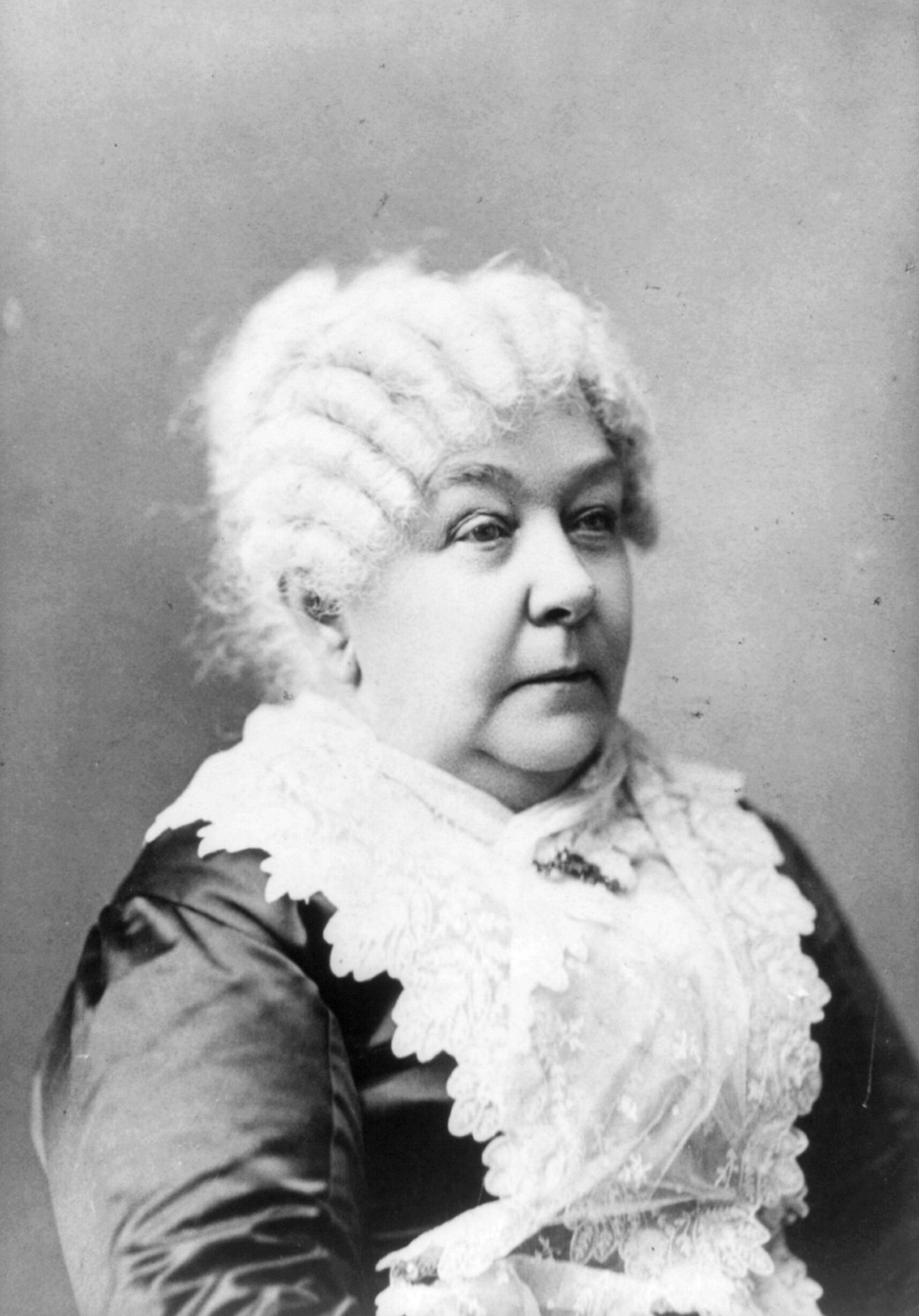
Elizabeth Cady Stanton 1815–1902
Elizabeth Cady Stanton
Born into an affluent, strict Calvinist family in upstate New York, Elizabeth, as a young woman, took seriously the Presbyterian doctrines of predestination and human depravity. She became very depressed, but resolved her mental crises through action. She dedicated her life to righting the wrongs perpetrated upon women by the Church and society.
She and four other women organized the first Women’s Rights Convention at Seneca Falls, New York, July 19–20, 1848. The event set her political and religious agenda for the next 50 years. She held the Church accountable for oppressing women by using Scripture to enforce subordination of women in marriage and to prohibit them from ordained ministry. She held society
accountable for denying women equal access to professional jobs, property ownership, the vote, and for granting less pay for the same work.
In 1881, the Revised Version of the Bible was published by a committee which included no women scholars. Elizabeth founded her own committee of women to write a commentary on Scripture, and applying the Greek she learned as a child from her minister, focused on passages used to oppress and discriminate against women.
Although Elizabeth blamed male clergy for women’s oppression, she attended Trinity Episcopal Church in Seneca Falls, with her friend Amelia Bloomer. As a dissenting prophet, Elizabeth preached hundreds of homilies and political speeches in pulpits throughout the nation. Wherever she visited, she was experienced as a holy presence and a liberator. She never lost her sense of humor despite years of contending with opposition, even from friends. In a note to Susan B. Anthony, she said: “Do not feel depressed, my dear friend, what is good in us is immortal, and if the sore trials we have endured are sifting out pride and selfishness, we shall not have suffered in vain.” Shortly before she died, she said: “My only regret is that I have not been braver and bolder and truer in the honest conviction of my soul.”
Amelia Jenks Bloomer 1818–1894
Amelia Jenks Bloomer
Amelia Jenks, the youngest of six children, born in New York to a pious Presbyterian family, early on demonstrated a kindness of heart and strict regard for truth and right. As a young woman, she joined in the temperance, anti-slavery and women’s rights movements.
Amelia Jenks Bloomer never intended to make dress reform a major platform in women’s struggle for justice. But, women’s fashion of the day prescribed waist-cinching corsets, even for pregnant women, resulting in severe health problems. Faith and fashion collided explosively when she published in her newspaper, The Lily, a picture of herself in loose-fitting Turkish trousers, and began wearing them publicly. Clergy, from their pulpits, attacked women who wore them, citing Moses: “Women should not dress like men.” Amelia fired back: “It matters not what Moses had to say to the men and women of his time about what they should wear. If clergy really cared about what Moses said about clothes, they would all put fringes and blue ribbons on their garments.” Her popularity soared as she engaged clergy in public debate.
She insisted that “certain passages in the Scriptures relating to women had been given a strained and unnatural meaning.” And, of St. Paul she said: “Could he have looked into the future and foreseen all the sorrow and strife, the cruel exactions and oppression on the one hand and the blind submission and cringing fear on the other, that his words have sanctioned and caused, he would never have uttered them.” And of women’s right to freedom, “The same Power that brought the slave out of bondage will, in His own good time and way, bring about the emancipation of woman, and make her the equal in power and dominion that she was in the beginning.”
Later in life, in Council Bluffs, Iowa, a frontier town, she worked to establish churches, libraries, and school houses. She provided hospitality for traveling clergy of all denominations, and for temperance lecturers and reformers. Trinity Episcopal Church, Seneca Falls, New York, where she was baptized, records her as a “faithful Christian missionary all her life.”
Sojourner Truth, “Miriam of the Later Exodus” 1797–8 to 1883
Sojourner Truth
Isabella (Sojourner Truth) was the next-to-youngest child of several born to James and Elizabeth, slaves owned by a wealthy Dutchman in New York. For the first 28 years of her life she was a slave, sold from household to household. She fled slavery with the help of Quaker friends, first living in Philadelphia, then New York, where she joined the Mother Zion African Methodist Episcopal Church when African-Americans were being denied the right to worship with white members of St. George’s Church in Philadelphia. Belle (as Isabella was called) became a street-corner evangelist in poverty-stricken areas of New York City, but quickly realized people needed food, housing and warm clothing. She focused her work on a homeless shelter for women.
When she was about 46, Belle believed she heard God say to her, “Go east.” So, she set out east for Long Island and Connecticut. Stopping at a Quaker farm for a drink of water, she was asked her name. “My name is Sojourner,” Belle said. “What is your last name?” the woman asked. Belle thought of all her masters’ names she had carried through life. Then the thought came: “The only master I have now is God, and His name is Truth.”
Sojourner became a traveling preacher, approaching white religious meetings and campgrounds and asking to speak. Fascinated by her charismatic presence, her wit, wisdom, and imposing six-foot height, they found her hard to refuse. She never learned to read or write, but quoted extensive Bible passages from memory in her sermons. She ended by singing a “home-made” hymn and addressing the crowd on the evils of slavery. Her reputation grew and she became part of the abolitionist and women’s rights speakers’ network.
During a women’s rights convention in Ohio, Sojourner gave the speech for which she is best remembered: “Ain’t I a Woman.” She had listened for hours to clergy attack women’s rights and abolition, using the Bible to support their oppressive logic: God had created women to be weak and blacks to be a subservient race.
Harriet Ross Tubman, “Moses of her People” 1820–1913
Harriet Ross Tubman
Slave births were recorded under property, not as persons with names; but we know that Harriet Ross, sometime during 1820 on a Maryland Chesapeake Bay plantation, was the sixth of eleven children born to Ben Ross and Harriet Green. Although her parents were loving and they enjoyed a cheerful family life inside their cabin, they lived in fear of the children being sold off at any time.
Harriet suffered beatings and a severe injury, but grew up strong and defiant, refusing to appear happy and smiling to her owners. To cope with brutality and oppression, she turned to religion. Her favorite Bible story was about Moses who led the Israelites out of slavery. The slaves prayed for a Moses of their own.
When she was about 24, Harriet escaped to Canada, but could not forget her parents and other slaves she left behind. Working with the Quakers, she made at least 19 trips back to Maryland between 1851 and 1861, freeing over 300 people by leading them into Canada. She was so successful, $40,000 was offered for her capture.
Guided by God through omens, dreams, warnings, she claimed her struggle against slavery had been commanded by God. She foresaw the Civil War in a vision. When it began, she quickly joined the Union Army, serving as cook and nurse, caring for both Confederate and Union soldiers. She served as a spy and scout. She led 300 black troops on a raid which freed over 750 slaves, making her the first American woman to lead troops into military action.
In 1858–9, she moved to upstate New York where she opened her home to African-American orphans and to helpless old people. Although she was illiterate, she founded schools for African-American children. She joined the fight for women’s rights, working with Elizabeth Cady Stanton and Susan B. Anthony, but supported African-American women in their efforts to found their own organizations to address equality, work and education.
Collects
I O God, whose Spirit guideth us into all truth and maketh
us free: Strengthen and sustain us as thou didst thy
servants Elizabeth, Amelia, Sojourner, and Harriet. Give
us vision and courage to stand against oppression and
injustice and all that worketh against the glorious liberty
to which thou callest all thy children; through Jesus Christ
our Savior, who liveth and reigneth with thee and the Holy
Spirit, one God, for ever and ever. Amen.
II O God, whose Spirit guides us into all truth and makes us
free: Strengthen and sustain us as you did your servants
Elizabeth, Amelia, Sojourner, and Harriet. Give us vision
and courage to stand against oppression and injustice and
all that works against the glorious liberty to which you
call all your children; through Jesus Christ our Savior, who
lives and reigns with you and the Holy Spirit, one God, for
ever and ever. Amen.
Lessons
Wisdom 7:24–28
1 Peter 4:10–11
Luke 11:5–10
We invite your reflections about this commemoration and its suitability for the official calendar and worship of The Episcopal Church. How did this person’s life witness to the Gospel? How does this person inspire us in Christian life today?
If you’d like to participate in the official online trial use survey, click here. For more information about the survey, click here.
To post a comment, your first and last name and email address are required. Your name will be published; your email address will not. The first time you post, a moderator will need to approve your submission; after that, your comments will appear instantly.
Welcome to the Holy Women, Holy Men blog! We invite you to read about this commemoration, use the collect and lessons in prayer, whether individually or in corporate worship, then tell us what you think. For more information about this project, click here.
###
About this commemoration
Adelaide Case was born in Missouri in 1887, but her family soon
moved to New York. She received her undergraduate education at
Bryn Mawr and her graduate degrees from Columbia University. By
the time she completed her doctorate a position had been created
for her on the faculty of the Teachers’ College at Columbia and she
quickly rose to the status of full professor and head of the department
of religious education. She is remembered for advocating a child-centered
rather than teacher-centered approach to education.
In 1941, while her professional accomplishments were at their height,
the Episcopal Theoogical School in Cambridge, Massachusetts, was
able to convince her to leave her distinguished and comfortable
position at Columbia and join the faculty as Professor of Christian
Education. Although other women had taught occasional courses in
the seminaries of the church, Adelaide Case was the first to take her
place as a full-time faculty member at the rank of Professor. Although
Case spoke well of her time in Cambridge, her early years there were
difficult. She continued to teach at ETS until her death in 1948.
Students and faculty colleagues remember her contagious faith in
Christ, her deep sense of humanity, and her seemingly boundless
compassion. Although she carried herself with style and grace, Case
had struggled with health issues her entire life, but those who knew
her testify to the fact that in spite of those challenges she was spirited,
energetic, and fully devoted to her work. “She was a true believer in
Christ and you saw him living in and through her,” is an oft-repeated
accolade.
Case believed that the point of practicing the Christian faith was
to make a difference in the world. As an advocate for peace, she
believed that Christianity had a special vocation to call people into
transformed, reconciled relationships for the sake of the wholeness of
the human family. She is said to have discovered these things not in
theology or educational theory, but in a life of common prayer and
faithful eucharistic practice.
Collects
I Everliving God, in whose light we see light: We offer
thanks for thy teacher and peacemaker Adelaide Case,
who inspired generations of students with a love of
learning that built up the Church and their communities.
Grant that we, following her example, may serve thee
tirelessly as learners and teachers, laboring for the
transformation of the world toward thy reign of peace,
through the companionship of Jesus thy Saving Word; who
with thee and the Holy Spirit liveth and reigneth, one God,
now and for ever. Amen.
II Everliving God, in whose light we see light: We thank
you for your teacher and peacemaker Adelaide Case, who
inspired generations of students with a love of learning
that built up the Church and their communities. Grant
that we, following her example, may serve you tirelessly
as learners and teachers, laboring for the transformation
of the world toward your reign of peace, through the
companionship of Jesus your Saving Word; who with you
and the Holy Spirit lives and reigns, one God, now and for
ever. Amen.
We invite your reflections about this commemoration and its suitability for the official calendar and worship of The Episcopal Church. How did this person’s life witness to the Gospel? How does this person inspire us in Christian life today?
If you’d like to participate in the official online trial use survey, click here. For more information about the survey, click here.
To post a comment, your first and last name and email address are required. Your name will be published; your email address will not. The first time you post, a moderator will need to approve your submission; after that, your comments will appear instantly.
Welcome to the Holy Women, Holy Men blog! We invite you to read about this commemoration, use the collect and lessons in prayer, whether individually or in corporate worship, then tell us what you think. For more information about this project, click here.
###
About this commemoration
Macrina
Macrina (340–379) was a monastic, theologian and teacher. She
founded one of the earliest Christian communities in the Cappadocian
city of Pontus. Macrina left no writings; we know of her through the
works of her brother St. Gregory of Nyssa (page 266). In his Life of
St. Macrina, Gregory describes her as both beautiful and brilliant, an
authoritative spiritual teacher.
Macrina persuaded her mother Emmelia to renounce their wealthy
lifestyle and to help her establish a monastery on the family’s estate.
Macrina’s ideal of community emphasized caring for the poor and
ministering to the wider community. She literally picked up young
women who lay in the road starving. Many joined her order.
Gregory credits Macrina as the spiritual and theological intelligence
behind her siblings’ notable careers in the Church. Gregory, and their
brothers St. Basil (page 426), St. Peter of Sebaste, and Naucratios went
to her often for theological counsel. Macrina frequently challenged
her celebrated brothers. She told Gregory his fame was not due to his
own merit, but to the prayers of his parents. She took Basil in hand
when he returned from Athens “monstrously conceited about his skill
in rhetoric.” Under her influence, Basil and Peter renounced material
possessions and turned away from secular academia to become monks
and theologians. Basil and Peter wrote a Rule for community life,
ensuring that Macrina’s ideas for Christian community would have
lasting authority. Basil, Gregory and Peter all became bishops, in no
small measure because of Macrina’s influence, and became leading
defenders of the Nicene faith.
Gregory visited Macrina as she lay dying on two planks on the floor.
He relates Macrina’s last words as a classical Greek farewell oration
imbued with Holy Scripture. In both his Life of St. Macrina and in his
later treatise of The Soul and Resurrection, Gregory presents Macrina
admiringly as a Christian Socrates, delivering beautiful deathbed
prayers and teachings about the resurrection.
Collects
I Merciful God, thou didst call thy servant Macrina to
reveal in her life and her teaching the riches of thy grace
and truth: May we, following her example, seek after
thy wisdom and live according to her way; through Jesus
Christ our Savior, who liveth and reigneth with thee and
the Holy Spirit, one God, for ever and ever. Amen.
II Merciful God, you called your servant Macrina to reveal
in her life and her teaching the riches of your grace and
truth: May we, following her example, seek after your
wisdom and live according to her way; through Jesus
Christ our Savior, who lives and reigns with you and the
Holy Spirit, one God, for ever and ever. Amen.
Lessons
Sirach (Ecclesiasticus) 51:13–22
Philippians 3:7–11
Matthew 11:27–30
We invite your reflections about this commemoration and its suitability for the official calendar and worship of The Episcopal Church. How did this person’s life witness to the Gospel? How does this person inspire us in Christian life today?
If you’d like to participate in the official online trial use survey, click here. For more information about the survey, click here.
To post a comment, your first and last name and email address are required. Your name will be published; your email address will not. The first time you post, a moderator will need to approve your submission; after that, your comments will appear instantly.
Welcome to the Holy Women, Holy Men blog! We invite you to read about this commemoration, use the collect and lessons in prayer, whether individually or in corporate worship, then tell us what you think. For more information about this project, click here.
###
About this commemoration
Las Casas was born in Seville in 1484. He studied both theology and
law at the University of Salamanca.
As a reward for his participation in various expeditions, Las Casas left
for Hispaniola in 1502. He was given an encomienda, a royal land
grant populated with native peoples of the Indies. He soon began to
evangelize them; he was ordained priest in 1510 at Santo Domingo.
On December of 1511, the Dominican Antonio de Montesinos
preached a fiery sermon implicating the colonists in the genocide of
the native Indians. Las Casas gave up his rights to the encomienda
and in his own preaching urged other Spanish colonists should do
likewise. Continuing his demand for change, he returned to Spain in
1515 to plead for justice from the Spanish government. The powerful
archbishop of Toledo, who named him “Protector of the Indies,” took
up his cause.
His passionate defense of the Indians before the Spanish Parliament
persuaded the emperor, Charles V, to accept Las Casas’s project of
founding “towns of free Indians”: communities of both Spaniards
and Indians who would jointly create a new civilization in America.
The location selected for the new colony was in the northern part of
present-day Venezuela. Although the initial attempts were a bitter
failure, Las Casas’s work seemed to be crowned with success when
Charles V signed the so-called New Laws (1542), that required the
Spanish colonists to set free the Indians after the span of a single
generation. Las Casas renounced his bishopric of Chiapas, Mexico,
returned to Spain in 1547, and became a prolific writer. His A
Brief Account of the Destruction of the Indies (1552), exposes the
oppression inflicted upon the peoples of the Indies. Although filled
with inaccuracies, it is his most famous work.
Las Casas lived his convictions with such zeal that he often seemed
intolerant of others, but is remembered as a tireless advocate for
justice for those oppressed by colonialism. Las Casas died in Madrid
on July 18, 1566.
Collects
I Eternal God, we offer thanks for the witness of Bartolomé
de las Casas, whose deep love for thy people caused him to
refuse absolution to those who would not free their Indian
slaves. Help us, inspired by his example, to work and
pray for the freeing of all enslaved people of our world,
for the sake of Jesus Christ our Redeemer; who liveth and
reigneth with thee and the Holy Spirit, one God, for ever
and ever. Amen.
II Eternal God, we give you thanks for the witness of
Bartolomé de las Casas, whose deep love for your people
caused him to refuse absolution to those who would not
free their Indian slaves. Help us, inspired by his example,
to work and pray for the freeing of all enslaved people of
our world, for the sake of Jesus Christ our Redeemer; who
lives and reigns with you and the Holy Spirit, one God, for
ever and ever. Amen.
Lessons
Isaiah 59:14–20
Philemon 8–16
Matthew 10:26–31
We invite your reflections about this commemoration and its suitability for the official calendar and worship of The Episcopal Church. How did this person’s life witness to the Gospel? How does this person inspire us in Christian life today?
If you’d like to participate in the official online trial use survey, click here. For more information about the survey, click here.
To post a comment, your first and last name and email address are required. Your name will be published; your email address will not. The first time you post, a moderator will need to approve your submission; after that, your comments will appear instantly.
Welcome to the Holy Women, Holy Men blog! We invite you to read about this commemoration, use the collect and lessons in prayer, whether individually or in corporate worship, then tell us what you think. For more information about this project, click here.
###
About this commemoration:
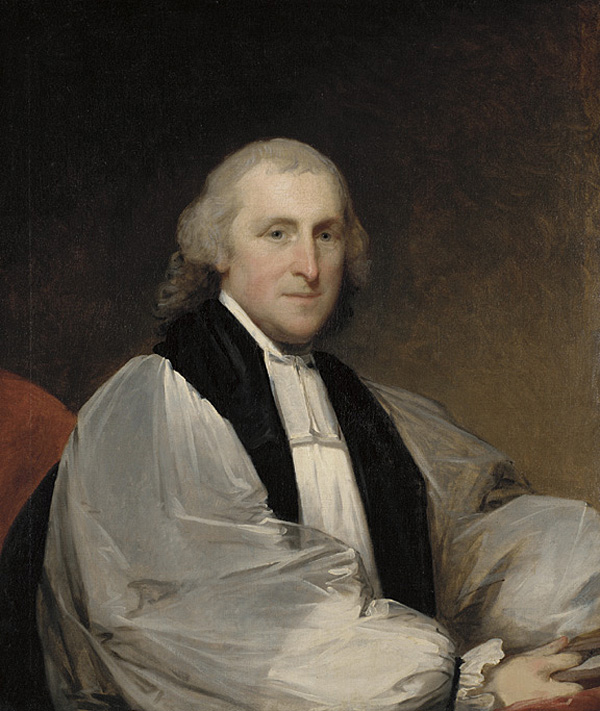
William White
William White was born in Philadelphia, March 24, 1747, and was educated at the college of that city, graduating in 1765. In 1770 he went to England, was ordained deacon on December 23, and priest on April 25, 1772. On his return home, he became assistant minister of Christ and St. Peter’s, 1772–1779, and rector from that year until his death, July 17, 1836. He also served as chaplain of the Continental Congress from 1777 to 1789, and then of the United States Senate until 1800. Chosen unanimously as first Bishop of Pennsylvania, September 14, 1786, he went to England again, with Samuel Provoost, Bishop-elect of New York; and the two men were consecrated in Lambeth Chapel on Septuagesima Sunday, February 4, 1787, by the Archbishops of Canterbury and York and the Bishops of Bath and Wells and of Peterborough.
Bishop White was the chief architect of the Constitution of the American Episcopal Church and the wise overseer of its life during
the first generation of its history. He was the Presiding Bishop at its
organizing General Convention in 1789 and again from 1795 until his death. He was a theologian of no mean ability, and among his proteges, in whose formation he had a large hand, were such leaders of a new generation as John Henry Hobart, Jackson Kemper, and William Augustus Muhlenberg. White’s gifts of statesmanship and reconciling moderation steered the American Church through the first decades of its independent life. His influence in his native city made him its “first citizen.” To few men has the epithet “venerable” been more aptly applied.
Collects
I O Lord, who in a time of turmoil and confusion didst
raise up thy servant William White, and didst endow him
with wisdom, patience, and a reconciling temper, that he
might lead thy Church into ways of stability and peace:
Hear our prayer, we beseech thee, and give us wise and
faithful leaders, that through their ministry thy people
may be blessed and thy will be done; through Jesus Christ
our Lord, who liveth and reigneth with thee and the Holy
Spirit, one God, for ever and ever. Amen.
II O Lord, in a time of turmoil and confusion you raised
up your servant William White, and endowed him with
wisdom, patience, and a reconciling temper, that he might
lead your Church into ways of stability and peace: Hear
our prayer, and give us wise and faithful leaders, that
through their ministry your people may be blessed and
your will be done; through Jesus Christ our Lord, who
lives and reigns with you and the Holy Spirit, one God, for
ever and ever. Amen.
Lessons
Jeremiah 3:15–19
1 Timothy 3:1–10
John 21:15–17
We invite your reflections about this commemoration and its suitability for the official calendar and worship of The Episcopal Church. How did this person’s life witness to the Gospel? How does this person inspire us in Christian life today?
If you’d like to participate in the official online trial use survey, click here. For more information about the survey, click here.
To post a comment, your first and last name and email address are required. Your name will be published; your email address will not. The first time you post, a moderator will need to approve your submission; after that, your comments will appear instantly.
Welcome to the Holy Women, Holy Men blog! We invite you to read about this commemoration, use the collect and lessons in prayer, whether individually or in corporate worship, then tell us what you think. For more information about this project, click here.
###
About this commemoration
During the Second World War, thousands of Christians and persons
of faith made valiant sacrifices, often at the risk of their own lives, to
save Jews from the Holocaust. These “righteous gentiles” are honored
for courageous action in the face of Hitler’s reign of terror.
Raoul Wallenberg (Lutheran) was a Swedish humanitarian and diplomat
whose great resourcefulness saved thousands of Hungarian Jews during
the Nazi occupation. He issued them Swedish passports so that they
could escape and housed many in Swedish government property in
Budapest, thereby protecting them on the basis of diplomatic immunity.
Hiram Bingham IV (Episcopalian) was an American diplomat in
France during the early years of the Nazi occupation. He violated
State Department protocol by arranging escape routes for persecuted
Jews and often provided the most wanted with safe haven in his own
home. When transferred to Argentina, he devoted considerable effort
to tracking the movements of Nazi war criminals.
Carl Lutz (Evangelical) was a Swiss diplomat in Budapest who also
worked to save the lives of many Hungarian Jews. Although deeply
involved in this endeavor at every level, he is most remembered for
negotiating with the Nazis for safe passage from Hungary to Palestine
for more than 10,000 Jews.
Chiune Sugihara (Orthodox), while serving as Japanese Consul in
Lithuania, rescued thousands of Jews by providing them with travel
credentials so they could escape. In doing so, he violated official
diplomatic policy and was removed from his country’s foreign service.
He lived the rest of his life in disgrace.
André Trocmé (Reformed) and his wife, Magda, were French
Christians who saved the lives of several thousand Jews in France
during the Nazi occupation. He was the pastor in Le Chambon-sur-
Lignon and, together with people in neighboring communities, he
created a safe haven for many refugees from the Nazi terror.
These faithful servants, together with more than 23,000 others verified to
date, are honored at Yad Vashem, the Holocaust Memorial overlooking
Jerusalem, and celebrated there as “the righteous among the nations.”
Collects
I God of the Covenant and Lord of the Exodus, who by the
hand of Moses didst deliver thy chosen people from cruel
enslavement: We offer thanks for Raoul Wallenberg and all
those Righteous Gentiles who with compassion, courage
and resourcefulness rescued thousands of thy children
from certain death. Grant that, in the power of thy Spirit,
we may protect the innocent of every race and creed in the
Name of Jesus Christ, strong Deliverer of us all; who with
thee and the Holy Spirit liveth and reigneth, one God, now
and for ever. Amen.
II God of the Covenant and Lord of the Exodus, by the hand
of Moses you delivered your chosen people from cruel
enslavement: We give you thanks for Raoul Wallenberg
and all those Righteous Gentiles who with compassion,
courage and resourcefulness rescued thousands of your
children from certain death. Grant that, in the power of
your Spirit, we may protect the innocent of every race and
creed in the Name of Jesus Christ, strong Deliverer of us
all; who with you and the Holy Spirit lives and reigns, one
God, now and for ever. Amen.
Lessons
Joshua 2:1–21
Colossians 3:1–4
John 19:10–15
We invite your reflections about this commemoration and its suitability for the official calendar and worship of The Episcopal Church. How did this person’s life witness to the Gospel? How does this person inspire us in Christian life today?
If you’d like to participate in the official online trial use survey, click here. For more information about the survey, click here.
To post a comment, your first and last name and email address are required. Your name will be published; your email address will not. The first time you post, a moderator will need to approve your submission; after that, your comments will appear instantly.
Welcome to the Holy Women, Holy Men blog! We invite you to read about this commemoration, use the collect and lessons in prayer, whether individually or in corporate worship, then tell us what you think. For more information about this project, click here.
###
About this commemoration
Samson Occum
Samson Occum, the first ordained Native American minister, was born
a member of the Mohegan nation near New London, Connecticut
in 1723. By the age of sixteen, Occum has been exposed to the
evangelical preaching of the Great Awakening. In 1743 he began
studying theology at the school of congregational minister Eleazar
Wheelock, later founder of Dartmouth College.
Occum did mission work among the Native Americans in New
England and Montauk, Long Island. In 1759, he was ordained a
Presbyterian minister. In 1766, at the behest of Eleazar Wheelock,
Occum went to England, where he was to raise money for Wheelock’s
Indian charity school. He preached extensively for over a year,
traveling across England, and raising over eleven thousand pounds
from wealthy patrons including King George III. When he returned
from England, however, his family, supposedly under the care of
Wheelock, was found destitute, and the school for which he had
labored moved to Hanover, New Hampshire, where it became
Dartmouth College. The funds he had raised had been put toward the
education of Englishman rather than of Native Americans.
Following a disagreement with the colonial government of Connecticut
over a lack of compensation for lands they had sold, Occum and many
other Mohegans moved to Oneida territory in upstate New York.
There, he and his companions founded the Brothertown Community.
In his day, Occum was renowned for his eloquence and spiritual
wisdom, and his work among the Mohegans of Connecticut, many of
whom became Christians under this guidance, which helped them to
avoid later relocation.
Collects
I God, the Great Spirit, whose breath givest life to the world
and whose voice thundereth in the wind: We give thee
thanks for thy servant Samson Occum, strong preacher
and teacher among the Mohegan people; and we pray that
we, cherishing his example, may love learning and by love
build up the communities into which thou sendest us, and
on all our paths walk in beauty with Jesus Christ; who
with thee and the Holy Spirit, liveth and reigneth, one
God, now and for ever. Amen.
II God, Great Spirit, whose breath gives life to the world
and whose voice thunders in the wind: We thank you
for your servant Samson Occum, strong preacher and
teacher among the Mohegan people; and we pray that
we, cherishing his example, may love learning and by love
build up the communities into which you send us, and on
all our paths walk in beauty with Jesus Christ; who with
you and the Holy Spirit, is alive and reigns, one God, now
and for ever. Amen.
Lessons
Sirach (Ecclesiasticus) 14:20–27
Acts 10:30–38
Luke 8:16–21
We invite your reflections about this commemoration and its suitability for the official calendar and worship of The Episcopal Church. How did this person’s life witness to the Gospel? How does this person inspire us in Christian life today?
If you’d like to participate in the official online trial use survey, click here. For more information about the survey, click here.
To post a comment, your first and last name and email address are required. Your name will be published; your email address will not. The first time you post, a moderator will need to approve your submission; after that, your comments will appear instantly.