Close

December 22: Charlotte Diggs (Lottie) Moon, Missionary in China, 1912

Welcome to the Holy Women, Holy Men blog! We invite you to read about this commemoration, use the collect and lessons in prayer, whether individually or in corporate worship, then tell us what you think. For more information about this project, click here.

###
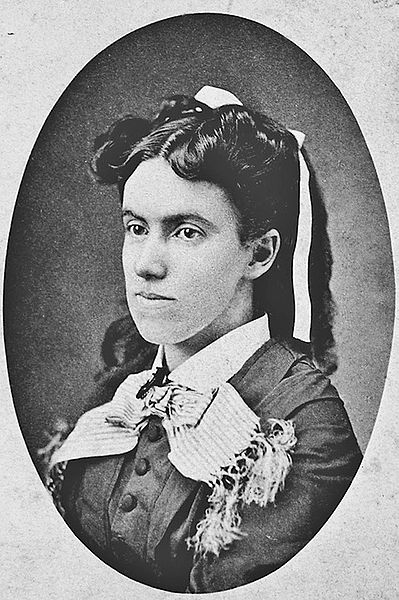
About this commemoration

Born in Virginia, in 1840, Charlotte Diggs (Lottie) Moon was the child of pious, and affluent, Baptist parents. Precocious in schooling, she received an M.A. in Classics, thereby earning one of the first graduate degrees awarded a woman in the South. She had a gift for languages, learning first the Biblical and Romance languages—and then later, and famously, Mandarin.

Lottie Moon’s piety lagged behind her learning, and through her teens she remained indifferent to her Baptist heritage. During a revival at age eighteen, she experienced a powerful conversion and devoted the rest of her life to Christ.

After college, Moon taught school in Alabama, Kentucky, and Georgia, one of the few occupations open to educated women in the South. Another vocation became available to her when Southern Baptists began to appoint women as foreign missionaries in 1872, and the following year, at age 33, Moon accepted an appointment in China.

Moon settled in Northern China and continued her work of education for girls. She soon became restless in teaching and she began evangelizing among adults, particularly women. Her supervisors disapproved of her initiative, but Moon quickly gained credibility because of her ease in relating, woman-to-woman.

Lottie Moon’s ceaseless correspondence with Baptist women in the United States, seeking their support and encouraging would-be missionaries, was instrumental in the denomination’s burgeoning missionary movement. She appealed to women for a special offering for missionaries at Christmastime in 1887. Her influence led to the formation of the Women’s Missionary Union in 1888, which continues the Lottie Moon Christmas Offering as a hallmark of Southern Baptist practice.

On arriving in China, Moon remained aloof from the Chinese, thinking them her cultural inferiors. Over time, however, she found a deep respect for Chinese culture, adopting not only their language but their dress and customs. As she wrote, “It is comparatively easy to give oneself to mission work, but it is not easy to give oneself to an alien people. Yet the latter is much better and truer work than the former.”

Lottie Moon died on Christmas Eve, 1912.

Collects

I O God, who in Christ Jesus hast brought Good News to those who are far off and to those who are near: We praise thee for awakening in thy servant Lottie Moon a zeal for thy mission and for her faithful witness among the peoples of China. Stir up in us the same desire for thy work throughout the world, and give us the grace and means to accomplish it; through the same Jesus Christ our Savior, who liveth and reigneth with thee and the Holy Spirit, one God, for ever and ever. Amen.

II O God, in Christ Jesus you have brought Good News to those who are far off and to those who are near: We praise you for awakening in your servant Lottie Moon a zeal for your mission and for her faithful witness among the peoples of China. Stir up in us the same desire for your work throughout the world, and give us the grace and means to accomplish it; through the same Jesus Christ our Savior, who lives and reigns with you and the Holy Spirit, one God, for ever and ever. Amen.

Lessons

Ruth 1:15–19a

2 Corinthians 5:16–21

John 1:29–33

Psalm

148:1–6

Preface of a Saint (2)

Text from Holy, Women, Holy Men: Celebrating the Saints © 2010 by The Church Pension Fund. Used by permission.

###

We invite your reflections about this commemoration and its suitability for the official calendar and worship of The Episcopal Church. How did this person’s life witness to the Gospel? How does this person inspire us in Christian life today?

If you’d like to participate in the official online trial use survey, click here. For more information about the survey, click here.

To post a comment, your first and last name and email address are required. Your name will be published; your email address will not. The first time you post, a moderator will need to approve your submission; after that, your comments will appear instantly.
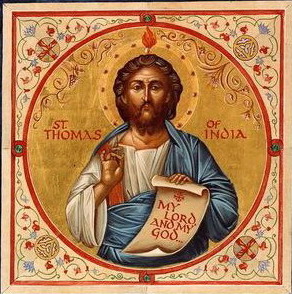
December 21: Saint Thomas the Apostle

Welcome to the Holy Women, Holy Men blog! We invite you to read about this commemoration, use the collect and lessons in prayer, whether individually or in corporate worship, then tell us what you think. For more information about this project, click here.

###

About this commemoration

The Gospel according to John records several incidents in which Thomas appears, and from them we are able to gain some impression of the sort of man he was. When Jesus insisted on going to Judea, to visit his friends at Bethany, Thomas boldly declared, “Let us also go, that we may die with him” (John 11:16). At the Last Supper, he interrupted our Lord’s discourse with the question, “Lord, we do not know where you are going; how can we know the way?” (John 14:5).

And after Christ’s resurrection, Thomas would not accept the account of the other apostles and the women, until Jesus appeared before him, showing him his wounds. This drew from him the first explicit acknowledgment of Christ’s Godhead, “My Lord and my God!” (John 20:28).

Thomas appears to have been a thoughtful if rather literal-minded man, inclined to scepticism; but he was a staunch friend when his loyalty was once given. The expression “Doubting Thomas,” which has become established in English usage, is not entirely fair to Thomas. He did not refuse belief: he wanted to believe, but did not dare, without further evidence. Because of his goodwill, Jesus gave him a sign, though Jesus had refused a sign to the Pharisees. His Lord’s rebuke was well deserved: “Blessed are those who have not seen and yet believe” (John 20:29). The sign did not create faith; it merely released the faith which was in Thomas already.

According to an early tradition mentioned by Eusebius and others, Thomas evangelized the Parthians. Syrian Christians of Malabar, India, who call themselves the Mar Thoma Church, cherish a tradition that Thomas brought the Gospel to India. Several apocryphal writings have been attributed to him, the most prominent and interesting being the “Gospel of Thomas.” Thomas’ honest questioning and doubt, and Jesus’ assuring response to him, have given many modern Christians courage to persist in faith, even when they are still doubting and questioning.

Collects

I Everliving God, who didst strengthen thine apostle Thomas with sure and certain faith in thy Son’s resurrection: Grant us so perfectly and without doubt to believe in Jesus Christ, our Lord and our God, that our faith may never be found wanting in thy sight; through him who liveth and reigneth with thee and the Holy Spirit, one God, now and for ever. Amen.

II Everliving God, who strengthened your apostle Thomas with firm and certain faith in your Son’s resurrection:
Grant us so perfectly and without doubt to believe in Jesus Christ, our Lord and our God, that our faith may never be
found wanting in your sight; through him who lives and reigns with you and the Holy Spirit, one God, now and for
ever. Amen.

Lessons

Habakkuk 2:1–4

Hebrews 10:35–11:1

John 20:24–29

Psalm

126

Preface of Apostles

Text from Holy, Women, Holy Men: Celebrating the Saints © 2010 by The Church Pension Fund. Used by permission.

###

We invite your reflections about this commemoration and its suitability for the official calendar and worship of The Episcopal Church. How did this person’s life witness to the Gospel? How does this person inspire us in Christian life today?

If you’d like to participate in the official online trial use survey, click here. For more information about the survey, click here.

To post a comment, your first and last name and email address are required. Your name will be published; your email address will not. The first time you post, a moderator will need to approve your submission; after that, your comments will appear instantly.
December 19: Lillian Trasher, Missionary in Egypt, 1961

Welcome to the Holy Women, Holy Men blog! We invite you to read about this commemoration, use the collect and lessons in prayer, whether individually or in corporate worship, then tell us what you think. For more information about this project, click here.

###

About this commemoration

Lillian Hunt Trasher was born in 1887 in Brunswick, Georgia. As a young woman she worked at an orphanage in North Carolina, not knowing at the time that her life’s work would be devoted to caring for abandoned children.

In 1909, while engaged to a man she loved deeply, she heard the testimony of a missionary from India, and she was aware at that moment that she could not be married. God had called her to service as a missionary. Not knowing where she would go, she opened her Bible and read Acts 7:34: “I have seen, I have seen the affliction of my people which is in Egypt, and I have heard their groaning and am come down to deliver them.  And now come, I will send thee to Egypt.”

In 1910, she arrived in Alexandria, Egypt, with her sister Jenny, and they found their way to the village of Asyut near the Nile. Shortly after arriving, Lillian was called to the bedside of a dying mother whose malnourished daughter was also near death. Though ordered by the mission directors to return the child to the village, Lillian refused to abandon her to poverty and certain death. In 1911 she rented a small house and some furniture and nursed the child back to health.

As she took in additional children, she had to rely on charity, though she eventually received aid from the newly formed Assemblies of God in the United States.  In 1916 she was able to purchase additional land, the buildings for which were built from bricks which Lillian and the older children made themselves. In 1919 she was ordered out of the country by the British government in the midst of political turmoil, and when she returned, she took in widows and the blind in addition to children. Despite the Nazi invasion of Egypt and the subsequent violence during World War II, she kept her orphanage running. When she died in 1961, she had become known as the “Mother of the Nile”and had cared for nearly 25,000 Egyptian children. Her orphanage remains open today.

Collects

I God, whose everlasting arms support the universe: We offer thanks for moving the heart of Lillian Trasher to heroic hospitality on behalf of orphaned children in great need, and we pray that we also may find our hearts awakened and our compassion stirred to care for thy little ones, through the example of our Savior Jesus Christ and by the energy of thy Holy Spirit, who broodeth over the world as a mother over her children; for they live and reign with thee, one God, for ever and ever. Amen.

II God, whose everlasting arms support the universe: We thank you for moving the heart of Lillian Trasher to heroic hospitality on behalf of orphaned children in great need, and we pray that we also may find our hearts awakened and our compassion stirred to care for your little ones, through the example of our Savior Jesus Christ and by the energy of your Holy Spirit, who broods over the world like a mother over her children; for they live and reign with you, one God, for ever and ever. Amen.

Lessons

Genesis 21:8–21

2 Corinthians 1:3–7

Luke 17:1–6

Psalm

10:12–19

Preface of  a Saint (1)

Text from Holy, Women, Holy Men: Celebrating the Saints © 2010 by The Church Pension Fund. Used by permission.

###

We invite your reflections about this commemoration and its suitability for the official calendar and worship of The Episcopal Church. How did this person’s life witness to the Gospel? How does this person inspire us in Christian life today?

If you’d like to participate in the official online trial use survey, click here. For more information about the survey, click here.

To post a comment, your first and last name and email address are required. Your name will be published; your email address will not. The first time you post, a moderator will need to approve your submission; after that, your comments will appear instantly.
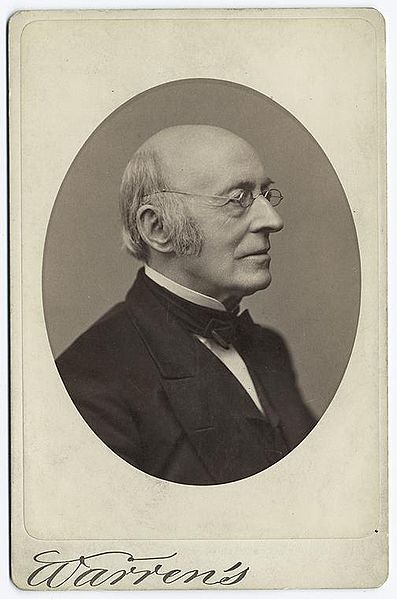
December 17: William Llyod Garrison and Maria Stewart, Prophetic Witnesses, 1879

Welcome to the Holy Women, Holy Men blog! We invite you to read about this commemoration, use the collect and lessons in prayer, whether individually or in corporate worship, then tell us what you think. For more information about this project, click here.

###

About this commemoration

William Lloyd Garrison was born in Newburyport, Massachusetts, in
1805. His father, a sailor, had abandoned the family when he was five
years old. His experience of poverty at a young age awakened in him
a religious zeal for justice and a hatred for slavery. After working on a
Quaker periodical in Baltimore, Garrison returned to Boston and, with
the help of the black community, started his own antislavery paper,
The Liberator.

His proclamation of purpose in the first issue became famous around
the country: “On [the subject of slavery] I do not wish to think, or
speak, or write, with moderation. No! No! Tell a man whose house is
on fire to give a moderate alarm … but urge me not to use moderation
in a cause like the present.”

The Liberator came to be the dominant voice in the abolitionist movement demanding immediate emancipation without compensation to slave owners. Garrison invoked the ire and rage of people all over the country, particularly in slaveholding states. In 1835 an angry mob attacked Garrison who was jailed for his own safety.

In what was a radical policy for the time, Garrison opened up his columns to black and female writers. Among those to respond to his call was Maria W. Stewart, a freeborn African-American woman who showed up at his office in 1831 with several essays that were published in The Liberator.

Born in Hartford, Connecticut, Stewart was orphaned at the age of five and grew up in the home of a white minister. She married James W. Stewart, a successful shipping outfitter, but was widowed just three years later. Soon after she experienced a religious conversion and responded with her vigorous antislavery advocacy. Her efforts called
upon African Americans in the south to rise up against slavery and for northern blacks to resist racial restrictions. When her speaking career ended after three years, she became a schoolteacher and then Head Matron of Freedom’s Hospital in Washington D.C., which was later to become Howard University.

Collects

I God, in whose service alone is perfect freedom: We offer
thanks for thy prophets William Lloyd Garrison and Maria
Stewart, who testified that we are made not by the color
of our skin but by the principle formed in our soul. Fill us,
like them, with the hope and determination to break every
chain of enslavement, that bondage and ignorance may melt
like wax before flames, and we may build that community
of justice and love which is founded on Jesus Christ our
cornerstone; who with thee and the Holy Spirit liveth and
reigneth, one God, now and for ever. Amen.

II God, in whose service alone is perfect freedom: We thank
you for your prophets William Lloyd Garrison and Maria
Stewart, who testified that we are made not by the color
of our skin but by the principle formed in our soul. Fill
us, like them, with the hope and determination to break
every chain of enslavement, that bondage and ignorance
may melt like wax before flames, and we may build that
community of justice and love which is founded on Jesus
Christ our cornerstone; who with you and the Holy Spirit
lives and reigns, one God, now and for ever. Amen.

Lessons

Wisdom 10:9–14

1 John 2:28–3:3

Mark 5:25–34

Psalm

82

Preface of God the Son

Text from Holy, Women, Holy Men: Celebrating the Saints © 2010 by The Church Pension Fund. Used by permission.

###

We invite your reflections about this commemoration and its suitability for the official calendar and worship of The Episcopal Church. How did this person’s life witness to the Gospel? How does this person inspire us in Christian life today?

If you’d like to participate in the official online trial use survey, click here. For more information about the survey, click here.

To post a comment, your first and last name and email address are required. Your name will be published; your email address will not. The first time you post, a moderator will need to approve your submission; after that, your comments will appear instantly.
December 16: Ralph Adams Cram, Richard Upjohn, and John LaFarge, Architects, 1942, 1878, Artist, 1910

Welcome to the Holy Women, Holy Men blog! We invite you to read about this commemoration, use the collect and lessons in prayer, whether individually or in corporate worship, then tell us what you think. For more information about this project, click here.

###

About this commemoration

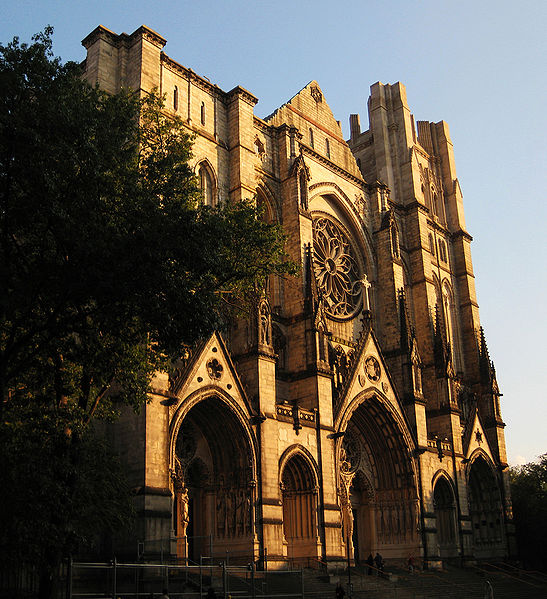
Ralph Adams Cram and Richard Upjohn were major architects whose influence on the design and decoration of Episcopal churches in the late 19th and early 20th centuries is without equal.

Cram was born on this day in 1863 in New Hampshire. After an apprenticeship in Boston, Cram established his own firmin1890 that specialized in designing churches. Heavily influenced by Anglo-Catholic principles, Cram was a leading proponent for an“American gothic revival”—buildings that were reminiscent of the ritual and structural dominance of the medieval period. Because ofhis many commissions for chapels and other buildings on college and university campuses, Cram is also remembered as the originator of the “collegiate gothic” style. Among his works is the great gothic nave of the Cathedral of St. John the Divine, New York City.

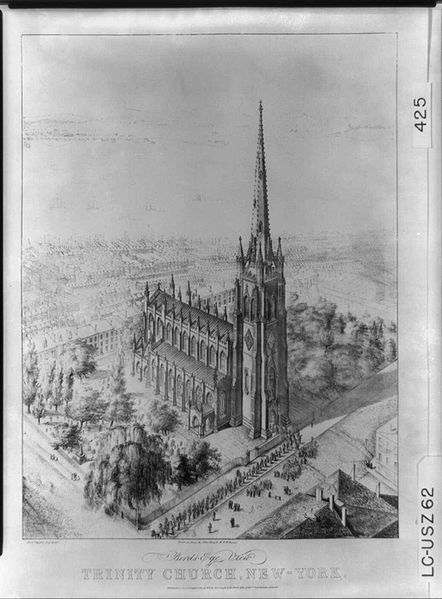
Richard Upjohn was born in England in 1802 where he trained as a cabinetmaker. He immigrated to the United States in 1829 and eventually took up residence in Boston where he worked as a draftsman, art teacher, and eventually an architect. His first major commission was for a gothic-style building for St. John’s Episcopal Church in Bangor, Maine, a building that was later destroyed by fire. He was commissioned in 1839 to design and supervise the construction of anew building for the Parish of Trinity Church, Wall Street, New York City. It was completed in 1846 and continues as Upjohn’s most well known accomplishment. Upjohn is also remembered for his sketchbooks of small wood-frame designs for churches in rural towns and villages. These designs were widely copied and adapted. As a result, Upjohn was among the early progenitors of “carpenter gothic.”

John Lafarge was born in 1835 in New York City and was a devout Roman Catholic. As an artist, LaFarge worked in a variety of media but is most often remembered for the murals that decorate Trinity Church, Boston, and the Church of the Ascension, New York City, among others. He also made significant contributions to ecclesiastical decoration in stained glass.

Collects

I Gracious God, we offer thanks for the vision of Ralph Adams Cram, John LaFarge and Richard Upjohn, whose harmonious revival of the Gothic enriched our churches with a sacramental understanding of reality in the face of secular materialism; and we pray that we may honor thy gifts of the beauty of holiness given through them, for the glory of Jesus Christ; who liveth and reigneth with thee and the Holy Spirit, one God, in glory everlasting. Amen.

II Gracious God, we thank you for the vision of Ralph Adams Cram, John LaFarge and Richard Upjohn, whose harmonious revival of the Gothic enriched our churches with a sacramental understanding of reality in the face of secular materialism; and we pray that we may honor your gifts of the beauty of holiness given through them, for the glory of Jesus Christ; who lives and reigns with you and the Holy Spirit, one God, in glory everlasting. Amen.

Lessons

2 Chronicles 6:12–20

Ephesians 2:17–22

Matthew 7:24–29

Psalm 118:19–29

Preface for the Dedication of a Church

Text from Holy, Women, Holy Men: Celebrating the Saints © 2010 by The Church Pension Fund. Used by permission.

###

We invite your reflections about this commemoration and its suitability for the official calendar and worship of The Episcopal Church. How did this person’s life witness to the Gospel? How does this person inspire us in Christian life today?

If you’d like to participate in the official online trial use survey, click here. For more information about the survey, click here.

To post a comment, your first and last name and email address are required. Your name will be published; your email address will not. The first time you post, a moderator will need to approve your submission; after that, your comments will appear instantly.
December 15: Robert McDonald, Priest, 1913

Welcome to the Holy Women, Holy Men blog! We invite you to read about this commemoration, use the collect and lessons in prayer, whether individually or in corporate worship, then tell us what you think. For more information about this project, click here.

###

About this commemoration

Robert McDonald was a priest, missionary, and archdeacon, who served among the First Nations peoples of Canada.

McDonald was born in 1829 in Point Douglas, Manitoba. He attended local schools, worked alongside his father on the family farm,and married Julia Kuttag with whom he had nine children.

Although McDonald showed initial reluctance, he responded to the church’s call to mission service among the native peoples of Canada. He was ordained a priest in 1853 and took charge of the Islington Mission on the Winnipeg River. It was there that he discovered his gift for languages and it was there that he became fluent in the language of the Ojibway Tribe and began to translate the Bible.

In 1862, the Church Missionary Society persuaded McDonald to establish a new mission at Fort Yukon. It was here, as later at Fort McPherson, where McDonald made his enduring contribution to the tribes of the Tinjiyzoo Nation. He developed a written alphabet for the Tukudh language so that the people could read the texts of the Christian tradition. He also published a grammar and dictionary in Tukudh, both of which remain standard reference works. Over the next forty years, working together with his wife, Julia, and other translators, he accomplished the translation of the whole of the Bible, the Book of Common Prayer, a hymnal and other texts. Possessing these commons texts was critical not only to the Christian mission, but also had a unifying impact on the common life of the various tribes in the region.

McDonald retired from the Church Missionary Society in 1904 and lived in Winnipeg, Manitoba, until his death in 1913. He is buried in the cemetery of St. John’s Anglican Cathedral.

Collects

I God of ice, sea and sky, who didst call thy servant Robert McDonald, making him strong to endure all hardships for the sake of serving thee in the Arctic: Send us forth as laborers into thy harvest, that by patience in our duties and compassion in our dealings, many may be gathered to thy kingdom; through Jesus Christ our Lord, who is alive and reigneth with thee and the Holy Spirit, one God, now and for ever. Amen.

II God of ice, sea and sky, you called your servant Robert McDonald and made him strong to endure all hardships for the sake of serving you in the Arctic: Send us forth as laborers into your harvest, that by patience in our duties and compassion in our dealings, many may be gathered to your kingdom; through Jesus Christ our Lord, who is alive and reigns with you and the Holy Spirit, one God, now and for ever. Amen.

Lessons

Isaiah 66:18–23

1 Thessalonians 1:2–8

Luke 9:1–6

Psalm

57:4–11

Preface of a Saint (3)

Text from Holy, Women, Holy Men: Celebrating the Saints © 2010 by The Church Pension Fund. Used by permission.

###

We invite your reflections about this commemoration and its suitability for the official calendar and worship of The Episcopal Church. How did this person’s life witness to the Gospel? How does this person inspire us in Christian life today?

If you’d like to participate in the official online trial use survey, click here. For more information about the survey, click here.

To post a comment, your first and last name and email address are required. Your name will be published; your email address will not. The first time you post, a moderator will need to approve your submission; after that, your comments will appear instantly.
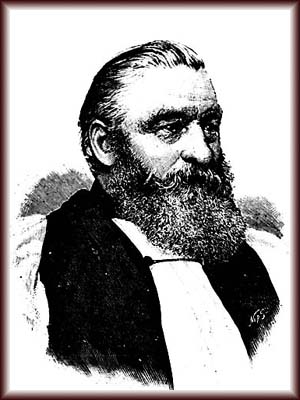
December 15: John Horden, Bishop and Missionary in Canada, 1893

Welcome to the Holy Women, Holy Men blog! We invite you to read about this commemoration, use the collect and lessons in prayer, whether individually or in corporate worship, then tell us what you think. For more information about this project, click here.

###

About this commemoration

Born in Exeter, England, in 1828, John Horden was apprenticed to the blacksmith’s trade as a young boy, and devoted his spare hours to self-education. He eventually qualified as a school teacher and attended the Vicar’s Bible Class at St. Thomas, Exeter, where he was educated in the Bible and in missionary work. Horden, along with some friends,volunteered his services to the Church Missionary Society, but was told to wait due to his young age.

Finally, in 1851, he received a letter informing him that he was being appointed mission schoolmaster in Moose Factory, James Bay, on the southern end of Hudson Bay, in Canada. He immediately devoted himself to learning Cree, the native language of those whom he served. Over time, Horden’s ability as a linguist was evident in his ability to function in no less that five First Nations’ languages, plus Norwegian, English, Greek and Latin.

In addition to working with the native peoples of the region, Horden regarded it as part of his work to serve the employees of the Hudson’s Bay Company. With their help, he built a schoolhouse and church, and developed a variety of ministries to serve the people in this remote territory. He ministered to his people through several epidemics often in the face of rugged, unforgiving conditions.

In 1872 he was recalled to England to receive Episcopal orders, and following his ordination in Westminster Abbey, he was appointed the first bishop of the Diocese of Moosonee. He returned to James Bay, traveling to the outer regions of his vast diocese, often by dog-team in harsh weather. Many congregations in the small towns and cities of the area trace their formation back to the inspiring work of Bishop Horden.

Collects

I Creator God, whose hands holdeth the storehouses of the snow and the gates of the sea, and from whose Word springeth forth all that is: We bless thy holy Name for the intrepid witness of thy missionary John Horden, who followed thy call to serve the Cree and Inuit nations of the North. In all the places we travel, may we, like him, proclaim thy Good News and draw all into communion with thee through thy Christ; who with thee and the Holy Spirit liveth and reigneth, one God, in glory everlasting. Amen.

II Creator God, whose hands hold the storehouses of the snow and the gates of the sea, and from whose Word springs forth all that is: We bless your holy Name for the intrepid witness of your missionary John Horden, who followed your call to serve the Cree and Inuit nations of the North. In all the places we travel, may we, like him, proclaim your Good News and draw all into communion with you through your Christ; who with you and the Holy Spirit lives and reigns, one God, in glory everlasting. Amen.

Lessons

Numbers 10:29–36

Acts 6:1–7

Luke 5:1–11

Psalm

107:35–43

Preface of a Saint (1)

Text from Holy, Women, Holy Men: Celebrating the Saints © 2010 by The Church Pension Fund. Used by permission.

###

We invite your reflections about this commemoration and its suitability for the official calendar and worship of The Episcopal Church. How did this person’s life witness to the Gospel? How does this person inspire us in Christian life today?

If you’d like to participate in the official online trial use survey, click here. For more information about the survey, click here.

To post a comment, your first and last name and email address are required. Your name will be published; your email address will not. The first time you post, a moderator will need to approve your submission; after that, your comments will appear instantly.
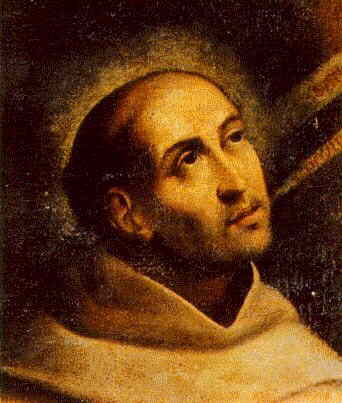
December 14: Juan de la Cruz (John of the Cross), Mystic, 1591

Welcome to the Holy Women, Holy Men blog! We invite you to read about this commemoration, use the collect and lessons in prayer, whether individually or in corporate worship, then tell us what you think. For more information about this project, click here.

###

About this commemoration

John of the Cross was unknown outside the Discalced Carmelites for nearly three hundred years after his death. More recently, scholars of Christian spirituality have found in him a hidden treasure. Once described by Thomas Merton as “the church’s safest mystical theologian,” John has been called the “the poet’s poet,” “spirit of flame,” “celestial and divine.”

John was born in 1542 at Fontiveros, near Avila, Spain. After his third birthday, his father died leaving his mother and her children reduced to poverty. John received elementary education in an orphanage inMedina del Campo. By the age of seventeen he had learned carpentry, tailoring, sculpturing, and painting through apprenticeships to local craftsmen. After university studies with the Jesuits, John entered the Carmelite Order in Medina del Campo and completed his theological studies in Salamanca. In 1567 he was ordained to the priesthood and recruited by Teresa of Avila for the reformation of the Carmelite Order.

By the age of thirty-five he had studied extensively, had been spiritual director to many, and yet devoted himself to the search for God so fully that he reached the peak of the mystical experience: a complete transformation in God.

John became disillusioned with what he considered the laxity of the Carmelites and in 1568 he opened a monastery of “Discalced” (strict observance) Carmelites, an act that met with sharp resistance from the General Chapter of the Calced Carmelites. John was seized, takento Toledo, and imprisoned in the monastery. During nine months of great hardship, he comforted himself by writing poetry. It was while he was imprisoned that he composed the greater part of his luminous masterpiece, The Spiritual Canticle, as well as a number of shorter poems. Other major works are, The Ascent of Mount Carmel, The Living Flame of Love and The Dark Night. It is this latter work, Noche obscura del alma, that gave the English language the phrase dark night of the soul.

After a severe illness, John died on December 14, 1591, in Ubeda, in southern Spain.

Collects

I Judge eternal, throned in splendor, who gavest Juan de la Cruz strength of purpose and mystical faith that sustained him even through the dark night of the soul: Shed thy light on all who love thee, in unity with Jesus Christ our Savior; who with thee and the Holy Spirit liveth and reigneth, one God, for ever and ever. Amen.

II Judge eternal, throned in splendor, you gave Juan de la Cruz strength of purpose and mystical faith that sustained him even through the dark night of the soul: Shed your light on all who love you, in unity with Jesus Christ our Savior; who with you and the Holy Spirit lives and reigns, one God, for ever and ever. Amen.

Lessons

Song of Solomon 3:1–4

Colossians 4:2–6

John 16:12–15,25–28

Psalm

121

Preface of God the Son

Text from Holy, Women, Holy Men: Celebrating the Saints © 2010 by The Church Pension Fund. Used by permission.

###

We invite your reflections about this commemoration and its suitability for the official calendar and worship of The Episcopal Church. How did this person’s life witness to the Gospel? How does this person inspire us in Christian life today?

If you’d like to participate in the official online trial use survey, click here. For more information about the survey, click here.

To post a comment, your first and last name and email address are required. Your name will be published; your email address will not. The first time you post, a moderator will need to approve your submission; after that, your comments will appear instantly.
 

December 13: Lucy (Lucia), Martyr at Syracuse, 304

Welcome to the Holy Women, Holy Men blog! We invite you to read about this commemoration, use the collect and lessons in prayer, whether individually or in corporate worship, then tell us what you think. For more information about this project, click here.

###

About this commemoration

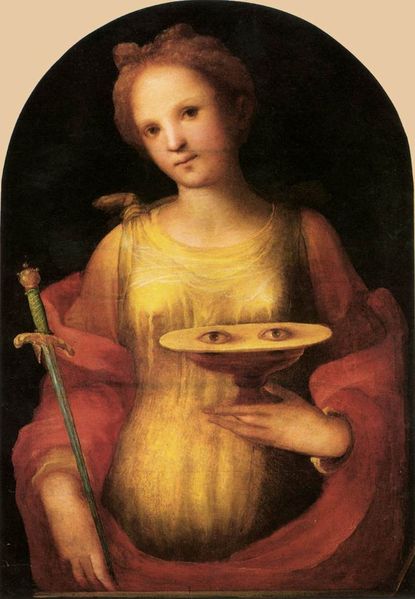
Lucy, or Lucia, was martyred at Syracuse, in Sicily, during Diocletian’s reign of terror of 303-304, among the most dramatic of the persecutions of early Christians. Her tomb can still be found in the catacombs at Syracuse. She was venerated soon after her death and her cult spread quickly throughout the church. She is among the saints
and martyrs named in the Roman Canon of the Mass. Most of the details of Lucy’s life are obscure. In the tradition she is remembered for the purity of her life and the gentleness of her spirit. Because her name means “light,” she is sometimes thought of as the patron saint of those who suffer from diseases of the eyes.

In popular piety, Lucy is perhaps most revered because her feast day, December 13, was for many centuries the shortest day of the year. (The reform of the calendar by Pope Gregory VIII (1582) would shift the shortest day to December 21/22, depending upon the year.) It was on Lucy’s day that the light began gradually to return and the days to lengthen. This was particularly powerful in northern Europe where the days of winter were quite short. In Scandinavian countries, particularly Sweden, Lucy’s day has long been a festival of light that is kept as both an ecclesiastical commemoration and a domestic observance.

In the domestic celebration of Lucia-fest, a young girl in the family dresses in pure white (a symbol of Lucy’s faith, purity, and martyrdom) and wears a crown of lighted candles upon her head (a sign that on Lucy’s day the light is returning) and serves her family special foods prepared especially for the day. In praise of her service, the young girl is called Lucy for the day.

Collects

I Loving God, who for the salvation of all didst give Jesus
Christ as light to a world in darkness: Illumine us, with thy
daughter Lucy, with the light of Christ, that by the merits
of his passion we may be led to eternal life; through the
same Jesus Christ, who with thee and the Holy Spirit liveth
and reigneth, one God, for ever and ever. Amen.

II Loving God, for the salvation of all you gave Jesus Christ
as light to a world in darkness: Illumine us, with your
daughter Lucy, with the light of Christ, that by the merits
of his passion we may be led to eternal life; through the
same Jesus Christ, who with you and the Holy Spirit lives
and reigns, one God, for ever and ever. Amen.

Lessons

Song of Solomon 6:1–9
Revelation 19:5–8
John 1:9–13

Psalm

131

Preface of a Saint (1)

Text from Holy, Women, Holy Men: Celebrating the Saints © 2010 by The Church Pension Fund. Used by permission.

###

We invite your reflections about this commemoration and its suitability for the official calendar and worship of The Episcopal Church. How did this person’s life witness to the Gospel? How does this person inspire us in Christian life today?

If you’d like to participate in the official online trial use survey, click here. For more information about the survey, click here.

To post a comment, your first and last name and email address are required. Your name will be published; your email address will not. The first time you post, a moderator will need to approve your submission; after that, your comments will appear instantly.

December 10: Karl Barth, Pastor and Theologian, 1968

Welcome to the Holy Women, Holy Men blog! We invite you to read about this commemoration, use the collect and lessons in prayer, whether individually or in corporate worship, then tell us what you think. For more information about this project, click here.

###

About this commemoration

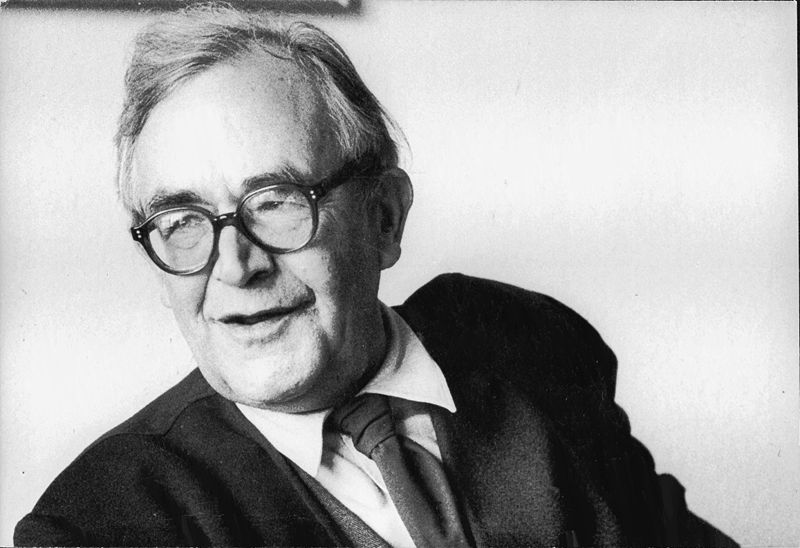
Born in Switzerland in 1886, Barth studied at several prestigious universities including Tübingen. After completing his studies, he served as pastor in Geneva and Safenwil. The events of the First World War led Barth to critically question the dominant theology of the day, which, in Barth’s view, held a too easy peace between theology and culture. In his Commentary on Romans, published in 1918, Barth reasserted doctrines such as God’s sovereignty and human sin, central ideas which he believed were excluded and overshadowed in theological discourse at that time.

With Hitler’s rise to power, Barth joined the Confessional Church and was chiefly responsible for the writing of the Barmen Declaration (1934), one of its foundational documents. In it, Barth claimed that the Church’s allegiance to God in Christ gave it the moral imperative to challenge the rule and violence of Hitler. Barth was himself ultimately forced to resign his professorship at Bonn due to his refusal to swear an oath to Hitler. In 1932, Barth published the first volume of his thirteen-volume opus, the Church Dogmatics. Barth would work on the Dogmatics until his death in 1968. An exhaustive account of his theological themes and a daring reassessment of the entire Christian theological tradition, the Dogmatics gave new thought to some of the central themes first articulated in the Commentary on Romans. In the first volume, “The Doctrine of the Word of God,” Barth laid out many of the theological notions which would comprise the heart of the entire work, including his understanding of God’s Word as the definitive source of revelation, the Incarnation as the bridge between God’s revelation and human sin, and the election of the creation as God’s great end.

Karl Barth was one of the great thinkers of the twentieth century. Pope Pius XII regarded him as the most important theologian since Thomas Aquinas. This assessment speaks to the respect Barth received from both Protestant and Catholic theologians and to his influence within both theological communities.

Collects

I Almighty God, source of justice beyond human knowledge: We offer thanks that thou didst inspire Karl Barth to resist tyranny and exalt thy saving grace, without which we cannot apprehend thy will. Teach us, like him, to live by faith,  and even in chaotic and perilous times to perceive the light of thy eternal glory, Jesus Christ our Redeemer; who liveth and reigneth with thee and the Holy Spirit, ever one God, throughout all ages. Amen.

II Almighty God, source of justice beyond human knowledge: We thank you for inspiring Karl Barth to resist tyranny and exalt your saving grace, without which we cannot apprehend your will. Teach us, like him, to live by faith, and even in chaotic and perilous times to perceive the light of your eternal glory, Jesus Christ our Redeemer; who lives and reigns with you and the Holy Spirit, ever one God, throughout all ages. Amen.

Lessons
Jeremiah 30:23–31:6

Romans 7:14–25

John 8:34–36

Psalm 76:7–12

Preface of a Saint (1)

Text from Holy, Women, Holy Men: Celebrating the Saints © 2010 by The Church Pension Fund. Used by permission.

###

We invite your reflections about this commemoration and its suitability for the official calendar and worship of The Episcopal Church. How did this person’s life witness to the Gospel? How does this person inspire us in Christian life today?

If you’d like to participate in the official online trial use survey, click here. For more information about the survey, click here.

To post a comment, your first and last name and email address are required. Your name will be published; your email address will not. The first time you post, a moderator will need to approve your submission; after that, your comments will appear instantly.